
Buy it here:
Synopsis:
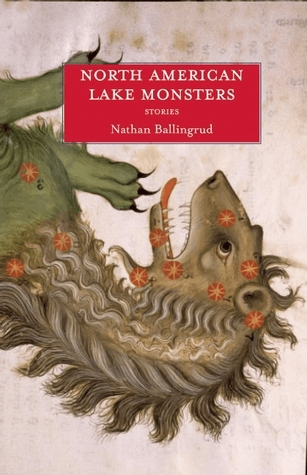
Nathan Ballingrud’s Shirley Jackson Award winning debut collection is a shattering and luminous experience not to be missed by those who love to explore the darker parts of the human psyche. Monsters, real and imagined, external and internal, are the subject. They are us and we are them and Ballingrud’s intense focus makes these stories incredibly intense and irresistible.
These are love stories. And also monster stories. Sometimes these are monsters in their traditional guises, sometimes they wear the faces of parents, lovers, or ourselves. The often working-class people in these stories are driven to extremes by love. Sometimes, they are ruined; sometimes redeemed. All are faced with the loneliest corners of themselves and strive to find an escape.
Nathan Ballingrud was born in Massachusetts but has spent most of his life in the South. He worked as a bartender in New Orleans and New York City and a cook on offshore oil rigs. His story “The Monsters of Heaven” won the inaugural Shirley Jackson Award. He lives in Asheville, North Carolina, with his daughter.
Review:
Short stories are a much different reading experience than novels and novellas. In a short story, the author only has a few pages to build the world, the characters, and the conflict before either the story ends or people lose interest and move on to the next story. Each short story should be designed to stand alone, even if it is part of a collection of linked stories that tell a bigger story. Short stories are only a moment in time, and this time needs to be used wisely. In a collection like North American Lake Monsters, these characters are each put in a time where they are dealing with a difficult situation, whether financially, romantically, emotionally, or morally, and the collection is filled with every type of monster.
Many of these ten stories have the same type of main character– a person who is struggling at the moment with being a decent human being. This is not to say they have not been decent at some point, just not at the moment. Many of them are abusive to their partners and children, some are racist, and all of them are dealing with the grief of being at a low point in their lives. All of these stories add some sort of new element to these feelings, whether it is a feeling of hope or even deeper despair. This stands out all of these stories, but a few of the stronger examples are “Wild Acre”, “The Monsters From Heaven,” and “The Way Station.” “Wide Acre” starts with a bankrupt building contractor witnessing his friends getting attacked by a monster. He runs away, and by being the lone survivor, his depression pushes everyone away from him, and he eventually loses control. In “The Monsters from Heaven” a father is struggling with being the parent responsible for his son disappearance. His wife has animosity, and the only thing that helps them get over this loss is nursing an injured alien back to health to treat as their son. “The Way Station” is about the grief of a homeless man who is displaced by Hurricane Katrina, finds himself in Florida looking for his adult daughter, and waking up with a literal hole in his chest shaped like his memories from New Orleans.
None of the characters in these stories are very good people. The men fight with their wives and call them names. The women are sick of their lives, their husbands and children, and are trying to find an escape. One of the stories, “S.S.” is about a young kid who is blatantly racist and is getting introduced to a white supremacy group by a girl he has a crush on. Nathan Ballingrud does not shy away from controversial language in this or any of his other stories, and in the end, it is obvious that his world is filled with monsters, but the most dangerous monsters are the humans. This theme is reflected in every single story, and it creates a collection of stories that is sometimes hard to read.


 ghostvillehero