
Buy it here:
Amazon, Bookshop
Synopsis:
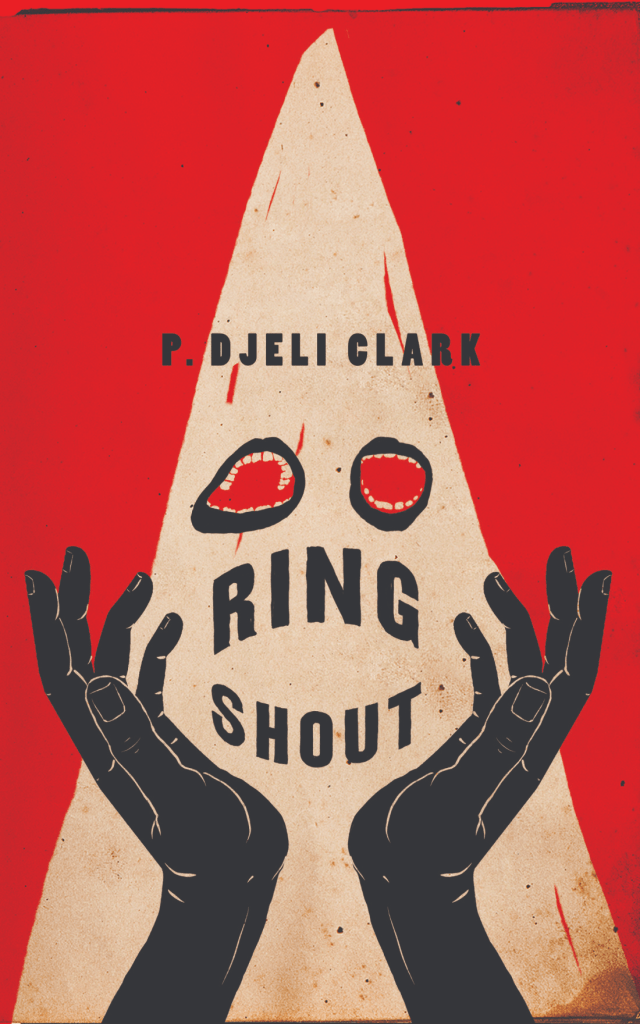
In America, demons wear white hoods.
In 1915, The Birth of a Nation cast a spell across America, swelling the Klan’s ranks and drinking deep from the darkest thoughts of white folk. All across the nation they ride, spreading fear and violence among the vulnerable. They plan to bring Hell to Earth. But even Ku Kluxes can die.
Standing in their way is Maryse Boudreaux and her fellow resistance fighters, a foul-mouthed sharpshooter and a Harlem Hellfighter. Armed with blade, bullet, and bomb, they hunt their hunters and send the Klan’s demons straight to Hell. But something awful’s brewing in Macon, and the war on Hell is about to heat up.
Can Maryse stop the Klan before it ends the world?
A video explaining the Ring Shout:
Review:
The Ku Klux Klan was born out the end of slavery and is a group who started by terrorizing, torturing, and murdering newly freed slaves. The first wave of the KKK lost much of their power due to federal government passing the Enforcements Acts of 1870-1871 that protected people of color against the harassment by this and any other organizations. The second wave started with the release of Birth of a Nation in 1915, the start of Prohibition, the end of WWI which came with economic instability, and the changes of American culture that was moving away from the traditions of a white only past. This second wave, from 1915-1940, had over 5 million members, was in every single state, and not only targeted people of color but Catholics, Jews, immigrants, and bootleggers. The official start of this second wave was when Colonel William J Simmons burned a cross on Stone Mountain near Atlanta, GA on Thanksgiving Day in 1915. However the biggest Klan rally at that time was July 4, 1923, when the D.C. Stephenson was appointed Grand Dragon in Indiana in front of 100,000 Klansmen. (I mention this because this rally happened to have taken place at Malfalfa Park, where I would attend YMCA camp over 65 years later.) This history is the backdrop of P. Djéli Clark’s novella Ring Shout.
The novella takes place in Georgia, where Maryse Boudreaux is a Ku Klux hunter, with her targets being demons who started as Klan members but have turned into mindless monsters who are only out to murder. The Ku Klux hunters are women who can see the Ku Klux for who they truly are. For strength they use traditional African folktales, haints and root magic, and most importantly, the ring shout, a song and dance from the Gullah-Geechee culture that help connect the fighters to all of their ancestors. The Klan is aware of these hunters and are planning to do something big to defeat them. Led by Butcher Clyde, they plan another rally on Stone Mountain where they will show Birth of a Nation, turn all of the Klan into Ku Klux monsters, and release the most powerful demon of all.
I find this novella fascinating because of the historical context more than the plot or characters. I love the things that Maryse and the fighters use as strength when they go into battle, how there are older men and women doing a ring shout while they go into battle, and how Maryse lets the anger of those before her run through her sword as she battles the Ku Kluxes. The plot is much larger than the page count, and some of the story is hampered by this. A few of the things that they do deserve more time and explanation, but this might also slowed down the story, turned Ring Shout into a slow action horror novel. As it is, Clark wrote this story with plot and purpose more than understanding and explanation, and it is up to our curiosity to delve deeper into the situation. I also like some of the ideas on race that are mentioned but not dwelled on. There are a few moments when the white people who become Ku Kluxes are considered, and how the anger and fear these people have is processed in an artless, ungracious, and damaging way. This is why the Ku Klux Klan rose to power in the first place, and why racism still exists as a major thorn in the side of American culture. I would have liked more of this story, but it also does so much for being such a short novella, bringing up so much history and social thought that I would instead like a second in a series. There is a hint of a sequel toward the end, but I am not holding onto hope.


 ghostvillehero