
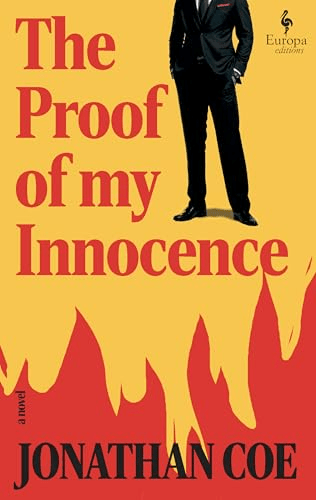
Buy it here:
Synopsis:
When Phyl, a young literature graduate, moves back home with her parents, she soon finds herself frustrated by the narrow horizons of English country life. As for her plans of becoming a writer, those are going nowhere. But the chance discovery of a forgotten novelist from the 1980s stirs her into action, as does a visit from her uncle Chris – especially when he tells her that he’s working on a political story that might put his life in danger.
Chris has been following the careers of a group of students, all present at Cambridge University in the 1980s, now members of a think-tank which has been quietly pushing the British government towards extremism. And now, after years in the political wilderness, they might be in a position to put their ideas into action.
As Britain finds itself under the leadership of a new Prime Minister whose tenure will only last for seven weeks, Chris pursues his story to a mysterious conference taking place deep in the Cotswolds. When Phyl hears that one of the delegates has been murdered, she begins to wonder if real life is starting to merge with the novel she’s been trying to write. But does the explanation really lie in contemporary politics, or in a literary enigma that is almost forty years old?
Darting between decades and genres, THE PROOF OF MY INNOCENCE reimagines the coming-of-age story, the cosy crime caper and the state-of-the-nation novel with Coe’s trademark humour and warmth. From one of Britain’s finest living novelists, this is a witty, razor-sharp novel which explores how the key to understanding the present can often be found in the murkiest corners of the past.
Review:
When I started The Proof of My Innocence, I did not know how much I was going to enjoy every aspect of the story. The novel starts with a long prologue, with Phyl living with her parents at a vicarage after finishing college, working at the Japanese restaurant in the airport, coming home to watch episodes of Friends as a comfort, and trying to figure out her next step in life. One of her mother’s friends from college, Christopher Swann, stops to visit on the way to a convention of conservative leaders as material for his liberal blog. Phyl starts to read his blog and even though it is not a topic she finds very interesting, she feels like she can write too. She makes a list of the types of novels that are popular and/or books she likes to read. The list consists of three subgenres: Cozy Crime, Dark Academia, and Autofiction. The rest of the novel is set into three parts. The first part is a crime section, where Christopher ends up dead at the conference and the older detective close to retirement is trying to solve the crime. The second is a slim autobiography of a friend of Chris and Phyl’s mother from Cambridge, and how there were some strange things going on at the campus. The third section is in the voice of Phyl and Chris’s adopted daughter Rashida as they travel around Europe trying to find more clues to the death of Chris. The three parts are written in the style of the subgenres that Phyl writes at the beginning of the novel, and they are distinctive and have their own rewards.
The entire novel also has a backdrop of a tumultuous political climate. England has a new Prime Minister, Queen Elizabeth passes away, and the Conservative government is changing things for the perceivable worst. This does not make much difference in the plot except that it is a device that adds another layer of turmoil to the world that the characters are trying to navigate, and it gives a good reason for someone who writes criticism against the conservative party to wind up dead at a convention for the conservative party. Even if this might be seen as a warning to some readers (especially in this moment in history when reading and art are an escape for what is happening at a government level), there are so many other elements to the novel that makes it worth reading. The Proof of My Innocence is a parallel story of trying to find your voice in a post college world, trying to find a place in a government system that you really do not fit into, and a crime novel poking fun at crime novels and literary cliches by making puns and even delving into pop culture theories like why many people stream episodes of Friends for comfort. Even the title of the novel is a play on words. This playfulness with tone and voice in a story about murder and shady politics is what makes The Proof of My Innocence a novel that I will remember and want to reread simply to catch the nuances I definitely missed the first time.
I received The Proof of My Innocence as an ARC from Europa Editions in exchange for an honest review.


 ghostvillehero