
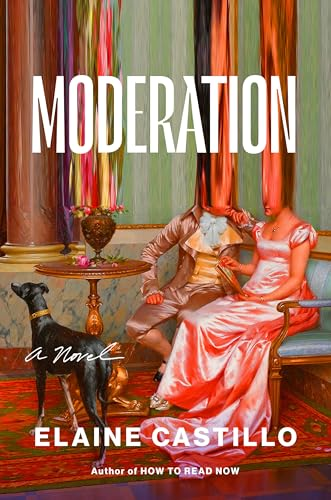
Buy it here:
Synopsis:
A bold and inventive novel about real romance in the virtual workplace—bringing Castillo’s trademark wit and sharp cultural criticism to an irresistible story about the possible future of love.
Girlie Delmundo is the greatest content moderator in the world, and despite the setbacks of financial crises, climate catastrophe, and a global pandemic, she’s going places: she’s getting a promotion. Now thanks to her parent company Paragon’s purchase of Fairground—the world’s preeminent virtual reality content provider—she’s on the way to becoming an elite VR moderator, playing in the big leagues and, if her enthusiastic bosses are to be believed, moderating the next stage of human interaction.
Despite the isolation that virtual reality requires from colleagues, friends, and family, the unbelievable perks of her new job mean she can solve a lot of her family’s problems with money and mobility. She doesn’t have to think about the childhood home they lost back in the Bay Area, or history at all—she can just pay any debts that come due. But when she meets William Cheung, Playground’s wry, reticent co-founder (now Chief Product Officer) and slowly unearths some of his secrets, and finds herself somehow falling in love, she’ll learn that history might be impossible to moderate and the future utterly impossible to control.
Review:
The beginning of Moderation starts with Girlie Delmundo working as a person moderating social media posts, flagging and removing posts and videos that violate terms and agreements. She specialized in videos about sexual abuse, child assault, and other terrible things done to women and children without their consent. People do not stay at this job very long, but she has been doing it for over ten years and is good at it. With this comes a numbing to the things outside of work, particularly interpersonal and romantic relationships. The first section shows how Girlie lives her life, financially taking care of her mother, her cousins, and herself, lifting heavy weights (no cardio though), buying vintage watches and bags on the internet, and being a great character built on the traumas that she is suppressing.
The book changes when Girlie meets William and gets a promotion of become a moderator in a VR world that is a historic theme park, built digitally with high quality models. The VR job is a big promotion but also does not seem as interesting as the social media moderator would be. This position comes with her starting to see the corporate psychologist who uses VR scenes to get her to open up about her life and her feelings. As soon as this promotion happens, most of the middle half of the novel is about work, her relationship with her boss, William, and opening up as a person. Her workout and family routines are not even mentioned anymore. When I go to therapy, I have a habit of when I no longer want to talk about myself and the things in my life that I am trying to fix, I start talking about work. Work is an easy thing topic of discussion because most people can relate to the office, the politics of any job, and whether or not people can be trusted as friends or only as coworkers. Talking about work is safe, easy, and pretty boring. Moderation feels like this is what happens; Girlie no longer wants to talk about herself so she focuses on work instead. This feels like a deflection and is a shame because Girlie Delmundo and her family in Las Vegas is a much more interesting than Girlie Delmundo at work.
Maurice de Coligny, one of the principal characters of the merger between the VR company she works for and a French amusement park company, L’Olifant, gives a speech about halfway through the novel. He says,
“In 1989, my father came up with an idée” De Coligny began, surveying the audience in the Grand Ballroom. “What if you could build a theme park that didn’t have one single ride?”
He held up his right index finger. “What if, instead of the commercialism and cheap thrills of other, more famous theme parks, you could imagine a different way to connect with visitors–a different way to connect with ourselves, and our history?” p. 176
This feels like what Elaine Castillo is trying to do with Moderation. She does show us an amusement park but then does not want to use any of these things for cheap thrills. The Goldie in the beginning is fascinating, with her interesting quirks and culture that can be explored but instead Castillo writes a novel about her figuring out how to connect with people (or one particular person). In the meantime she becomes a different and better person. She become more connected to her history and what she has been through previous to becoming Goldie Delmundo, and she is more willing to make bold choices for different outcomes for the future. Goldie is living the idea laid out by de Coligny in his speech, but as a reader who is watching her do this, I want her to ride more rides. I like Goldie and I enjoy the writing by Elaine Castillo, but I do feel like both the character and the writer’s choices are not as interesting as they could have been.


 ghostvillehero