
Buy it here:
Synopsis:
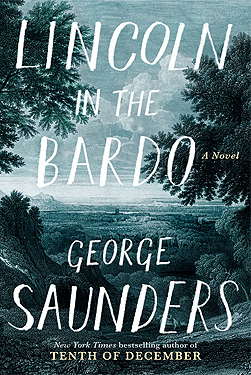
n his long-awaited first novel, American master George Saunders delivers his most original, transcendent, and moving work yet. Unfolding in a graveyard over the course of a single night, narrated by a dazzling chorus of voices, Lincoln in the Bardo is a literary experience unlike any other—for no one but Saunders could conceive it.
February 1862. The Civil War is less than one year old. The fighting has begun in earnest, and the nation has begun to realize it is in for a long, bloody struggle. Meanwhile, President Lincoln’s beloved eleven-year-old son, Willie, lies upstairs in the White House, gravely ill. In a matter of days, despite predictions of a recovery, Willie dies and is laid to rest in a Georgetown cemetery. “My poor boy, he was too good for this earth,” the president says at the time. “God has called him home.” Newspapers report that a grief-stricken Lincoln returned to the crypt several times alone to hold his boy’s body.
From that seed of historical truth, George Saunders spins an unforgettable story of familial love and loss that breaks free of its realistic, historical framework into a thrilling, supernatural realm both hilarious and terrifying. Willie Lincoln finds himself in a strange purgatory, where ghosts mingle, gripe, commiserate, quarrel, and enact bizarre acts of penance. Within this transitional state—called, in the Tibetan tradition, the bardo—a monumental struggle erupts over young Willie’s soul.
Lincoln in the Bardo is an astonishing feat of imagination and a bold step forward from one of the most important and influential writers of his generation. Formally daring, generous in spirit, deeply concerned with matters of the heart, it is a testament to fiction’s ability to speak honestly and powerfully to the things that really matter to us. Saunders has invented a thrilling new form that deploys a kaleidoscopic, theatrical panorama of voices—living and dead, historical and invented—to ask a timeless, profound question: How do we live and love when we know that everything we love must end?
Review:
Lincoln in the Bardo by George Saunders has been around long enough for me to have a good idea of what it is about. The story is about Abraham Lincoln and dealing with the death of his son, Willie, while Lincoln is president. The true story is that when Willie died, Lincoln went to visit the crypt where his son was laid, and Lincoln would hold him. This story also takes place within the first year of the Civil War so Lincoln also feels the mounting pressure regarding a war that many do not see as very popular. With Lincoln’s grief over the death of his child, a wife who is not in the best state of mental health, and himself getting pushed against his beliefs because ending the war is something that might be the popular opinion of his colleague but it does not feel right in his heart, Abraham Lincoln is stoop in grief, sadness, and worry. But Lincoln in the Bardo is not about him.
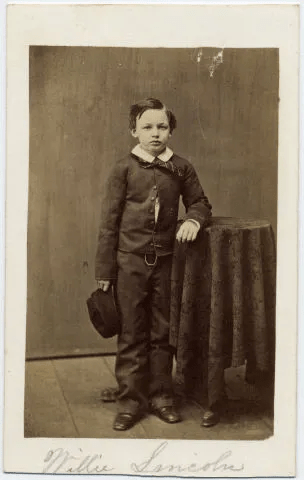
A “bardo” is a Tibetan Buddhist idea on the afterlife where a person stays for an undetermined amount of time, sometimes seconds and sometimes trapped for eternities, between death and rebirth. The time spent is determined by the way that person conducted themselves during their life. William Wallace Lincoln died when he was 11 years old in February of 1862 of typhoid fever. His death came only ten months after the death of Eddie Lincoln, age 3, his younger brother. Willie is a good kid and he loves his father, so when he see his father in the graveyard mourning him, Willie wants to stay in the bardo for as long as he can because he feels like his father is going to come get him. The Lincoln in Lincoln in the Bardo is Willie Lincoln, but the novel does not soley focus on him because there are so many other people trapped in the bardo with him.
Lincoln in the Bardo is about the afterlife as a whole, the people who are stuck in the bardo, and how they arrived (how they died) more than what is keeping them from moving on to the next life. Three of these characters, Hans Vollman, Roger Bevins III, and Reverend E Lawrence Thomas, tell most of the stories about the bardo, and the truth of this afterlife is that there are so many people stuck for different reasons, not able to get to the true afterlife. They want to make sure that Willie Lincoln is not one of them, so they do what they make it their mission to help him crosses over.
The audiobook of this novel has 166 narrators, one for each character. This is due to George Saunders leaning heavy on a way of telling this story in clips and excerpts. Most of the story involving Lincoln, the death of his son, the state of the White House and the feelings on Lincoln as president are told through quotes from books, articles, letters, and diaries from historians and people around them. Some of these quotes are real, some of them are fictional. The telling of the stories in the bardo is more about oral tradition, people sitting around and repeating the stories of their lives or the lives of those that they know. With Vollman, Bevins III, and Rev. Thomas taking the lead, the three of them can tell the stories of everyone we meet in the bardo, and it almost feels like they are trying to entertain us by telling the story of Willie Lincoln. However to tell his story, you have to hear all of the stories of the people in the bardo. This makes Lincoln in the Bardo less about Lincoln and more about the bardo itself, the people who are already stuck there and how their lives never change.
There are some moments that really show how powerful of a writer that George Saunders can be. He paints the picture of Lincoln and his grief in a haunting and heartbreaking way, the mourning over the loss of his child being something that is most likely going to break him as a human. This sadness is only shown in spurts throughout because most of the novel is not about his sadness but about three guys trying to get an 11-year old boy to move on to the next life. At times this novel does not feel very focused, and some of the stories that are introduced do not seem like they have much importance to the whole of the novel. This is difficult to say because it is difficult to think that telling about one person’s life and death is more or less important than another, but for the sake of the focus of a novel, this aspect could have been a little more condensed. We could have done with fewer narrators and stories, because some of them really push away the impact of how grief-stricken and devastated Abraham Lincoln is while he visits his young dead son in a borrowed crypt. I do not know if this was purposeful distraction, like to break the tension and sadness, but there feels like more of it than necessary. People love this novel, it has won awards, it will most likely be one of those novels that will be on “Best Novels of the Century” lists, and it might be a novel that is taught in universities in the future (if not already). I can respect these ideas, and I can agree with how people feel about this novel, but my agreement is not wholehearted. This is a good book, but it is not gong to be the best book I read this year, and most likely will not be in the top ten. Maybe I will revisit this novel at some time in the future, but for right now, my feeling is that this is not even George Saunders’s best book.


 ghostvillehero