
Buy it here:
Synopsis:
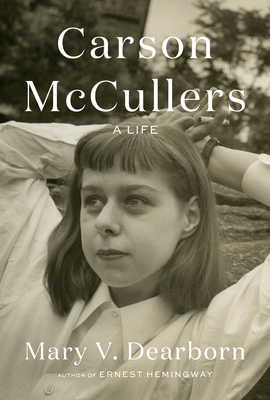
The first major biography in more than twenty years of one of America’s greatest writers, based on newly available letters and journals
V. S. Pritchett called her “a genius.” Gore Vidal described her as a “beloved novelist of singular brilliance . . . Of all the Southern writers, she is the most apt to endure . . .” And Tennessee Williams said, “The only real writer the South ever turned out, was Carson.”
She was born Lula Carson Smith in Columbus, Georgia. Her dream was to become a concert pianist, though she’d been writing since she was sixteen and the influence of music was evident throughout her work. As a child, she said she’d been “born a man.” At twenty, she married Reeves McCullers, a fellow southerner, ex-soldier, and aspiring writer (“He was the best-looking man I had ever seen”). They had a fraught, tumultuous marriage lasting twelve years and ending with his suicide in 1953. Reeves was devoted to her and to her writing, and he envied her talent; she yearned for attention, mostly from women who admired her but rebuffed her sexually. Her first novel— The Heart Is a Lonely Hunter —was published in 1940, when she was twenty-three, and overnight, Carson McCullers became the most widely talked about writer of the time.
While McCullers’s literary stature continues to endure, her private life has remained enigmatic and largely unexamined. Now, with unprecedented access to the cache of materials that has surfaced in the past decade, Mary Dearborn gives us the first full picture of this brilliant, complex artist who was decades ahead of her time, a writer who understood—and captured—the heart and longing of the outcast.
Review:
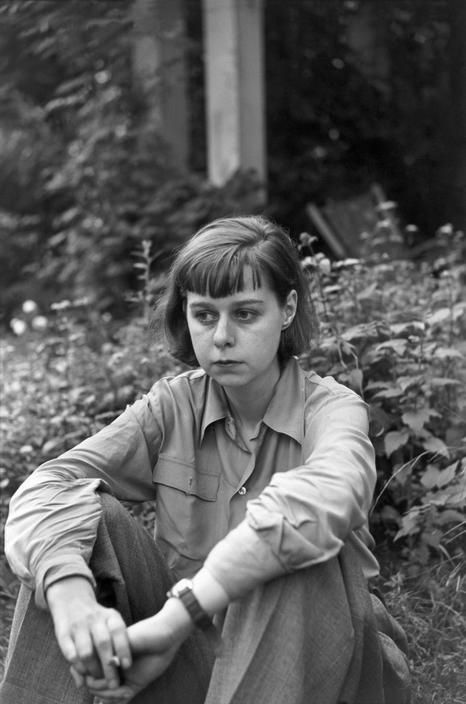
In 2004, Oprah Winfrey selected Carson McCullers debut novel from 1940 The Heart is a Lonely Hunter for her book club. This caused the novel to be reprinted with a new cover and a spike in sales and readership. I was one of those people who bought the Oprah version of the novel as soon as I saw to cover. I had read and loved some southern writers, To Kill a Mockingbird and As I Lay Dying were favorites at the time. I had heard of Carson McCullers, but I did not know anything about her or her writing. Like many before this exposure by Oprah, I thought Carson was a male writer until this new version of The Heart is a Lonely Hunter came out with her picture on the cover, her wearing a man’s dress shirt and watch, her hair cut short, and a cigarette in her crossed hands. It was the look on her face that intrigued me most. Her eyes sad and contemplating something in the distance, not exactly looking at the camera for the photo but thinking of something so upsetting that she has forgotten that she is getting her photograph taken. I stared at this photo for a long time, I still stare at this photo for a long time, but back then that look on her face helped me develop a major crush on her. The Heart is a Lonely Hunter was published when Carson was 23 years old, and the novel is much weirder than I ever thought a novel from 1940 could be. It made me seek out more fiction like this, and it really became the catalyst that has lead me on a lifelong journey to seek art that is just a little strange and off-center.
Carson McCullers herself is an interesting lady. She was raised as a wunderkind musician, playing piano and writing music. Her mother encouraged her to do whatever she needed to do to work on her art and forget about the rest. On her way to Julliard, she decides she can write and work instead of going to school but when she gets rheumatic fever, she is forced to go back home to recover. This sickness makes her turn to writing in earnest. The new biography by Mary V. Dearborn Carson McCullers: A Life not only explores Carson’s beginnings, but how she traveled through the world, through her marriage, her work, her literary circles, her unfulfilled crushes on women, her health, and her unwavering alcoholism, and shows that Carson McCullers is always filled with longing to be around people but is probably not a person that was easy to be around. There is a sense that many people loved spending time with her for a short period because she was fun, but after a little bit, people grew tired of childish behavior, her ruthless outbursts, and her increasing dependence on her friends to take complete care of her. She had a series of strokes and became more and more of an invalid as time wore on, but there are some of her friends and acquaintances who saw her and thought her limb weakness, her clawed-hand, and her use of a wheelchair were all for show, that she used this to get more and more sympathy. Toward the end of her life, when she was really starting to become frail, confined to a hospital bed, and needed total care, almost all of her friends who had partied with her during her success were long gone.
And she was successful in her lifetime. She proved her genius. She wrote very weird and compelling stories about longing, desire, queerness, racism, and being an outcast. Her novels sold well. The stage production of A Member of the Wedding was a hit play. She made a great deal of money. One of her money problems was that she drank much of it away. Her second money problem was that she was married Reeves McCullers, her husband, spent much of it because he could not find success in anything he did. He wanted to be an artist too but failed. The relationship between Reeves and Carson is rocky the entire time, with Reeves having both male and female lovers and Carson wanting so badly to have a relationship with another woman. The biggest crushes she had throughout her life were women who were slightly older than her, world travelled and were interesting. In her letters and writings, she shows her desire is not as much about a sexual component as it is about having them to love. One of the thing brought up by Dearborn is that it seems as if Carson always wanted to give love but did not know how to be loved back. Because of this, she mostly chose her crushes for people who would not reciprocate, and if they did find interest in Carson as well, things rarely happened. McCullers’s writing is incredible, every book she wrote is successful, but she gets so caught up in drinking and wanting to be loved so much that she throws away many good years when she could have been writing.
Carson McCullers: A Life is a biography of a person that I should not have learned so much about. It is definitely a “Never meet your heroes” type of experience. I had a crush on Carson that started in 2004, and nothing had changed that for me until I learned about her as a person, learned that she was pretty difficult to be around, particularly in her latter days. and that the likelihood of her being interested in any friendship that was not transactional would be slim. This does not change my admiration for Carson McCullers’s work. Her novels and short stories stand as influential and important, especially in my reading life. They are a testament to her mother for knowing that her daughter Carson is a genius artist and deserved the encouragement to do whatever she wants.


 ghostvillehero