
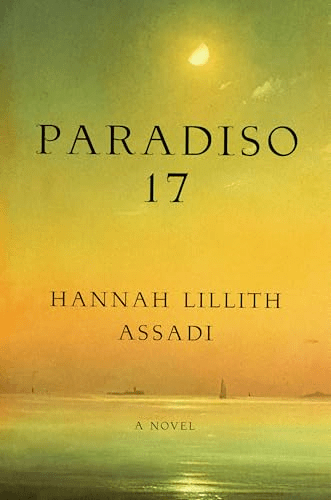
Buy it here:
Synopsis:
The intimate, sweeping tale of one man’s restless search for home the world over, as the pendulum of fate swings between loss and life, grief and euphoria, regret and hope
All his life, exile has been the shadow stitched to the sole of Sufien’s shoe.
Born in Palestine on the precipice of 1948’s Nakba, Sufien is forced to leave the only home he’s ever known, the one on the hill with a beautiful blue door. This is the precise moment when time stops making sense. He spends the rest of his life propelled forward, always on the way—although in search of what, he is never quite sure. In the dusty, oil-rich desert of Kuwait, he meets his first love and decides he must leave his family. In a small Italian university town, he spends his youth wrapped up in the sweet promise of the West and the forgetful assurance of wine. When life takes him to a gritty New York, he discovers his true vocation and falls for a Jewish woman born into a wholly different world. Finally, he finds himself recalled to the wild, vast open skies of the desert, in Arizona.
Sufien’s life spans friendships lost and maintained, a stint selling leathers at a tanner’s stall, the ineffable company of cats, and the freedom of the open road, the glowing pride of fatherhood, Sufi myths, prophetic dreams, and visions of the afterlife—and always, always, no matter how far he chases joy, the sweet, treacherous song of a balcony urging him to fly, to fall, to fall. The lyrical pages of Paradiso 17 weave in and out of time and space, beginning at the end and ending at the beginning. They are haunting, haunted with grief, struck through, as Dante once wrote, with “the arrow that the bow of exile / shoots first,” and yet they throb with light—not just the light that Sufien sees as he approaches his own end, but the brilliant light of a life lived.
Like all of our dead, Sufien still speaks, the book begins. Listen, this is his story.
Review:
Part of “Canto XVII” of Paradiso was written by Dante Alighieri during his exile from Florence. He is part of a group that Pope Boniface VIII did not like, so suddenly Dante sees himself as a man whose home, family, and everything that he has known is taken from him. Exile is uncomfortable, and a person is forced to spend time with people he would not spend time with. He writes in “Canto XVII”:
“You’ll leave behind everything dearest to you
And that will be the first arrow
That the bow of exile lets fly.
You’ll have to learn how the bread of others
Tastes like salt, and what a stony road it is
To go up and down other people’s stairs.
And what will most weigh down your shoulders
Will be the evil and asinine company
With which you’ll fall into this sinkhole.”
~Paradiso Canto XViI, lines 55-63 trans. by Mary Jo Bang
This is basis of Paradiso 17, the new novel by Hannah Lillith Assadi. The story starts with Sufien at a young age, fleeing war with his mother and siblings while his father fights. He never sees his childhood home again, the only image being of a house with a blue door. Sufien spends the rest of his life in exile, never going back to his childhood country, moving all over the world, trying to find a place where he can relax, make money, be a good husband and good father, and find a place that just does not always feel uncomfortable. He travels from Palestine, to Kuwait, to Italy, to New York, to Arizona. This movement is because he does not feel settled like these places are not home but they offer a new opportunity. Arizona and the desert is the closest he can get, where he at least has some reminders of what he is searching for and trying to remember. His life is not perfect. He is not a perfect husband, father, or friend, and there are moments when he acts out of desperation, with the underlying issue being that he never finds a place that feels like his home. The novel begins at the end, when he is dying, slipping away from this life into the afterlife, with the line between the two growing thinner and thinner, where he might be finally finding his peace.
The writing is beautiful and powerful. Hannah Lillith Assadi really pulls emotion out of the scenes, whether it be longing, isolation, sadness, or a sense of loss for a place. She uses language as a tool to make us feel out of place too, many phrases and words that we can understand throught context clues, but do not know unless we spend the time to look them up. She makes us feel like we are also someone in someone else’s home, a guest that does not know how long we should stay. The writing really pulls the reader in so that they can feel some of the same feelings as Sufien and have more empathy to his situation, even when Sufien is not always the most sympathetic character. The narrative also swirls between past, present, and future, and it can be compared to Paradiso by Dante, because this is how the entire Divine Comedy is written.
Assadi chooses Paradiso as an inspiration, and we must remember that this is not the section of The Divine Comedy where Dante goes to Purgatory and Hell but where Dante is seeing Heaven. And this is a remind of how Paradiso 17 needs to feels. No matter what, this is not just story about the Purgatory or Hell of being in exile, but it is also a reminder that at the end of the day, through all of the trials and discomforts, Paradise waits. For Sufien, this paradise has always been just beyond his vision, the slightest memories of the house on the hill, of the blue door on the house, of looking at the stars in the sky when he is a small child and running from the war with his mother and siblings. Even though he leaves all of this behind as he grows older and never gets to see it again from the same part of the world, he never forgets, and his feelings about this place are never lost. He just needs to find his way back, and the only option is through paradise. Paradiso 17 is a powerful and beautiful novel that will most likely not be read as much as it should.
I received this as an ARC from NetGalley in exchange for an honest review.


 ghostvillehero