Review: The Night House by Jo Nesbo

Buy it here:

Amazon, Bookshop

Synopsis:

From the internationally best-selling author, a twisted, multi-layered spin on the classic horror novel

In the wake of his parents’ tragic deaths in a house fire, fourteen-year-old Richard Elauved has been sent to live with his aunt and uncle in the remote, insular town of Ballantyne. Richard quickly earns a reputation as an outcast, and when a classmate named Tom goes missing, everyone suspects the new, angry boy is responsible for his disappearance. No one believes him when he says the telephone booth out by the edge of the woods sucked Tom into the receiver like something out of a horror movie. No one, that is, except Karen, a beguiling fellow outsider who encourages Richard to pursue clues the police refuse to investigate. He traces the number that Tom prank called from the phone booth to an abandoned house in the Black Mirror Wood. There he catches a glimpse of a terrifying face in the window. And then the voices begin to whisper in his ear . . .

You know who I am. She’s going to burn. The one you love is going to burn. There’s not a thing you can do about it.

When another classmate disappears, Richard must find a way to prove his innocence–and preserve his sanity–as he grapples with the dark magic that is possessing Ballantyne and pursuing his destruction.

Then again, Richard may not be the most reliable narrator of his own story . . .

Review:

Jo Nesbo has found international fame with his Harry Hole thriller series. (I have thought about trying them more than once but my twelve-year-old brain cannot get passed the name “Harry Hole”. Immature, I know.) The Night House is billed as a stand alone horror novel, and I was interested without reading anything about it. The cover of a bloody phone dangling in front of a creepy old gothic house. This was enough for me. 

The story starts with Richard Elauved hanging out with his friend Tom. They are just goofing around, being boys, when they find a telephone booth. Richard dares Tom to make a prank call. While Tom is on the phone, he literally gets sucked into the telephone. Tom’s disappearance and the unbelievable story that Richard tells about his demise, mixed with the fact that Richard is adopted and not from the town, makes it hard for anyone to believe Richard. The adventure of Richard trying to prove his innocence mixed with a large amount of strange and gruesome things happening to Richard’s friends, makes for a horror story that really is captivating.

Then this story folds in half.

Then this story folds in half again.

The Night House is very good. There are some elements that are a well worn when it comes to horror tropes, but I feel like Jo Nesbo uses them with an innocence and sincerity, like someone who does not read horror or watch 100 horror movies a year. The tone of this story, which grows weirder and weirder as it goes along, does not waver. Richard is a character that feels trustworthy, even when everyone around him shows him evidence that he is wrong. Jo Nesbo has written a character that starts as a bully and a jerk, but he is someone that you are cheering for. You want him to succeed in his situation because you cannot help but like him.  I do not know if Nesbo has more of these types of characters in his writing, but I am certain that it is now time to find out. I look forward to diving into the Harry Hole stories based on the strength of his writing in The Night House.

I received this as an ARC from NetGalley in exchange for an honest review.  
Posted in book review, horror book reviews, Uncategorized | Tagged , , , , , , , , | Leave a comment

Review: Holly by Stephen King

Buy it here:

Bookshop, Amazon

Synopsis:

Holly Gibney, one of Stephen King’s most compelling and ingeniously resourceful characters, returns in this thrilling novel to solve the gruesome truth behind multiple disappearances in a midwestern town.

“Sometimes the universe throws you a rope.” — BILL HODGES

Stephen King’s Holly marks the triumphant return of beloved King character Holly Gibney. Readers have witnessed Holly’s gradual transformation from a shy (but also brave and ethical) recluse in Mr. Mercedes to Bill Hodges’s partner in Finders Keepers to a full-fledged, smart, and occasionally tough private detective in The Outsider. In King’s new novel, Holly is on her own, and up against a pair of unimaginably depraved and brilliantly disguised adversaries.

When Penny Dahl calls the Finders Keepers detective agency hoping for help locating her missing daughter, Holly is reluctant to accept the case. Her partner, Pete, has Covid. Her (very complicated) mother has just died. And Holly is meant to be on leave. But something in Penny Dahl’s desperate voice makes it impossible for Holly to turn her down.

Mere blocks from where Bonnie Dahl disappeared live Professors Rodney and Emily Harris. They are the picture of bourgeois respectability: married octogenarians, devoted to each other, and semi-retired lifelong academics. But they are harboring an unholy secret in the basement of their well-kept, book-lined home, one that may be related to Bonnie’s disappearance. And it will prove nearly impossible to discover what they are up to: they are savvy, they are patient, and they are ruthless.

Holly must summon all her formidable talents to outthink and outmaneuver the shockingly twisted professors in this chilling new masterwork from Stephen King.

Review:

In the latest Stephen King novel, Holly, King returns to Holly Gibney and her Finders Keepers detective agency. She is called about a missing girl, Bonnie Dahl, and what she uncovers is an elderly couple, the Harrises, retired professors from the university and serial killers.

The story is good. I have been reading far more thrillers and mysteries than I used to so I can start to distinguish what I like versus what I do not like. I like the structure like Holly, where we know the Harrises from the very beginning, and we know that they are up to something sinister. King has been writing novels long enough to plot well, pace well, and leave his readers on the edge of their seats. With his starting the book with the killers, we have the information that Holly does not have and will have to figure out. While she gets closer and closer to learning what we know, the tension ramps up higher and higher until a conclusion that is satisfying. The plot is interesting and entertaining and I enjoyed reading a majority of the second half of this book. 

The first half is excruciating. We know that King has political opinions and he shares a great deal of this on Twitter. He has also spent his career writing politics into his stories. Since this novel is set in 2021, with Holly’s mother just dying of Covid, the topic of Covid, vaccinations, masks, and elbow-bumping instead of handshakes are prominent. Holly has been written as a germaphobe anyway, so it is no surprise that she takes precautions seriously. This becomes more and more intolerable as the books move along. It turns from being a cautious character into a statements that are no longer part of the plot. Moments throughout feel like King is just an old man taking the opportunity to yell at the clouds.

I know firsthand that Covid was ugly and brutal. I watched many many patients die in the hospital, but there is also a part of me that feels like the entire pandemic was much more nuanced than King portrays it to be. King’s preoccupation with precautions and vaccination status eventually turn into a good vs evil in this book. The good guys are vaccinated. The bad guys are anti-vaxxers. The good guys tell each other which vaccines they received before taking their masks off (which also does not make much sense because having the vaccine does not stop you from getting or spreading Covid). The bad guys refuse to do elbow bumps with Holly. These things become a focal point in who is good and who is evil really stereotypes all of the characters in the novel and the inclusion of this black and white, right and wrong narrative distracts so much from the story. 


Holly is not one of his best, but it is pretty decent. I like that unlike The Outsider and “If It Bleeds”, this story does not have a single supernatural element, just evil people doing evil things. Holly Gibney, despite all of her flaws, is someone that you are rooting for, and I feel like we are definitely going to see more Holly in the future.

Posted in book review, horror book reviews, Reviews | Tagged , , , , , , , , , , , | Leave a comment

Review: The Graveyard Shift by Maria Lewis

Buy it Here:

Bookshop, Amazon

Synopsis:

When a horror-loving radio show becomes the stage of a gruesome murder, its host Tinsel Monroe is put next on the killer’s list…

Tinsel Munroe’s dream of working in radio hasn’t turned out to be everything she hoped it would. Sure, she has her own show – the aptly titled The Graveyard Shift – where she celebrates the sounds of horror-cinema. It’s a pop cultural oasis for the niche audience she has cultivated, but the wage is barely enough to cover her rent and the midnight hours are putting a strain on her relationship with tattooist boyfriend, Zack. After three years at Melbourne’s coolest station, she’s seemingly no closer to a prime-time slot.

That is, until someone is murdered live on air. 

Mistaking it for a Halloween prank at first, a visit from police informs Tinsel that the hysterical call was, in fact, the real deal. She is freaked out by the horrible incident, but her true-crime obsessed sister Pandora is fascinated by it. 

While detectives assure them the killer will soon be caught, the bodies continue to drop with the killer striking at locations tied to Australian film history in increasingly gruesome ways. With a growing, macabre audience to her radio show, that potentially includes the killer, Tinsel begins receiving strange messages over the text lines. Her home and her workplace suddenly aren’t the sanctuaries she once thought they were. 

Tinsel and her sister are left no choice but to team up with Detective James as they race to find the connection between her and the culprit. The people she thought she could trust are now those she should fear the most. In order to survive, Tinsel is going to have to listen to more than just the airwaves…

Review:

Tinsel Munroe is an overnight radio DJ who specializes in all things spooky. This includes creepy music and horror movies (I actually listened to some of the songs she played on her show while reading, which made for a great soundtrack for Tinsel’s life) . When a person dies on the air while trying to win tickets to the premiere of the new Joe Meyer movie, Band Candy, Tinsel’s life turns into a dangerous game of finding the girl’s killer and trying not to be the next target herself.

There are some interesting elements to this mystery. I like Tinsel, the life that she lives above a pub with her tattoo boyfriend, surrounded by interesting music and movies (both premieres and hosting a Halloween movie marathon). Her sister, Pandora runs a true crime blog, and both of them seem to be interesting people to be around. The setting of Melbourne and many scenes placed at Tinsel’s radio station job and movie theaters adds to the appeal of this novel, but the execution of the plot just did not capture me like it should have. The plot feels fatty. Maria Lewis spends a great deal of time on things that are insignificant. There is almost as much time spent on why Tinsel should not wear open toed shoes in a mechanic’s garage as the motive for all of the killings in the book. A disproportionate amount of time is spent on the fact that Tinsel and Pandora are adopted because it has absolutely zero to do with the plot in the end. For a mystery and thriller, this novel is not sharp at all, but just soft and mostly meandering toward the ending.

The Graveyard Shift has some interesting ideas, but it does not seem like the ideas are enough to carry the plot for four hundred pages. The mystery elements are fairly weak. We are given a red herring suspect that we do not believe for one second is the culprit, and we are also given a cliche male cop who is there to save this damsel in distress, while falling in love with her. This has the pieces to be a really great horror-tinged thriller, but instead it is soft and mostly uninteresting, with an ending that feels rushed and not as well plotted as it could have been. 

I received this as an ARC from NetGalley in exchange for an honest review.

Posted in book review, Uncategorized | Tagged , , , , , , , , , | Leave a comment

Review: Starter Villain by John Scalzi

Buy it here:

Bookshop, Amazon

Synopsis:

Following the bestselling The Kaiju Preservation Society, John Scalzi returns with Starter Villain, another unique sci-fi caper set in the strangest of all worlds, present-day Earth.

Inheriting your mysterious uncle’s supervillain business is more complicated than you might imagine.

Sure, there are the things you’d expect. The undersea volcano lairs. The minions. The plots to take over the world. The international networks of rivals who want you dead.

Much harder to get used to…are the the sentient, language-using, computer-savvy cats.

And the fact that in the overall organization, they’re management…

Review:

The cover and title of this book alone should make you want to read it. There is a stereotype that if any pet would be a villain, it would be a cat, and the team that designed the cover for Starter Villain has used this to their advantage. Hopefully many people will read this book because of the cover alone. When I saw it, I knew it was a must read before I even knew what the novel was about.

I read and reviewed Scalzi’s last novel The Kaiju Preservation Society and enjoyed it immensely. Starter Villain feels like it follows the same idea of The Kaiju Preservation Society. Both have main characters that are down on their luck, both get picked out of their circumstances to join an underground society that has immense challenges but immense rewards, and both of these “fish out of water” main characters have the uncanny ability to navigate these strange new roles to become unlikely successes. In Starter Villain, Charlie has a rich uncle that he has only met once who leaves his fortune to him. His uncle dies, and he quickly learns that his uncle’s fortune is not on in parking garages but in being a world villain. He has a secret lair on a volcanic island. He has dolphins that curse. He has genetically modified cats that are used as spies. Charlie quickly learns that there are other supervillains throughout the world that did not like his uncle, so by turn, they do not like him. He has to navigate this new world, find out how to do business with his new associates, and not get killed in the process.

This novel, like The Kaiju Preservation Society, spends a great deal of time with world building. This novel takes the first two-thirds to build his dead uncle’s world, and Charlie as a character. Fortunately this does not feels like an information dump as much as a slow build. It takes time, and the novel is almost done before we get a basic understanding of what Charlie’s uncle has pushed him into. By the time that the Charlie has to make some real decisions to save his life, the novel is over. I would not cut back on the first two-thirds as much as make the book a little longer, find some other things about this world to explore (because there are many things that are mentioned in passing that should be expanded). As it is, as soon as we get a good sense of how entertaining and fun this world is, the story is over.

Entertaining and fun is how I would describe both The Kaiju Preservation Society and Starter Villain. There are incredibly funny scenes (like the Zoom call and the dolphin union negotiations), and Scalzi gives the impression that he has a good time writing these novels. Starter Villain is very enjoyable, humorous, and has a great set of characters. I just wish there was a bit more plot after the world is built. 

I received an ARC through NetGalley in exchange for an honest review.
Posted in Uncategorized | 1 Comment

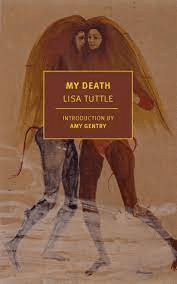
Review: The Complete Stories of Leonora Carrington

Buy it here:

publisher, Bookshop, Amazon

Synopsis:

Surrealist writer and painter Leonora Carrington (1917-2011) was a master of the macabre, of gorgeous tableaus, biting satire, roguish comedy, and brilliant, effortless flights of the imagination. Nowhere are these qualities more ingeniously brought together than in the works of short fiction she wrote throughout her life.

Published to coincide with the centennial of her birth, The Complete Stories of Leonora Carrington collects for the first time all of her stories, including several never before seen in print. With a startling range of styles, subjects, and even languages (several of the stories are translated from French or Spanish), The Complete Stories captures the genius and irrepressible spirit of an amazing artist’s life.

Review:

Leonora Carrington lived an interesting life, not in a sense that she lived 94 years, was a founder of the women’s liberation movement in Mexico and the lover of painter Max Ernst. Her life was interesting because of the way that she saw things, the way that she painted and the way that she wrote fiction. Her sensibility and style had to seep into every part of her life, and she was probably one of the most interesting people in the neighborhood. 

In a surrealistic style that was dominated by male writers, Carrington wrote some of the greatest weird short stories and was mostly ignored. Dorothy, a Publishing Project, has compiled all of her short stories, including three that are previously unpublished, and the collection is a little over 200 pages. The early stories seem to be more sketches and ideas than the later stories. Carrington writes about all sorts of things in nature. She makes them do things, particularly stories involving talking horses and cats, and stories like “Uncle Sam Carrington”, she writes of vegetables fighting one another in the garden. The early stories are filled with whimsy and charm whereas the later stories, like “The Seventh Horse” and “My Mother is a Cow” start to really fall into the deep end of the weird. I finished a few of these final stories wondering what it was that I just read. Carrington writes these stories in a way that make them easy to read, but if you are not paying attention, you can get lost quickly. There were a few times I had to reread paragraphs because my mind wandered away, and she places so much within each sentence that you can make it half way down a page and realize you have wandered completely off of the path. 

Leonora Carrington died in May 2011. When Jeff Vandermeer wrote about her on his website, he said this: 

“Carrington is an under-appreciated writer. In genre circles, it’s in part because she wrote most of her fiction decades ago but also in part because she’s not identifiably a genre writer.” 

I agree with this statement because even though these stories have talking animals and weird plots, I do not see this particularly fitting into any sort of genre. These are good stories that came from the mind of someone who saw the world in a much more fascinating way than I do. 

Posted in book review, literary book review | Tagged , , , , , | Leave a comment

Review: Not Forever, But For Now by Chuck Palahniuk

Buy it here:

Amazon, Bookshop

Synopsis:

From the bestselling author of Fight Club comes a hilarious horror satire about a family of professional killers responsible for the most atrocious events in history and the young brothers that are destined to take over.

Meet Otto and Cecil. Two brothers growing up privileged in the Welsh countryside. They enjoy watching nature shows, playing with their pet pony, impersonating their Grandfather…and killing the help. Murder is the family business after all. Downton Abbey, this is not.

However, it’s not so easy to continue the family legacy with the constant stream of threats and distractions seemingly leaping from the hedgerow. First there is the matter of the veritable cavalcade of escaped convicts that keep showing up at their door. Not to mention the debaucherous new tutor who has a penchant for speaking in Greek and dismembering sex dolls. Then there’s Mummy’s burgeoning opioid addiction. And who knows where Daddy is. He just vanished one day after he and Mummy took a walk in the so called “Ghost Forest.”

With Grandfather putting pressure on Otto to step up, it becomes clear that this will all end in only two a nuclear apocalypse or just another day among the creeping thistle and tree peonies. And in a novel written by Chuck Palahniuk, either are equally possible.

Review:

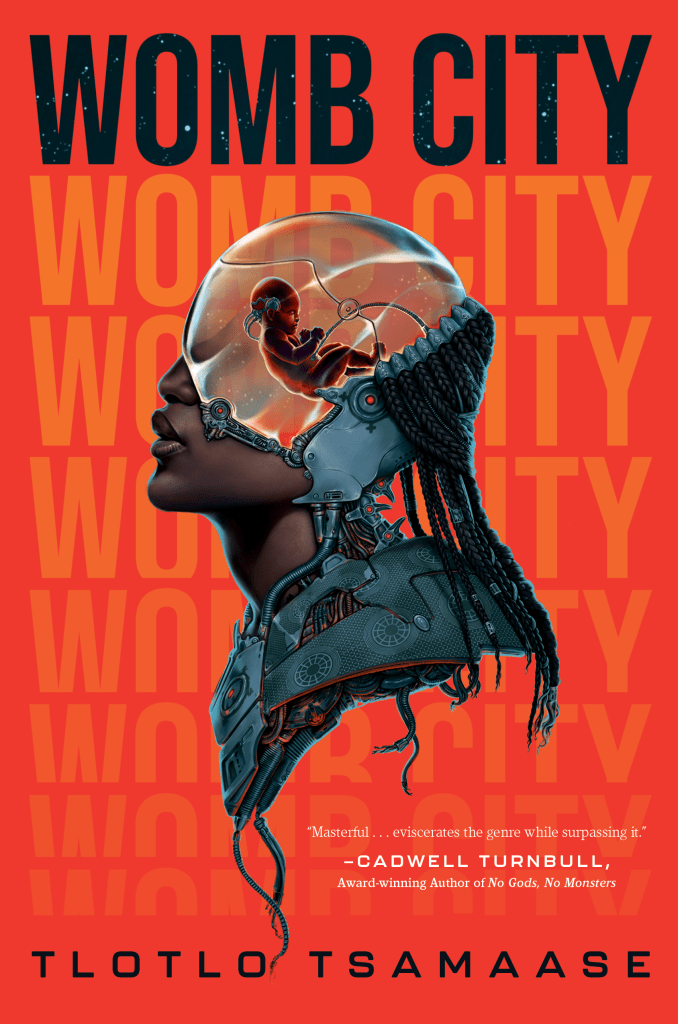
Not Forever, But For Now, the latest book by Chuck Palaniuk starts with brothers, Otto and Cecil, watching a nature show about kangaroos. The small joeys have to climb up the kangaroo mother and into the pouch to find shelter and milk. This becomes the metaphor of the entire novel. Otto and Cecil are the baby kangaroos, born into a family of assassins, trying to get up their mother’s leg, to find shelter and warmth from her. They try to accomplish this by doing disgusting and evil things to the help (the maids, governesses, chauffeurs, and tutors), to strangers, and to each other. Otto, the oldest, wants nothing but to be noticed, doing whatever he can to get this accomplished. This includes escaping the estate to dress up in drag and dance for the drunks at the local tavern, be pen pals with pedophiles, serial killers, and the criminally insane (letters that explicitly tell these killers that he wants to have sex with them while they murdered him, or after they murdered him, whichever they prefer), corrupting the Jesuit tutor, and of course having continuous sex with his brother. These calls for attention get more and more drastic and depraved, and eventually Otto and Cecil do not have many other things they can do except blow up the world. 

This story is not for everyone. Chuck Palaniuk has never been for everyone, and he is also working hard on getting rid of the people who just like him because of his earlier novels. Fight Club was released when I was nineteen years old, and it was a great novel for a nineteen-year-old. This was 27 years ago. I am not the same reader as I was then, and Palaniuk is not the same writer. Sure he uses some of the same techniques he has always used (depravity, repeated terms and phrases, deep dives into a certain subject that his characters use as coping mechanisms, etc), but his stories, particularly this novel and his last, Invention of Sound, feel like he is trying to write stories that are more for the grown fans of Fight Club, those who are now older and have different concerns. Whereas Fight Club is about trying to change the world, Not Forever, But For Now is about family, about trying to get the attention of absentee parents, and about leaning on each other when the whole world is against you.

I have read many Chuck Palaniuk books, and for the longest time, I thought I had outgrown his writing. I still do not think he is flawless, but I feel a glimmer of hope in his future books. Fortunately his last two novels have brought me back into the fold and make me more excited than I have in years about what Palaniuk might do next.

*Spolier-ish theory*

This also feels like a final send off to Fight Club and the early writings of Chuck Palaniuk. We have Otto and Cecil. They were five and three when their father disappears and their mother tells them that they will no longer age in their estate, no longer celebrate birthdays or get older. Thirty years have passed since then. In those thirty years, they get to the point where they still do the horrible stuff, but they also grow up even though they’re told they are not supposed to. They steal cars. They dump them into a lake. They corrupt the staff around them. They invent an app that is clever and sad at the same time. The crimes get more and more outlandish but they also get to where they are bored with things, where they will not do certain things (like killing animals), and this “maturity” happens whether they want it to or not, until they have to plot to destroy the world. They start doing some of the same things Tyler Durden was doing, and this final meltdown echoes the same meltdown in Fight Club. This could be a send off to Fight Club and the book that many people have tried to use to keep him from aging as a writer for, well, thirty years. 

I received this as an ARC from NetGalley in exchange for an honest review.
Posted in book review, horror book reviews, literary book review, Reviews | Tagged , , , , , | Leave a comment

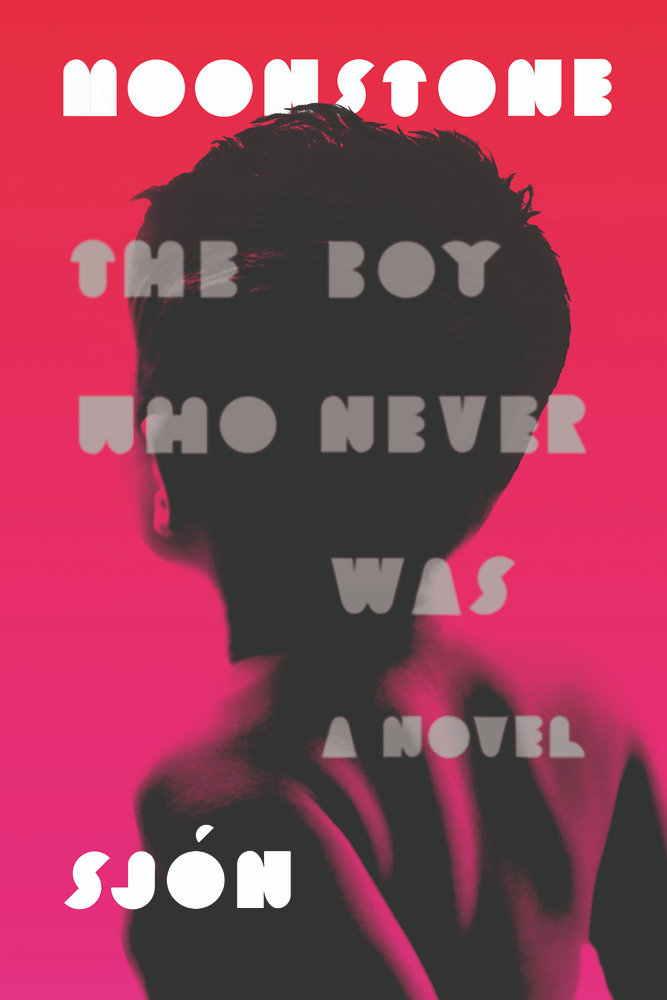
Review: Cold, Black & Infinite: Stories of the Horrific & Strange by Todd Keisling

Buy it here:

Cemetery Dance Publishing, Amazon, Bookshop

Synopsis:

Down here in the dark lies a vast and twisted landscape where the wicked, wistful, and profane coalesce. This is where the lonely and lost face their demons, where anxious paranoias are made manifest, and where mundane evil wears a human face. For readers, the sixteen stories found within Cold, Black, & Infinite serve as a harrowing glimpse into the nightmarish imagination of
Todd Keisling, Bram Stoker Award-nominated author of Devil’s Creek and Scanlines.

Visit a town where the residents are slowly being replaced by mannequins in “We’ve All Gone to the Magic Show.” Go for a drive and discover your favorite radio host is still transmitting from beyond the grave in “Midnight in the Southland.” Laugh at Karen’s misfortune when she learns necromancy isn’t the best way to raise a child in “Afterbirth.” And uncover the true motivation behind one man’s historical betrayal in “Gethsemane.”

Featuring three previously unpublished stories and an introduction by Bram Stoker Award-winner John Langan, Cold, Black, & Infinite establishes Keisling as a leading voice in contemporary indie horror.

Cast your doubts aside and take the plunge. Touch the abyss. It’s waiting.

Review:

Todd Keisling’s last novel, Devil’s Creek was an unsurprising hit. The plot is good, the characters are interesting, and the writing is superb. I did not connect with the novel like some other readers, but it was more my taste than the book itself. This is why I am thrilled to give Keisling another deserved shot. His short story collection Cold, Black, & Infinite: Stories of the Horrific & Strange is a much more appealing representation of his work. The sixteen stories are broken into three different, distinct sections, each with a different markedly different themes. 

The first section “Cold” has five stories, all but one of them taking place on a holiday (if you include Black Friday as a holiday). Each of these stories also have an element of the paranormal and otherworldly. My favorite of these stories, and possibly my favorite story in the collection is “The Happytown Yuletide Massacre”, a story about Angela returning to her hometown on Christmas Eve, possibly to be swept off of her feet by a hometown suitor. This is perfectly setup to echo Hallmark Christmas movies, but of course this one goes very wrong. The ending is very much turns the entire story into a cosmic horror. 

The second section, “Black”, contains five stories that are motivated by revenge. My favorite of this group is “Tommy The Destructo-Bot Vs. The Bullies from Future Street.” The story stars Tommy Slone, a handicap kid that is being picked on by the neighborhood bullies. When he meets Old Lady Future, part witch, part mad scientist, she promises him revenge if she can turn him into his favorite comic book superhero. 

The final section, “Infinite” contains six stories. All of them have a darkness or infinite void that the characters are either facing or jumping into. My favorite of these, “The Smile Factory,” is about the promotion of Marty Godot from cubicle worker to management. In this apocalyptic world, everyone is falling apart, and the higher you climb in the corporate structure, the less human you become. It reminds me of the Zach Galifianakis movie, Visioneers (2008), a little frightening with very dark humor.

Of all three sections, I love every single story in the first two. The third section was a problem for me because I but did not really connect with the stories. The themes of darkness and facing the void are not as interest to me as the overarching themes in the other two sections. Of course this section could be another reader’s favorite because it’s a theme they love. The last section falls into the same problem that I had with Devil’s Creek: the stories are good but they are not my favorite type of stories.

I received an ARC from NetGalley in exchange for an honest review.
Posted in book review, fiction, horror book reviews, Reviews | Tagged , , , , , , , | Leave a comment

Review: Their Four Hearts by Vladimir Sorokin

Buy it here:

Dalkey Archive, Amazon, Bookshop

Synopsis:

In many respects, Their Four Hearts is a book of endings and final things. Vladimir Sorokin wrote it in the year the Soviet Union collapsed and then didn’t write fiction for ten years after completing it–his next book being the infamous Blue Lard, which he wrote in 1998. Without exaggerating too much, one might call it the last book of the Russian twentieth century and Blue Lard the first book of the Russian twenty-first century. It is a novel about the failure of the Soviet Union, about its metaphysical designs, and about the violence it produced, but presented as God might see it or Bataille might write it.

Their Four Hearts follows the violent and nonsensical missions carried out by a group of four characters who represent Socialist Realist archetypes: Seryozha, a naive and optimistic young boy; Olga, a dedicated female athlete; Shtaube, a wise old man; and Rebrov, a factory worker and a Stakhanovite embodying Soviet manhood. However, the degradation inflicted upon them is hardly a Socialist Realist trope. Are the acts of violence they carry out a more realistic vision of what the Soviet Union forced its “heroes” to live out? A corporealization and desacralization of self-sacrificing acts of Soviet heroism? How the Soviet Union truly looked if you were to strip away the ideological infrastructure? As we see in the long monologues Shtaube performs for his companions–some of which are scatological nonsense and some of which are accurate reproductions of Soviet language–Sorokin is interested in burrowing down to the libidinal impulses that fuel a totalitarian system and forcing the reader to take part in them in a way that isn’t entirely devoid of aesthetic pleasure.

As presented alongside Greg Klassen’s brilliant charcoal illustrations, which have been compared to the work of Bruno Schulz by Alexander Genis and the work of Ralph Steadman as filtered through Francis Bacon by several gallerists, this angular work of fiction becomes a scatological storybook-world that the reader is dared to immerse themselves in.

Review:

When I reviewed Vladimir Sorokin’s The Blizzard in 2016, I started the review with the sentence: “Vladimir Sorokin is nuts.” I do not remember everything about The Blizzard, but I do know that this level of nuttiness in The Blizzard does not compare to Their Four Hearts. Nuts is not even where I would begin to describe what Sorokin does in this novel. 

The story centers around four characters. They could be spies or terrorists or working for the government or working against the government. I think that at certain points, all of these things are true. These four characters have missions they carry out, missions that make no sense, looking for information that makes even less sense. All that we know is that these missions are violent, disgusting, and brutal. Deaths are horrific. The treatment of women is misogynistic and grotesque. There are moments that rival the best extreme horror novels, moments that make you cringe while you read and contemplate your life. Some of the reviews have the readers throwing away the book instead of finishing it. Those who quit early should not be alarmed that Their Four Hearts does to get any better and does not get any easier to read. 

So why do I like this novel so much? This is a question that cannot really be explained. The entire novel is more about the four characters than the nonsense that surrounds them. These are archetypes of characters in 1990s Russian society, which was rapidly changing at the time. Even though each of the characters are horrible people in their own ways, there seems to be an earnestness in the way they feel about the importance of the missions that they are carrying out. Missions that seemingly have no meaning or purpose. In the end, I like the feeling of the book and the brutalness of the action. The four main characters have to contribute to this ugliness of fit in because the final mission might be one of sheer beauty.


Vladimir Sorokin’s next novel, Blue Lard, led to public demonstrations and calls for his execution as a pornographer, but I am certain that the reason why Blue Lard caused this reaction is because the people just did not read Their Four Hearts. I enjoyed it, but it is also something I would not want my mother to catch me reading.

Posted in book review, fiction, literary book review, Reviews | Tagged , , , , , , , , | Leave a comment

Review: Mister Magic by Kiersten White

Buy it here:

Amazon, Bookshop

Synopsis:

Who is Mister Magic? Former child stars reunite to uncover the tragedy that ended their show—and discover the secret of its enigmatic host—in this dark supernatural thriller from the #1 New York Times bestselling author of Hide.

Thirty years after a tragic accident shut down production of the classic children’s program Mister Magic, the five surviving cast members have done their best to move on. But just as generations of cultishly devoted fans still cling to the lessons they learned from the show, the cast, known as the Circle of Friends, have spent their lives searching for the happiness they felt while they were on it. The friendship. The feeling of belonging. And the protection of Mister Magic.

But with no surviving video of the show, no evidence of who directed or produced it, and no records of who—or what—the beloved host actually was, memories are all the former Circle of Friends has.

Then a twist of fate brings the castmates back together at the remote desert filming compound that feels like it’s been waiting for them all this time. Even though they haven’t seen each other for years, they understand one another better than anyone has since.

After all, they’re the only ones who hold the secret of that circle, the mystery of the magic man in his infinitely black cape, and, maybe, the answers to what really happened on that deadly last day. But as the Circle of Friends reclaim parts of their past, they begin to wonder: Are they here by choice, or have they been lured into a trap?

Because magic never forgets the taste of your friendship. . . .

Review:

Kiersten White’s last novel, Hide, is a great story with poor execution. White’s follow-up, Mister Magic, is another novel that has a great premise but even poorer execution. The story starts with a tragedy that stopped a popular children’s show, Mister Magic. Thirty years later, the final kids on the show reunite as adults to be interviewed for a podcast. There is a great deal of mystery behind the end of the show, and Val, who was kidnapped by her father, holds the key. 

Like Hide, Mister Magic is written with paper thin characters which mostly rely on cliches. Most of the focus is on Val, the one who was leader on the show, and the one who has forgotten absolutely everything about her life on Mister Magic. It is hard to believe that Val has so much trauma amnesia surrounding an event that she did not see. By the time the traumatic event happened that ended the show, she was already gone. So why does she have so many memories that are blocked out? It does not make sense, and it is frustrating for Val to be the main narrator when most of the first half of the novel is her saying she does not remember any of it. Val is one of the most bland and uninteresting main characters I have read in a long time. She is so boring that I do not care what happens to her or anyone else in this book. The truth is that all of these characters are so vanilla, so boring, that the only thing that could possibly save them is a great story. 

But the story turns out to be very safe. There is no threat of danger, no real fear except for them confronting their past. I did not get a sense at any point that these people were in any sort of severe peril. Even when they venture into the small town of Bliss, they are not welcomed, but this is done in a pleasant way. I do not feel like anyone in charge of the bad things that are happening is willing to take any steps to put these character in physical harm. 

I get the point of Mister Magic. I get that this is about changing kids that the cultish society finds undesirable by using conversion therapy. I get that Mister Magic is about getting kids to behave the way that the adults want them to behave. I just do not like the story or the execution or the boring characters that are brought back to face this childhood trauma. Kiersten White has pulled me in twice with great story ideas and frustrated me twice with how horrible the book turns out to be. I cannot be fooled again.

I received this as an ARC from NetGalley in exchange for an honest review.

Posted in book review, Reviews | Tagged , , , , , , | Leave a comment

Review: The Child and The River by Henri Bosco

Buy it here:

Amazon, Bookshop

Synopsis:

A new translation of an evocative, Huckleberry Finn –esque French bestseller about a young farmboy, the river where he is forbidden to play, and the adventures that ensue when he disobeys his family’s wishes.

The Child and the River tells a simple but haunting tale. Pascalet, a boy growing up on a farm in the south of France, is permitted by his parents to play wherever he likes—only never by the river. Prohibition turns into Pascalet dreams of nothing so much as heading down to the river, and one day, with his parents away, he does. Wandering along the bank, intoxicated with newfound freedom, he falls asleep in a rowboat and wakes to find himself caught in rapids and run aground on an island where a band of Gypsies has pitched camp together with their trained bear. Hiding in the underbrush, Pascalet observes that the group includes a boy his age, who, after receiving a whipping, has been left tied to a post. This is Gatzo, and as soon as night falls, Pascalet sets him loose. The boys escape in a boat and spend an idyllic week on the river. But then the mysterious “puppeteer of souls” arrives, bringing their adventure to an end, and Pascalet must go back home to face the music. Has he seen the last of his new friend?

Long hailed as a sort of French Huckleberry Finn , The Child and the River is, as Henri Bosco himself once wrote in a letter to a friend, “a novel very good, I think, for children, adolescents, and poets.” A beguiling adventure story, it is also beautifully written, full of keenly observed details of the river’s wilds, well captured by Joyce Zonana’s new translation.

Review:

Henri Bosco’s very thin novella, The Child and The River, is the story of Pascalet, a boy growing up isolated on a farm where he is allowed to explore everything as long as he stays away from the river. This only satisfies him for a short period of time before his curiosity gets the better of him. His parents are out of town, and he is left under the care of his father’s aunt, Tante Martine. She finds him only to yell at him before returning to the attic where she spends most of the day. Pascalet does not have anyone really paying attention to him, so after he has explored all that he can around the farm, he decides to check out the river. His excitement to see this forbidden place turns into an adventure when he falls asleep in an old boat and wakes up drifting on the river. The story has been described as a “French Huckleberry Finn”, but while reading it, I reminded me more of the scene in Night of the Hunter where the two kids take a boat down the river to escape Reverend Harry Powell (Robert Mitchum.) Of course they are running from danger of Reverend Powell whereas Pascalet is running from boredom but both have a similar feeling that when they finally get caught, they are in huge trouble. In both stories, the children do not know what is going to happen next, and there is nothing but adventure in front of them and trouble behind them.

The Child and The River is a short novella, only about 80 pages, and it feels like a character study more than a fully formed story. I like Pascalet as a grown man telling the story of when he was a child and floated down the river behind his family’s farm. We could feel the sense of wonder at all of the new things he was seeing, and the acceptance that there was going to be trouble when he returned back home, if he ever got there. I also feel the loneliness in the child, an isolated kid with parents that are gone and an aunt that is too busy with her own life to spend time with him. When he finds another boy, Gatzo, they become friends, simply because he is another boy around his age and someone to share his adventures with. The whole of the story is short and simple but very satisfying. There is the perfect balance between adventure and danger, exploration of nature, and lessons about growing up. Pascalet as an old man telling the story of himself as a child on the river is really telling the story of how he became the person that he is today.

Posted in book review, fiction, literary book review | Tagged , , , , , , , | Leave a comment