Review: youthjuice by E.K. Sathue

Buy it here:

Amazon, Bookshop

Synopsis:

A 29-year-old copywriter realizes that beauty is possible—at a terrible cost—in this surreal, satirical send-up of NYC It-girl culture.

From Sophia Bannion’s first day on the Storytelling team at HEBE (hee-bee), a luxury skincare/wellness company based in New York’s trendy SoHo neighborhood and named after the Greek goddess of youth, it’s clear something is deeply amiss. But Sophia, pushing thirty, has plenty of skeletons in her closet next to the designer knockoffs and doesn’t care. Though she leads an outwardly charmed life, she aches for a deeper meaning to her flat existence—and a cure for her brutal nail-biting habit. She finds it all and more at HEBE, and with Tree Whitestone, HEBE’s charismatic founder and CEO.

Soon, Sophia is addicted to her HEBE lifestyle—especially youthjuice, the fatty, soothing moisturizer Tree has asked Sophia to test. But when cracks in HEBE’s infrastructure start to worsen—and Sophia learns the gruesome secret ingredient at the heart of youthjuice—she has to decide how far she’s willing to go to stay beautiful forever.

Glittering with ominous flashes of Sophia’s coming-of-rage story, former beauty editor E.K. Sathue’s horror debut is as incisive as it is stomach-churning in its portrayal of all-consuming female friendship and the beauty industry’s short attention span. youthjuice does to skincare influencers what Bret Easton Ellis did to yuppies. You’ll never moisturize the same way again.

Review:

Nothing is as it seems in E.K. Sathue’s novel, youthjuice. Sophia lands a job at a high end makeup company, HEBE as one of their “storytellers”. They are testing a new anti-aging cream they call “youthjuice” on the inner circle of the company, and the cream has dramatic effects. The origins of the cream and the lifestyle captures Sophia becomes a catalyst for her alienating her friends and boyfriend while digging deeper and deeper into the work of HEBE. 

The overall concepts of the novel are interesting. I do like stories about people put into situations and environments that they are ill equipped to handle so they either change the culture or adapt. Sophia is not ready for HEBE when she first arrived and does not know what they are doing to reinvent makeup. She just looks up to Tree Whitestone, the CEO, and will do what it takes to find her footing while trying to balance her old life with her new. These ideas are there, but they are not solid. The storytelling is soft and does not do the job in the way that it wants to. The characters are underdeveloped, and I don’t feel like this will be a novel that I remember a few days from now. Sophia’s journey through destroying every relationship she has is fairly mundane, the only one that really sticks out is the falling out between her and her roommate Dom, whom we only know as someone she is close to and shares clothes with. The one relationship that Sathue spends a great deal of the novel exploring is flashbacks from when Sophia was in high school and had a friend named Mona. The finale of that friendship is so generic and boring that any reader will guess the end within the first few pages. Sophia is supposed to be written as someone who is cold and disinterested in other people, but the truth is she comes off as self-centered, bitchy, and a person nobody would want to be around in the first place. For her to get deep into the inner circle of HEBE is unexplained and unexplainable. Maybe it is because she is just as much of a fraud as everyone else in the novel.

There is a great amount of potential in youthjuice. I like the ideas of the story, but I do not like the execution. The novel feels like it could use some more focus and editing. At 288 pages, it seems like it is still at least fifty pages too long. 

I received this as an ARC from Netgalley in exchange for an honest review.

Posted in book review, fiction, horror book reviews, literary book review | Tagged , , , , , , , , , , | Leave a comment

Review: Dog Men by Gavin Torvik

Buy it here:

Amazon, Bookshop

Synopsis:

In the Canadian wilderness, Chris seeks solace in nature, surviving off the land as he wanders across rugged terrain, from campsite to campsite. But his tranquil existence is shattered when he’s ensnared by a group of ruthless strangers, thrust into a harrowing game where survival demands a deadly kill or be killed.

In a twisted world where the distinction between man and beast blur, Chris wrestles not only to stay alive but to keep ahold of his sanity in the process. On each pulse-pounding page, the stakes escalate, hurtling toward a crescendo of unbridled savagery  that you’ll never see coming. 

Review:

Chris is a guy living out of his car, living off of peanut butter and hot dogs, and enjoying the freedom of no responsibilities in the Canadian wilderness. He is enjoying his life, taking in the scenery, when a large black extended cab truck with three men pulls up, blaring music and disrupting his peace. This is a peace that Chris will never get back. As soon as he meets these men, his life is turned into a game of survival where he is treated more like an animal than a man and is competing for his life against other men who are doing the same thing. Gavin Torvik’s book is dark, brutal, and bleak, and in the beginning there is a note that says it is based on a true story. This fact reminds me of the way that The Girl Next Door by Jack Ketchum is based on a true story. Both stories are is proof that the biggest monsters are humans.

There are some aspects to this novella that make it work. One is the fear that is generated when we meet the villains in the middle of a pristine landscape. They are loud and disruptive, driving a loud truck and blaring EDM music out of the speakers. The halting to the flow of nature makes it obvious from the start that these are men are out to run someone’s life. The masculinity of the truck with the artificial tones of the music completely take over the serenity of the scene immediately, and we can sense the danger that Chris is in as soon as the truck pulls up next to him. The “masculinity” of the three villains is attempted to be proven over and over by the way that they treat Chris and one another. They are brutal, antagonistic, and use homophobic slurs to “prove” how strong and “manly” they are. The fact that none of these characters ever get a real name, that they stay anonymous, keeps a distance between them and any sort of humanity, This wedge between human and animal grows wider and wider as the story moves on.

I like the setup of this novella, and even though some of it felt a little repetitive, particularly how many fights scenes there are in such a short book, it is compelling and disturbing. I would have liked to have more time with Chris in isolation, trying to connect with someone or something to help him a little more, not only to escape but to deal with the treatment and isolation that he is receiving. As it is, we just get him going to fights, recovering, and trying to escape. One thing is that a human will find a way to adapt to any situation, regardless of how horrific, and I do not see Chris doing this at all. I do like the ideas forged in Dog Men, but turning down some of the violence for more about Chris’s mental survival, would turned this book into a richer experience. As it is, I got the feeling while reading that I am just a spectator in cruelty and physical survival, another faceless man passively watching fights.

I received this ARC from Netgalley in exchange for an honest review. 
Posted in book review, horror book reviews, Reviews | Tagged , , , , , , , , | Leave a comment

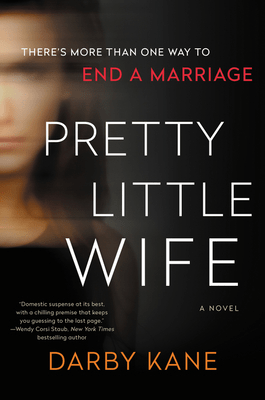
Review: Pretty Little Wife by Darby Kane

Buy it here:

Amazon, Bookshop

Synopsis:

Debut author Darby Kane thrills with this twisty domestic suspense novel that asks one central question: shouldn’t a dead husband stay dead?

Lila Ridgefield lives in an idyllic college town, but not everything is what it seems. Lila isn’t what she seems. A student vanished months ago. Now, Lila’s husband, Aaron, is also missing. At first these cases are treated as horrible coincidences until it’s discovered the student is really the third of three unexplained disappearances over the last few years. The police are desperate to find the connection, if there even is one. Little do they know they might be stumbling over only part of the truth….

With the small town in an uproar, everyone is worried about the whereabouts of their beloved high school teacher. Everyone except Lila, his wife. She’s definitely confused about her missing husband but only because she was the last person to see his body, and now it’s gone.

Review:

There are some books that I cannot explain what motivates me to read them. Pretty Little Wife, the debut novel by Darby Kane, is one of them. I know I ordered it as part of the Book of the Month selections in November 2020, and looking back at the selections that month, this was probably the best choice (most likely to be read even though it took almost four years). Darby Kane has been publishing a new book every year since 2020, and after reading Pretty Little Wife, it is no wonder that she has a good readership.

Pretty Little Wife starts with Lila Ridgefield finding her husband’s secret phone filled with explicit videos of him having sex with his high school students. Lila is devastated that her perfectly cold marriage is being ruined by her husband’s predator desires so she decides to kill him. She executes a plan, but instead of authorities finding his dead body in his car on the school grounds, they find nothing, no car, no body, no husband. While Aaron’s disappearance starts and investigation, Lila is also trying to find out what happened to him and where he is hiding out. There is a great deal of tension in several different relationships, but the one battle that drives the novel is between Lila and Ginny, the lead investigator into Aaron’s disappearance. The women are a lot alike, usually the smartest and most cunning person in the room, and pitting them against each other is the most compelling part of the novel because you honestly never know who is going to become the victor until the very end. 


I liked the first two acts of Pretty Little Wife, the psychological battle between Ginny and Lila added to the mystery of what actually happened to Aaron are what push this novel forward at a breakneck speed. Before the third act, many of the secrets are revealed and the final push of the novel is tying up the new information and action. It does not feel as well plotted as the first 75% of the novel and by the end, I was ready for it to be over. This is not to say that I did not enjoy the experience. I just did not have the same connection to the book by the end as I did throughout. I do think this novel is worth reading, and I will most likely read another Darby Kane novel at some point, and I respect anyone who can write a novel every year with this many twists and turns, but I am not going to be rushing out to read her other books. Maybe I will take another chance someday if one becomes a Book of the Month selection. 

Posted in book review, fiction, Reviews | Tagged , , , , , , , , , , | Leave a comment

Review: We Were the Universe by Kimberly King Parsons

Buy it here:

Amazon, Bookshop

Synopsis:

A young mother, in denial after the death of her sister, navigates the dizzying landscapes of desire, guilt, and grief in this darkly comic, highly anticipated debut novel from Kimberly King Parsons, author of the story collection, Black Light (longlisted for the National Book Award).

The trip was supposed to be fun. When Kit’s best friend gets dumped by his boyfriend, he begs her to ditch her family responsibilities for an idyllic weekend in the Montana mountains. They’ll soak in hot springs, then sneak a vape into a dive bar and drink too much, like old times. Instead, their getaway only reminds Kit of everything she’s lost lately: her wildness, her independence, and—most heartbreaking of all—her sister, Julie, who died a few years ago.

When she returns to the Dallas suburbs, Kit tries to settle into her routine—long afternoons spent caring for her irrepressible daughter, going on therapist-advised dates with her concerned husband, and reluctantly taking her mother’s phone calls. But in the secret recesses of Kit’s mind, she’s reminiscing about the band she used to be in—and how they’d go out to the desert after shows and drop acid. She’s imagining an impossible threesome with her kid’s pretty gymnastics teacher and the cool playground mom. Keyed into everything that might distract from her surfacing pain, Kit spirals. As her already thin boundaries between reality and fantasy blur, she begins to wonder: Is Julie really gone?

Neon bright in its insight, both devastating and laugh-out-loud funny, We Were the Universe is an ambitious, inventive novel from a revelatory new voice in American fiction—a fearless exploration of sisterhood, motherhood, friendship, marriage, psychedelics, and the many strange, transcendent shapes love can take.

Review:

For better or worse, Kit, the narrator of We Were the Universe, has an inner life that is far more dangerous than her exterior life. When we meet her on the park bench, watching her three year old, Gilda, bullying her way through the playground, she is fantasizing about having a romantic relationship with the mother on the bench next to her, and affair that his steamy and satisfying and also outside of her marriage. This escapism is consistent in her life, always clouding the boringness of marriage and motherhood, and always largely relevant because she is doing her best to avoid thinking about her dead sister, her hoarder mother, and the life that she now has that is so far away from her teenage years. 

For better or worse, Kit is a compelling, well constructed character. Kimberly King Parsons writes a woman who knows she is having issues with the loss of her sister coming only months before the birth of Gilda, and it was easy for her to switch one love with the other at the beginning, but now the cracks in the facade are causing problems in her life. She is starting to have panic attacks, become unreliable, and the fantasy world that she hides behind is starting to seep too much into her daily routine. This all feels like a natural progression, and what she does not realize is that she is surrounded by the people that notice these changes in her quicker than she has notice it herself. Her husband, Jad, is a fairly minor character in the novel, smaller even that her friend Pete who takes her to Montana for a weekend to get her away from Gilda and her life for a few days. Both Jad and Pete are supportive and only want the best for her, and you can feel the honest concern by them. This this brings wholesomeness to her life at a time when everything is growing more chaotic, impulsive, and falling apart. 

For better or worse, We Were the Universe is a debut novel that is just as compelling and wonderful as Black Light, the short story collection that preceded this. Some readers might not like that this is heavily about motherhood or that Kit is doing her own things without regard to her family, her child, or those around her, but Kimberly King Parsons does a great job making this story her own and telling it only how she can tell it. She writes characters that feel like they could be walking down the street next to me, and I would not think anything of it until they stop to dig through a trash can because they see something salvageable. Every story told by her has been fabulous, and this has made me want to go back and reread Black Light.

I received this as an ARC from NetGalley in exchange for an honest review. 

Other books by Kimberly King Parsons reviewed:

Black Light

Posted in book review, literary book review, Reviews | Tagged , , , , , , , , , , , | Leave a comment

Review: Blue Ruin by Hari Kunzru

Buy it here:

Amazon, Bookshop

Synopsis:

From one of the sharpest voices in fiction today, a profound and enthralling novel about beauty, power, and capital’s influence on art and those who devote their lives to creating it.

Once, Jay was an artist. Shortly after graduating from his London art school, he was tipped for greatness, a promising career already taking shape before him. Now, undocumented in the United States, he lives out of his car and makes a living as an essential worker, delivering groceries in a wealthy area of upstate New York. The pandemic is still at its height—the greater public panicked in quarantine—and though he has returned to work, Jay hasn’t recovered from the effects of a recent Covid case.

When Jay arrives at a house set in an enormous acreage of woodland, he finds the last person he ever expected to see Alice, a former lover from his art school days. Their relationship was tumultuous and destructive, ultimately ending when she ghosted him and left for America with his best friend and fellow artist, Rob. In the twenty years since, their fortunes could not be more as Jay teeters on the edge of collapse, Alice and Rob have found prosperity in a life surrounded by beauty. Ashamed, Jay hopes she won’t recognize him behind his dirty surgical mask; when she does, she invites him to recover on the property—where an erratic gallery owner and his girlfriend are isolating as well—setting a reckoning decades in the making into motion.

Gripping and brilliantly orchestrated, Blue Ruin moves back and forth through time to deliver an extraordinary portrait of an artist as he reunites with his past and confronts the world he once loved and left behind.

Review:

Blue Ruin, the third in a theme based trilogy by Hari Kunzru, is a novel that starts with Jay delivering groceries during the beginning of the Covid pandemic. He is very sick and living in his car due to his roommates kicking him out for not wanting to catch what he has. When Jay sees that the person who he is delivering groceries to is not only a ghost from his past but someone who ghosted him years early halfway across the world, he thinks it is a side effect of his sickness. Alice was his girlfriend, lover, and drug friend at a London art school, until she ran off with Rob, another artist and friend, while Jay was lost in his drug use. Now that they are facing each other, years later and thousand of miles away, the old feelings and rivalries quickly boil over. 

The main thing that keeps this triangle together (and tears them apart) is art and their individual theories on what art means. Jay is the one who does not believe that art should not be any sort of commercial commodity. Rob has built his life on selling paintings and his biggest struggle in the moment is creating six paintings that he has already been paid to paint. While Rob works to fulfill his obligations, Jay has always done things on his own terms, leaving art behind during a final art performance, to travel the world and do whatever he needs to do to survive. In the scheme of things, Jay is much more revered for disappearing than Rob is for having years of consistent art production. This difference in philosophies and work is what keeps the wedge drawn between the two men, and makes sure the tension is high enough to where where they will never get to the same place that they were when they were young.

Kunzru raises the question. “Is art a commodity, and if so what is it worth in a society that is struggling just to survive?” By setting Blue Ruin during Covid lockdown, where none of the characters know if society is going to collapse, and they are certain that they are witnessing the end of America, is there even an importance in creating new paintings? Kunzru has created a space where Jay in his anti-commercial art makes more sense than Rob working every day trying to get paintings finished. The only other book I have read by Hari Kunzru is White Tears, and I honestly expected a much weirder story, one that becomes more surreal and convoluted, but instead we get a story that is pretty straight forward, one that has more interest in conveying a question to the readers and hoping for a discussion than turning into a art project on its own. Due to the direct manner of the story, Kunzru is making me think more about the questions that are asked and feelings that are conveyed, because this is more important than letting the style become a distraction. 

I received this as an ARC from NetGalley in exchange for an honest review. 

Posted in book review, fiction, literary book review, Reviews | Tagged , , , , , , , , , , , | Leave a comment

Review: Deacon King Kong by James McBride

Buy it here:

Amazon, Bookshop

Synopsis:

The funny, sharp, and surprising story of the shooting of a Brooklyn drug dealer and the people who witnessed it—from James McBride, author of the National Book Award-winning The Good Lord Bird

In September 1969, a fumbling, cranky old church deacon known in the neighborhood as Sportcoat shuffles into the courtyard of the Causeway Housing project in south Brooklyn, pulls a .38 from his pocket, and in front of everybody shoots the project’s drug dealer at point-blank range.

The reasons for this desperate burst of violence and the consequences that spring from it lie at the heart of Deacon King Kong, James McBride’s novel and his first since his National Book Award-winning The Good Lord Bird. In McBride brings to vivid life the people affected by the shooting: the victim, the African-American and Latinx residents who witnessed it, the white neighbors, the local NYPD cops assigned to investigate what happened, the members of the Five Ends Baptist Church where Sportcoat was deacon, the neighborhood’s Italian mobsters, and Sportcoat himself.

As the story deepens, it becomes clear that the lives of the characters—caught in the tumultuous swirl of New York in the late 1960s—overlap in unexpected ways. When the truth finally emerges, McBride shows us that not all secrets can be hidden, that the best way to grow is to face change without fear, and that the seeds of love lie in compassion and hope.

Review:

Deacon King Kong is a novel set in Brooklyn, 1969. The Causeway Housing project is changing due to the introduction of heroin, and the biggest drug dealer in the projects, Deems Clemens is shot by one of the deacons of Five Ends Baptist Church, Cuffy Lambkin, also known as Sport Coat. Sport Coat is an old drunk who immediately forgets that he shot Deems, blowing off his ear. When people are coming after him for vengeance and justice, Sport Coat haphazardly navigates through the danger. Also with Deems shooting, rival drug factions see this as an opportunity to muscle into Deems territory. This one strange event opens up a huge plot to take over control of the heroin trade in the project. Deacon King Kong is part crime thriller, part comedy of errors, part social commentary, and completely a redemption story. 

All of the characters in Deacon King Kong are well constructed, but none of them are as entertaining and create as much empathy as Sport Coat. He is 71, lost his wife after she walked into the harbor, and has drank himself blind since. His favorite is King Kong, a homemade hooch that he drinks from basement to basement in the project houses. He has a few odd jobs that do not get in the way of his drinking, spends a great deal of time talking to his dead wife, and by the time he shoots Deems, he is so lost in booze and his grief that he does not understand why Deems would be mad because he was always so good to Deems. His blindness to the situation, and the way that he walks through the scenes oblivious to everything in the world besides where he is going to get his next bottle, makes me think of the phrase, “God takes care of babies, fools, and drunks.” God is taking care of Sport Coat throughout this novel, protecting him while he lives his life, walking through a tornado not seeing all of the problems swirling around him. 

Everything that James McBride writes wins awards and for good reason. If you are not interested in the stories that McBride tells, come for the writing. The way that he structures scenes and stories, the way that we understand the history of all of these characters and the neighborhood, makes me as the reader feel like I am sitting with McBride in the basement of a building on wooden crates, passing a bottle of booze back and forth, while McBride tells me the stories of the neighborhood, about what happened after the deacon of the church shot the local drug dealer. There are some lines in this novel that made me laugh out loud, but there are also parts, particularly about race relations, that really make me pause and think. There is poignant modern political and social commentary mixed in with a story set in the late sixties, and we can see that McBride is using this story not only as a funny and entertaining neighborhood crime story but as a vehicle to remind us that nothing much has changed in sixty years.

Posted in book review, fiction, literary book review | Tagged , , , , , , , , , , , | Leave a comment

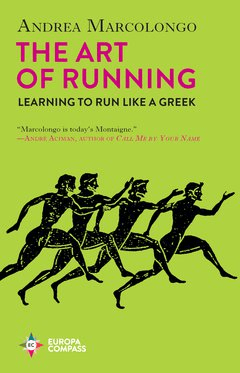
Review: The Art of Running: Learning to Run Like a Greek by Andrea Marcolongo

Buy it here:

Amazon, Bookshop

Synopsis:

The inspiring story of how one of Europe’s most original and compelling classicist learned to run—and live—like a Greek 

Much has changed since the day in 490 BCE when the indefatigable Athenian herald Philippides made his legendary run and delivered to the people of Athens news of their city’s victory over the Persians. One thing, however, hasn’t it is still twenty-five punishing miles over rough terrain from Marathon to the Acropolis.

Each year, all over the world, thousands of professional athletes and millions of amateur enthusiasts replicate Philippides’s enterprise, many running with such gusto that one could be forgiven for thinking the fate of Athens once more hung in the balance. 

Why do we run? To what end, all the effort and pain? Wherefore this love of muscle, speed, sweat, of testing one’s limits? The Greeks were the first to ask these questions and to wonder why we choose to measure ourselves in this way against others; they were the first to formulate the adage, mens sana in corpore sano; they were first to interrupt war, work, politics, the daily routine to enjoy public celebrations of athletic prowess. The Greeks invented sport! Sport as something separate from labor or war; activity as an end unto itself and a form of entertainment for others. They were also the first to understand how regular physical activity, victory, and loss connected to our emotional and mental well-being.

As the pandemic entered its second year, despondent, isolated, and apprehensive about the future, the internationally renowned classics scholar and best-selling author Andrea Marcolongo discovered running. After years spent with her head and heart in the books, trying to think like a Greek, she set out to learn how to run like a Greek. In doing so, she not only deepened her understanding of the ancient civilization she has spent decades studying, but also discovered a great deal about herself. 

In this spirited, generous, and erudite book, Andrea Marcolongo shares not only her erudition but her own journey to understanding that a healthy body is indeed, and in more ways than one might guess, a healthy mind.

Review:

David Lynch has talked about daydreaming being important to his creativity, and it is important to find a safe space to let your mind wander. In The Art of Running: Learning To Run Like a Greek, Andrea Marcolongo uses running as her safe space to sort out what running means to her and how she is continuing a tradition of running like Pheidippides and his twenty five mile run between Marathon and Athens that famously ended with him collapsing after announcing victory. This act by Pheidippides is the romanticized beginnings of the modern marathon, even though the Greeks themselves had no interest in running this far if it was not for a military reasons. With Marcolongo being a person who fell in love with ancient Greece as an teenager and running as an adult, it only makes sense that these two loves would eventually meet. The Art of Running is Marcologo’s journey in training for a marathon between Marathon and Athens, and she knows the best way for her to stick to training is to write a book along the way.

The book does have many insights into how the Greeks felt about running and althletics in general, but a majority of this book is Marcolongo’s insights into what running brings to her and what she feels like as a woman in her thirties training for her first (and possibly only) marathon. Some of the ideas that she brings up are interesting and honestly motivating for someone like myself who does run but struggles with consistency and with a pace that is growing slower and slower.

One of her observations that really strikes me:

“I don’t know if it’s the clearest sign of growing old, but at a certain point, without warning, the reserves of talent that we once greedily drew on begin to run low. It’s terrifying to find them gone, in short supply, insufficient. Replenishing them through training and dedication, physical and intellectual, is hard but necessary work.” p. 120

Not only is this something that puts a simple concept into words that make sense, it is something that can motivate those who have felt like they have lost a step, not only with running but with every talent. The truth about running is most runners, the largest population who will read a book about running, are in my age group (late forties) and older. When you participate in any sort of race, whether it be a 5k or a marathon, the most competitive categories are the 50s and 60s age groups. These are people who have switched from the talent of youth to discipline and training. 

There are not many books on running, mostly because the idea of a book about running is pretty boring. Runners say “My sport is your sport’s punishment”, so many probably feel like a book about running would be punishment as well. Fortunately Andrea Marcolongo writes a book that is more about what athletics means, to her, to the Greeks, and to life in general, than about the day to day sludge of individual runs. Anyone who is a runner should pick this up because it fits well in a small library of motivating running books. Anyone who does not run should pick this up because it is not really about running as much as it is about how finding that safe space to let your mind wander, to connect concepts to one another, and to continue to work your talents even when it is no longer as easy to get results.

I received this book from Europa Editions in exchange for an honest review. 

Posted in book review, nonfiction, Reviews | Tagged , , , , , , , , , , , , , , , | 1 Comment

Essay 002: Kurt Cobain

This past week was the thirtieth anniversary of the death of Kurt Cobain. Many people who were closer to him and/or more insightful than me have written many articles about him. This is only my experience this week.

I pulled out my Nirvana albums and listened to Nevermind and In Utero specifically. While listening to them, I spent a great deal of this time thinking about the past and what the future could have been like if Kurt Cobain was still alive.

  1. The past:

I was fourteen when Nevermind was released. The first time I heard “Smells Like Teen Spirit” on the radio, I knew this song was something different, something that really spoke to me as a fourteen year old. I scraped a few dollars together and went to the mall to buy the cassette single of “Smells Like Teen Spirit” with “Even in His Youth” as the B side. I liked the songs and wore out the tape. At the time, our local library had cassettes to rent, and when they got their copy of Nevermind (with a sticker conveniently censoring the cover), I snagged it up and listened to it nonstop for the entire two week rental period. I loved all of the songs, and even though the radio was playing “Smells Like Teen Spirit” over and over, I liked the B side of the cassette much better than the hits on the front side. Eventually Nirvana became a juggernaut. While all of my classmates were loving Kurt Cobain, I was listening to other bands from Seattle area, particularly Mudhoney, Screaming Trees, and anything put out on the Sub Pop label. I revisited Nirvana many times throughout this period, but I really connected to some of the other bands. Not to say that I did not think that Nirvana was masterful, I just liked other bands more at the time. 

This all seems like lightning in a bottle. Nirvana was not supposed to really capture the country and the music industry by storm. Every kid my age should not have had a copy of Nevermind or a smiley face Nirvana t-shirt. When I relisten to their albums now that I am 46 instead of 14, I can feel that by the time In Utero was released, Kurt Cobain was feeling the same way. The songs on In Utero feel strained in a way, like Kurt was having a hard time pulling these songs out of the depth of his being, the tug-of-war bringing him to the brink of death. He is telling us he is ready to be done with the station that life has given him.

These observations are easier now because of the events that took place after In Utero, his struggles with stomach issues and addiction, his disenchantment with the fame and spotlight he had been thrust into, all of the success that became afflictions on his career. In Utero was released in September 1994. Seven months later, he was dead. In Nirvana’s three studio albums, one album of B-sides, and an acoustic MTV concert, we are given a body of work that feels complete, like Kurt had said what he wanted to say and knew it was time to stop. 

  1. The Present

One of the most honest things that I can say is that Nirvana is that they are a great band for young people. I was fortunate enough to be a teenager when Nirvana was releasing new music, so I can tie some of their songs into my feelings about the world, my dissatisfaction with life. Nirvana’s songs were a companion along my dark teenage journey. There are lyrics that I can quote today that sums up exactly how I felt at the time when they were released. 

“I’m so lonely, that’s okay, I shaved my head. And I’m not sad

And Just maybe I’m to blame for all I’ve hurt, but I’m sure

I’m so excited, I can’t want to meet you there, and I don’t care

I’m so horny, that’s okay, my will is good”

~Lithium

Of course from fourteen to seventeen the other thing that really interested in besides music was girls. There are Nirvana lyrics I sang as loud as I could in my bedroom, pretending to sing to a girl I had a high school crush on. The two songs that really spoke to me were “Lithium” and “Breed”, even though in retrospect, they both seem to be pretty crass songs to sing to woo girls. At that age, I was attracted to the songs because I felt the emotion that came with them, like I honestly believed that Kurt was in the same place I was, in his bedroom, pouring his heart out to his unrequited love, but with each repetition, the song lost a little hope but grew a little bit of bitterness. 

I relisten to these albums now and see them as a part of the time capsule to my youth, songs that came out in my formative years, songs that felt as if they were written for me in that moment. These are songs for my 17 year old self, not for my 46 year old self. I am not diminishing the greatness of Nirvana. Nevermind as a whole is pure magic. I am saying that when I have listen to Nirvana now, I feel as if I am no longer the target audience. While I have grown older, Nirvana has stayed the same. Kurt Cobain died thirty years ago, and their growth as a band has stunted, whereas my growth has mercilessly continued. 

The song that really strikes me in a new way now, listening to them thirty years later, is “Pennyroyal Tea”. There are some wild theories on the internet about the meaning, but I see it at the shallowest of them. Cobain is singing about his stomach issues, which caused him to turn to heroin as a pain relief. He sounds like an old man, filled with regrets, trying to fix the most base of his pain with some herbal tea. This makes sense to me.  

  1. The Alternate Universe

While I listened to In Utero, I started to think about what Nirvana would have been like if Kurt Cobain had not died. My theory is that they would release one or two more albums as Nirvana, Dave Grohl would have started Foo Fighters, and Kurt Cobain would have released a short album of new songs every ten years or so. The songs would still be about decaying self-worth and dissatisfaction, but with the topic turning to growing old. Nirvana might get back together to record a few more songs, but they would not tour, simply because Cobain would never want to be in a band that tours their Greatest Hits. The legacy of Nirvana is much better the way it is, and Kurt Cobain will forever be one of the strongest voices of the teenage struggle. 

Posted in essay, nonfiction | Tagged , , , , , , | Leave a comment

Review: There’s Always This Year: On Basketball and Ascension by Hanif Abdurraqib

Buy it here:

Amazon, Bookshop

Synopsis:

A poignant, personal reflection on basketball, talent and allegiance, and of course, LeBron James—from the author of the National Book Award finalist A Little Devil in America

While Hanif Abdurraqib is an acclaimed author, a gifted poet, and one of our culture’s most insightful critics, he is most of all, at heart, an Ohioan. Growing up in Columbus in the 1990s, Abdurraqib witnessed a golden era of basketball, one in which legends like LeBron were forged, and countless others weren’t. His lifelong love of the game leads Abdurraqib into a lyrical, historical, and emotionally rich exploration of what it means to make it, who we think deserves success, the tensions between excellence and expectation, and the very notion of role models, all of which he expertly weaves together with memoir. “Here is where I would like to tell you about the form on my father’s jumpshot,” Abdurraqib writes. “The truth, though, is that I saw my father shoot a basketball only one time.”

There’s Always This Year is a classic Abdurraqib triumph, brimming with joy, pain, solidarity, comfort, outrage, and hope. It’s about basketball in the way They Can’t Kill Us Until They Kill Us is about music and A Little Devil in America is about history—no matter the subject, Abdurraqib’s exquisite writing is always poetry, always profound, and always a clarion call to radically reimagine how we think about our culture, our country, and ourselves.

Review:

Hanif Abdurraqib is a poet, cultural observer, music lover, and die hard Ohioan. He grew up in Columbus when Lebron James was playing high school basketball in 100 miles away in Akron. He drove this distance to watch James play. He also drove 143 miles from Columbus and Cleveland to watch the Cleveland Cavaliers, with and without James. With a few exceptions, all of There’s Always This Year takes place within these miles, and Hanif Abdurraqib has not only written an ode to Ohio and Cleveland sports but a treatise on being an underdog and living a life of loss, frustration, and being underestimated. 

Cleveland is his sports town, but Columbus is his hometown. Hanif grows up in Columbus, one year older than Lebron, going to parks and basketball courts throughout the city, not only to play but watch those players who are local legends, and even better than those playing in the NBA, destinies unfulfilled. His personal life is also on this same trajectory. He does not graduate high school and live a life that leads to fame and recognition, but in the end, it is the mentality of being the underdog, the grit from growing up rooting for sports teams that are not meant to do much of anything, that keeps his focus and striving for better.

Lebron James is the catalyst to the timeline of the book. He is the example of the King who has come to Cleveland to make the team better, to win championships. The hopes of him being their basketball savior is dashed when he announces in 2010 in an ESPN special called “The Decision”, his intentions to leave Ohio and win championships in Miami, which he does. Abdurraqib dedicates one of the four quarters of this book to Lebron leaving Cleveland, how the city reacted, and how much he enjoys the fallout for the Cavs the next year. The return of Lebron to Cleveland in 2014 is met with the landscape of a city and of a country that has changed. Michael Brown was shot in Ferguson by police in August. Tamir Rice was killed by police in November. These events and the protests and unrest that results, is something that deeply affects Abduraqib, makes him contemplate the way basketball can be an escape, but this is just a way that we hustle ourselves into living with the unthinkable happening around us.

There’s Always This Year is a deep meditation that made me think long after finishing a chapter or even a paragraph. I have walked around the house late at night thinking about how we hustle ourselves. What it means to be a person who lives and dies for a sports franchise that does not live up the hopes of the beginning of the year. How we always love the underdog until the underdog starts to win. How we are put into a system where everyone is essentially an underdog, and unless we come together in the face of adversity, like in the Nike promo that Lebron James did when returning to Cleveland, then we do not stand a chance. This is a book that I will return to at a future date. It is one of those books that impact you in a way that you cannot forget. I am positive that each time I read it, I will find new ways to look at the meanings and feelings behind every single word of There’s Always This Year.

I received this as an ARC from NetGalley in exchange for an honest review.

Posted in book review, nonfiction, Reviews | Tagged , , , , , , , , , , , | Leave a comment

Essay 001: Numbers

Credit: PeterHermesFurian/Getty Images

I enjoy numbers in a casual way. My Garmin watch tells me that I average 9,761 steps every day and that my resting heart rate is 55 (I do know this heart rate is not completely accurate because it is using my watch and not an actual heart rate monitor.) I wear a CPAP at night, and first thing in the morning, I check the app, go through the numbers of how long I wore it (usually just over four hours), what my average CPAP pressure was (8.6), and how many times I took it off through the night (2). If a publishing company has a product with a number on the spine, like the numbers on physical Criterion Collection DVDs, the books from Grindhouse Press, or pretty much every record label, I want to collect them all. Of course I also like to look at the amount of views this site gets every day and every month. I sometimes check the various numbers many times throughout the day. All of these numbers are fun to look at, but the weird thing about my constant monitoring is that I do not think about improvement, that there is not elation for when I am doing better, nor is there sadness, shame, or guilt that comes from not doing as good as I should be doing.

When I go through the numbers, I do two things. The first is that I look at the numbers that are good and ignore those that are not so good. My V02 Max on my Garmin watch says my fitness is in the bottom 15% of my age group. I am always chasing my CPAP to make sure that I stay slightly above the 70% compliance that is needed for the insurance company not to take the machine back. I look at the sheer amount of Criterion Collection releases and know I’ll never be close to getting them all. My social media numbers are good, but I do not do much to grow the numbers. I also do not do much to improve on any of these things. 

Most of my casualness is due to a general lack of focus on details. I do not spend a great deal of my life looking at the details. Like a smooth rock that water has been rushing over for decades, my outlook has become one where things will get done and they will look good enough, but if you look closely at the details, you can see severe flaws. For example, I clean the kitchen. From the doorway, the countertops shine and the smell is one that you associate with a clean kitchen, but if you lift the toaster or look in the corners, you can see crumbs and dirt that I did not clean. My casualness toward details can be a blessing but mostly it is a hindrance. The blessing is that I do not obsess about social media, about follower and like counts. I only produce and publish things I like, so I cannot be disappointed when others are not interested. My downfall is that I get too wrapped up in the idea that nobody is really paying attention, so I miss deadlines, take extra days off, and I do too many things with a shortcut. 

The thought that I have been dwelling on, the idea about this that has been stuck in my head and has made me write this, is that in most cases, attention to detail only takes another minute or two. There is not a great amount of time loss because I take a few extra steps to make sure that things are finished properly. This is easier to think about than it is to put into action. Sure I can say to myself, “I’m going to always take an extra minute to look at the details in everything I do,” but sounds overwhelming, and it is easy to quit when I am overwhelmed. Instead I can pick one thing in my life that I will purposefully slow down to make sure that I accomplish it with detail in hopes that this habit will change into a bigger habit. The goal is to eventually see those numbers, and the ones that I so casually ignore will start to get better. 

Posted in essay, nonfiction, Uncategorized | Tagged , , , , , , | Leave a comment