Review: Fury: A Novel by Clyo Mendoza

Buy it here:

Seven Stories Press, Amazon, Bookshop

Synopsis:

In this devastating novel, Clyo Mendoza, a Mexican poet and novelist in her twenties, weaves together multiple narratives into a lyrical, shape-shifting existential reflection on love, violence, and the power of myth.

“ Fury has the poetic and wild force of the desert. In its pages there is tenderness, fear and forceful, rhythmic writing with images that are difficult to forget. It is about the violence of desire that turns us into dogs that drool, howl and bite, but also about love in the midst of hostility and helplessness. This is why it is a disturbing and, at the same time, deeply moving novel.” —Mónica Ojeda

In a desert dotted with war-torn towns, Lázaro and Juan are two soldiers from opposing camps who abandon the war and, while fleeing, become lovers and discover a dark truth. Vicente Barrera, a salesman who swept into the lives of women who both hated and revered him, spends his last days tied up like a mad dog. A morgue worker, Salvador, gets lost in the desert and mistakes the cactus for the person he loves. Over the echoes of the stories of these broken men—and of their mothers, lovers and companions—Mendoza explores her characters’ passions in a way that simmers on the page, and then explodes with pain, fear and desire in a landscape that imprisons them.

After winning the International Sor Juana Inés de la Cruz Poetry Prize, Clyo Mendoza has written a novel of extraordinary beauty where language embarks on a hallucinatory trip through eroticism, the transitions of conscience, and the possibility of multiple beings inhabiting a single body. In this journey through madness incest, sexual abuse, infidelity, and silence, Fury offers a moving questioning of the complexity of love and suffering. The desert is where these characters’ destinies become intertwined, where their wounds are inherited and bled dry. Readers will be blown away by the sensitivity of the writing, and will shudder at the way violence conveyed with a poetic forcefulness and a fierce mastery of the Mexican oral tradition.

Review:

Most of the time, when I think of weird fiction, I think of stories that have more of a speculative plot. Stories that take place in alternate universes or timelines, or just odd life occurrences happening to normal people. In Fury by Clyo Mendoza, she writes another type of weird fiction, one where the people are weird and trying to navigate a seemingly normal universe. The book is split into five sections, and each on of them focuses on one of three half-brothers, Lazaro, Juan, or Salvador. The common thread between these three is their father, Vincente, a predator, womanizer, and man who eventually goes crazy and dies as a dog. Each of of his sons play an important role in the lives of the other brothers, and all of them try to scourge him from their personalities. The two motivations of every man in this novel is either sex or revenge, both being equally important and equally destructive to everyone. 

There are so many interesting things that happen during the journey through Fury. All of the stories of the men, looking for their love or their revenge, end up with them broken. There is no real outcomes to the anger or jealousy that motivates them, nothing good comes from this. This makes Fury not only a epic journey for all of those involved, but a cautionary tale. The emotions that motivate us will sometimes destroy us if we are not careful. None of the men learn this lesson. There is no redemption. This is what makes this novel somewhat hard to read. Most of the stories readers enjoy are stories where a lesson is learned and the misguided character finds redemption at the end. There is none of this in Fury. Instead we get a group of misguided characters, lost in the desert, motivated by anger or lust, and not a single person finds any sort of solace in the outcome of their actions. 

This does not stop their journeys from being compelling. The story is bleak and the characters are broken people breaking others, but the writing is beautiful. It is not surprising that Clyo Mendoza is an award winning poet. What is surprising is that she is barely thirty writing novels with this much depth and darkness. She seems to have a connection to the ugliness in the spirit of man that many writers want but do not have. So many of her paragraphs and scenes that are artful and mind blowing, and the story as a whole, of weird people interacting with a normal world, is written in such a compelling way that we sometimes forget that the people involved are pretty terrible people. Clyo Mendoza is easily one of the best young writers I have read in a long time.


I received an ARC of Fury through NetGalley in exchange for an honest review.    
Posted in book review, literary book review, Reviews | Tagged , , , , , , , , , , , , , , , | Leave a comment

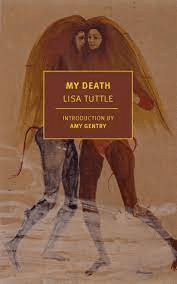
Review: My Death by Lisa Tuttle

Buy it here:

Amazon, Bookshop

Synopsis:

A widowed writer begins to work on a biography of a novelist and artist—and soon uncovers bizarre parallels between her life and her subject’s—in this chilling and singularly strange novella by a contemporary master of horror and fantasy.

The narrator of Lisa Tuttle’s uncanny novella is a recent widow, a writer adrift. Not only has she lost her husband, but her muse seems to have deserted her altogether. Her agent summons her to Edinburgh to discuss her next book. What will she tell him? At once the answer comes to she will write the biography of Helen Ralston, best known, if at all, as the subject of W.E. Logan’s much-reproduced painting Circe , and the inspiration for his classic children’s book.

But Ralston was a novelist and artist in her own right, though her writing is no longer in print and her most storied painting too shocking, too powerful—malevolent even—to be shown in public. Over the months that follow, Ralston proves a reluctantly cooperative subject, even as her biographer uncovers eerie resonances between the older woman’s life and her own. Whose biography is she writing, really?

Review:

I see a great deal of Tik Toks and Instagram Reels about “top strange books”, “five weird novellas you should read”, “WTF books”, and videos of this ilk. Most of the time, I am not influenced much by them. I did read and enjoy Bear by Marian Engel because of one of these videos, so I cannot say I am completely above the influence of these videos, but most of the time I have enough to read. When My Death by Lisa Tuttle started to come up in these “weird lit” videos, I knew I could give it a chance because I already owned a copy.

My Death is about a writer who has lost a husband a year and a half earlier and had not written anything since. Suddenly she inspired by a painting by W.E. Logan, to write a biography about the model of the painting Helen Ralston. Helen, a novelist in her own right, and Willy Logan had a passionate, tumultuous affair that included Helen falling (being pushed? jumping?) out of a window. After the narrator decides to write the biography, she is surprised to learn that Helen is still alive, at 94, lucid, and waiting for her to visit. The novella is engaging and near perfect. I do not want to really say anything other than it needs to be read by as many people as possible.


I skipped the introduction when reading My Death because I am a reader that wants to know as little as possible about any book I read. Going back afterward, Amy Gentry starts her introduction with the fact that readers love to know about lives of writers, and we are always fascinated with meeting our literary heroes. She then starts to talk about the life of Lisa Tuttle. Being friends with Harlan Ellison, dating and writing her first novel with George R.R. Martin, having a short marriage to Christopher Priest, Lisa Tuttle’s works stand out, and she is considered one of the best writers you have never heard of. The wild thing about this biography of Tuttle is that I am doing the same thing that the narrator in My Death did for Helen Ralston. Yes I want to know about the body of work, but I am much more interested in the relationship that Tuttle had with these men. I could say that someone should write a biography about Tuttle, but I am like the narrator in My Death. I do not want to know about the art as much as the relationships that she has had. This desire to know what is behind the curtains of the art is the driving force behind the novella, and My Death plays perfectly into this voyeuristic tendency.

Posted in book review, horror book reviews, literary book review | Tagged , , , , , , , , , , , , , , | Leave a comment

Review: Womb City by Tlotlo Tsamaase

Buy it here:

Amazon, Bookshop

Synopsis:

WOMB CITY imagines a dark and deadly future Botswana, rich with culture and true folklore, which begs the question: how far must one go to destroy the structures of inequality upon which a society was founded? How far must a mother go to save the life of her child?

Nelah seems to have it all: wealth, fame, a husband, and a child on the way. But in a body her husband controls via microchip and the tailspin of a loveless marriage, her hopes and dreams come to a devastating halt. A drug-fueled night of celebration ends in a hit-and-run. To dodge a sentencing in a society that favors men, Nelah and her side-piece, Janith Koshal, finish the victim off and bury the body.

But the secret claws its way into Nelah’s life from the grave. As her victim’s vengeful ghost begins exacting a bloody revenge on everyone Nelah holds dear, she’ll have to unravel her society’s terrible secrets to stop those in power, and become a monster unlike any other to quench the ghost’s violent thirst.

Review:

Tlotlo Tsamaase came onto my radar last month when I read The Year’s Best African Speculative Fiction 2022. The anthology is packed with incredible stories, but the two that really stick out are the two written by Tsammase. When I learned that xer first novel was going to be released this month, I had to read it. Luckily, Netgalley and Erewhon Books allowed me to read an ARC in exchange for an honest review.

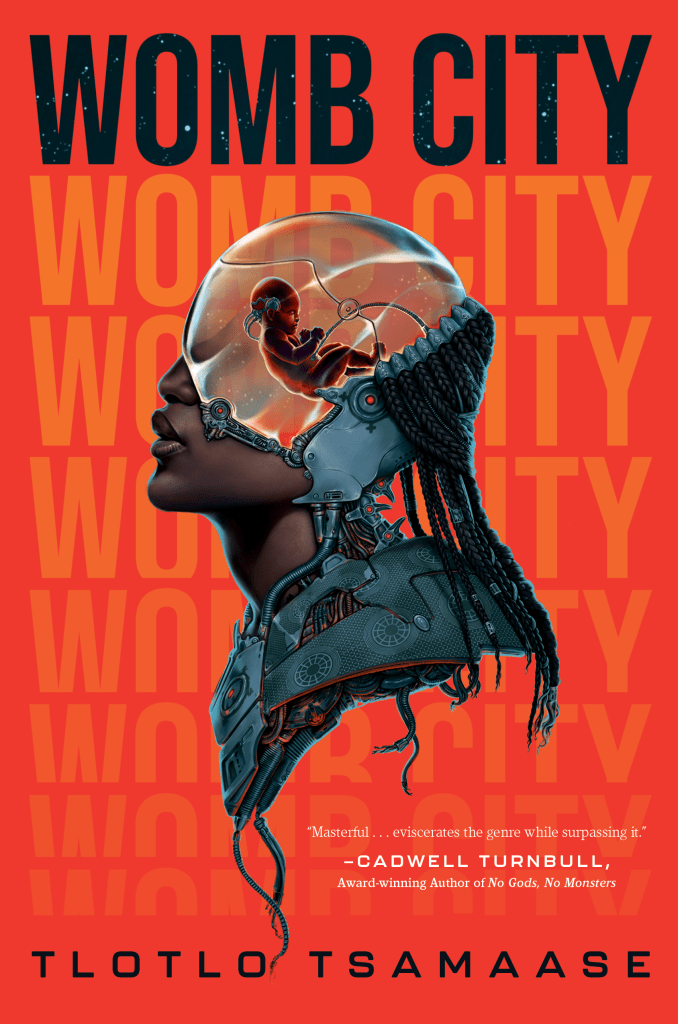
There are several reasons to love this novel before I even read the first sentences. The first is that Womb City is a wonderful title, and the cover art elicits so many different mental images, so many different curiosities that are about to unfold. The story starts with Nelah waking and her husband Elifasi wanting to hook her up to the wall with her microchip to make sure that she is not thinking about crime. The society that is built in Womb City, this dystopian Botswana, is filled with corruption, male superiority, power struggles, and men being leaders of everything, even though women are the backbone of society. In the first sections, the novel a marital drama about Nelah and Elifasi trying to have a child, trying to keep their finances in order, and trying to get along with each other. Neither of them trusts the other. All of this time, a wealthy business owner, Janith, becomes Nelah’s lover, and keeping this a secret quickly turns Nelah’s life upside down.

Womb City starts as a sci-fi novel, with consciousness jumping from body to body and the politics of this, from the rights of criminals to immigration waiting lists (those with money to the front of the line), investigations for criminals that might commit another crime in the future, and a mist on Sundays that is really the release of markers for the location of hidden dead bodies. The novel quickly turns from a sci-fi novel into straight horror. There are scenes that rival any horror novel I have ever read. The vengeance and anger at the core of the novel slowly turns the book into a conspiracy thriller that morphs the novel into a new, even worse type of horror, because the horrible acts that people are doing to one another is worse than any wrath of an ancient god. 

At some points in the novel, I started thinking that Tlotlo Tsamaase wrote xer book with the idea in mind that this could be the only book xhe ever releases so xhe must put every idea xhe has into the plot. There are so many things that happen, so many different directions that this novel takes, and so many social issues that are examined, that it is impossible to really catch all of it the first time. It is exhausting, but in the way that you feel after a good run, the exhilaration of getting to the end makes the journey worth it. There are moments that feel like they could be slimmed down some, but as a whole, Tlotlo does so many great things in this novel that I will look for everything that xhe writes. I cannot get enough. 

I received this as an ARC from NetGalley in exchange for an honest review.
Posted in book review, science fiction review, Uncategorized | Tagged , , , , , , , , , , | Leave a comment

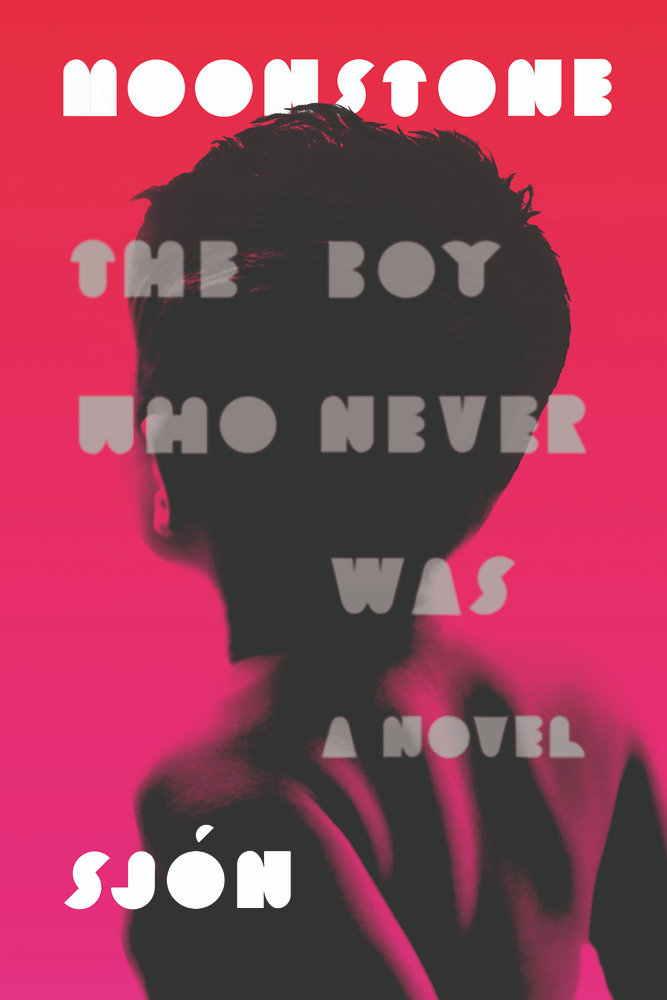
Review: Moonstone: The Boy Who Never Was by Sjón

Buy it here:

Amazon, Bookshop

Synopsis:

The mind-bending miniature historical epic is Sjón’s specialty, and Moonstone: The Boy Who Never Was is no exception. But it is also Sjón’s most realistic, accessible, and heartfelt work yet. It is the story of a young man on the fringes of a society that is itself at the fringes of the world–at what seems like history’s most tumultuous, perhaps ultimate moment.

Máni Steinn is queer in a society in which the idea of homosexuality is beyond the furthest extreme. His city, Reykjavik in 1918, is homogeneous and isolated and seems entirely defenseless against the Spanish flu, which has already torn through Europe, Asia, and North America and is now lapping up on Iceland’s shores. And if the flu doesn’t do it, there’s always the threat that war will spread all the way north. And yet the outside world has also brought Icelanders cinema! And there’s nothing like a dark, silent room with a film from Europe flickering on the screen to help you escape from the overwhelming threats–and adventures–of the night, to transport you, to make you feel like everything is going to be all right. For Máni Steinn, the question is whether, at Reykjavik’s darkest hour, he should retreat all the way into this imaginary world, or if he should engage with the society that has so soundly rejected him.

Review:

Sjón is a Icelandic writer who has written songs with Bjork (including the Academy Award nominated song for the Lars Von Trier film Dancer in the Dark), written screenplays (most notably Lamb and the Robert Egger’s collaboration, The Northman), and over a dozen fiction and poetry books. I have read and reviewed CoDex 1962 and Red Milk, and when I stumble on any of his books in the bookstore, I pick it up.

What Sjon does in Moonstone: The Boy that Never Was is a huge reason why I seek out his work. Máni Steinn is an orphan that lives in an attic with a distant relative. He is obsessed with movies, watching every film shown at both the old cinema and the new cinema in Reykjavik. He is  obsessed with a girl who drives an old Indian motorcycle around town, and he makes money by having sexual encounters with men (one is an English speaking man who’s pronunciation of Mani Stein sounds like Moonstone). The story takes place during a few months in 1918, when the Spanish Flu rips through the town and changes everything. Máni observes the town getting more and more sick, the cinema emptying out, his dates disappearing, and the amount of the dead piling up. He almost becomes one of the number himself. Sjón’s writing and Victoria Cribb’s translation brings the reader into this dark world, making us part of the dying city. The writing is crisp and sharp, but the story is so bleak. We are transported into the middle of and Iceland that is cold and dying of sickness, and we can feel the fever, death, and sadness spreading through every house.


Nothing about this novel can change. It is rare to be so transported into a world so fleshed out by an author using so few words. The novel is less than 150 pages, and many of those pages are blank. For Sjón to write such a strong and powerful novel in such a small space really shows how good he is. Sjón is one of the best writers in the world, and Moonstone: The Boy Who Never Was is proof.

Posted in book review, fiction, literary book review, Reviews | Tagged , , , , , , , , , , , , , , , , , | Leave a comment

Review: Martyr! by Kaveh Akbar

Buy it here:

Amazon, Bookshop

Synopsis:

Kaveh Akbar’s Martyr! is a paean to how we spend our lives seeking meaning—in faith, art, ourselves, others—in which a newly sober, orphaned son of Iranian immigrants, guided by the voices of artists, poets, and kings, embarks on a search that leads him to a terminally ill painter living out her final days in the Brooklyn Museum.

Cyrus Shams is a young man grappling with an inheritance of violence and loss: his mother’s plane was shot down over the skies of Tehran in a senseless accident; and his father’s life in America was circumscribed by his work killing chickens at a factory farm in the Midwest. Cyrus is a drunk, an addict, and a poet, whose obsession with martyrs leads him to examine the mysteries of his past—toward an uncle who rode through Iranian battlefields dressed as the Angel of death to inspire and comfort the dying, and toward his mother, through a painting discovered in a Brooklyn art gallery that suggests she may not have been who or what she seemed.

Electrifying, funny, wholly original, and profound, Martyr! heralds the arrival of a blazing and essential new voice in contemporary fiction.

Review:

After publishing a few acclaimed poetry collections, Kaveh Akbar’s first novel, Martyr!, is to be released later this month. The novel starts with Cyrus Shams, a poet, recovering drug and alcohol addict, and someone is trying find meaning, not only in life but in death. His mother is killed in 1988 on Flight 655, an Iranian commercial flight shot down by the United States military. He is a baby at the time. Afterward, he and his father move from Iran to Indiana, where his father worked at a chicken farm. Cyrus grows up, but he does not grow out of the feeling of his mother, and eventually the death of his father as soon as he goes to college. Martyr! is Cyrus’s journey post family and post drugs to figure out if his mother and father’s death has meaning at all. This journey leads him to the idea of writing a book about martyrs, which leads him and his friend Zee from Indiana to Brooklyn, where an Iranian-born artist is publicly dying of breast cancer. She is at the Brooklyn Museum meeting people every day to talk about whatever they want until she eventually dies. Her hospice is on display for art. Cyrus wants to know if her death is art, thus making it more meaningful than other deaths. Meeting her changes everything for him.

This story is not straight forward or complete. We are given large chunks of the story, not only Cyrus’s life, but the life of his parents, what his mother felt when she was boarding the plane on her fateful trip, how military service messed up Cyrus’s uncle, and how his father felt after losing his wife, but we are also allowed to fill in the blanks. Chapters are written from the perspective of everyone, from Cyrus, from Cyrus’s mother, father, and uncle, and from the dying artist herself. There are chapters that are fictionalized conversations between famous people that Cyrus uses to help him fall asleep at night (which we could have used a few more of these). We are also given snippets of the book of martyrs that Cyrus is writing: poems and paragraphs explaining the depths of what death can mean. Cyrus has collected all of these pieces, and he hopes this can mean something.

The writing is fantastic, and the story is gripping. I was more invested in these characters and this story than any other book in a long time. There are some moments when Kaveh Akbar writes very deep conversations between two characters and the narrative does seem to stall a bit, but most of the novel is flawless, exciting, and quite possibly one of the best books I will read this year. 

I reviewed this as an ARC from NetGalley in exchange for an honest review.
Posted in book review, literary book review, Reviews | Tagged , , , , , , , | Leave a comment

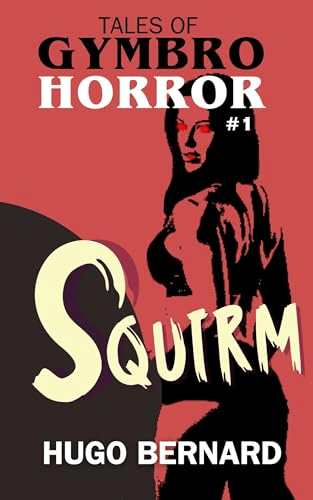
Review: Squirm by Hugo Bernard

Buy it here:

Amazon

Synopsis:

Steve’s friend has exclusive access to a new substance to promote muscle mass. The plan is to get rich once the boys see how insanely huge it makes him. But when his sweet girlfriend throws him across the room with freakish force, he knows something has gone terribly wrong. He messed up, and the girlfriend he loves might never be the same because of it. The dead bodies are piling up as Steve searches for a way to undo his mistake. Swept from one bloody horror to the next, he will need more than brute force to survive the chaos of the night and get back to save his girl.

Fans of supernatural thrillers and unexpected twists are sure to get a satisfying dopamine rush out of this quick and grossly entertaining read! WARNING Contains profanity, debauchery and violence.

Review:

Squirm is the first in the Tales of GymBro Horror series written by Hugo Bernard. I was honestly hooked on this series by the idea of “Gymbro Horror.” There is something about going to the gym and seeing all of the gymbros and gym rats who spend so much of their life trying to get bigger, look better, get swole, and be attractive to their partners, potential partners, and hopefully themselves. Some of it is with good intentions, but like with any sort of culture, there is a dark underbelly. I look forward to reading horror stories based on the whole gym scene. 

The basic concepts of Squirm fit into the desires that many people in the gym want: to be bigger, stronger, larger than anyone else in the gym. Most steroid use is not by professional athletes or fitness competitors, but by the guy next door who wants more muscles. Steve is a guy who is teetering on the edge of what he can do next to get bigger. He sees one of his friends getting huge at an alarming pace, and this friend introduces him to something called FrogJuice. He has also nicknamed it Squirm, due to the tadpole looking things that are swimming around in the drink. Squirm makes Steve pack on pounds of muscle in a short period of time, get a gym girlfriend, and start making a ton of money. Then the strange side effects begin, particularly when some of the women around him get it into their system. Before long, the semi-good idea of taking Squirm turns into a horrible idea, and Steve finds himself in more trouble that he ever expected.

There are some elements of good horror, but the bigger focus of the story is the danger that Steve gets into, from rival testosterone sellers, from scientists who studied Squirm, from women who have accidently taken it and turned monsters, from the military, from himself. There are good chase scenes, many kills, but the real interesting part, the dynamics of the infection, is just sort of glossed over. I would have liked to seen more concentration of the grisly body horror aspects of the story, because there really is some great potential that just seems passed by. 


The second in this series, called Shredz, is coming out in March. I am not going to lie. I am all for another installment of Gymbro horror. This was fast paced, fun, and I enjoyed every minute of it. I cannot wait to see what Hugo Bernard does next with the series.

Posted in Uncategorized | Tagged , , , , | Leave a comment

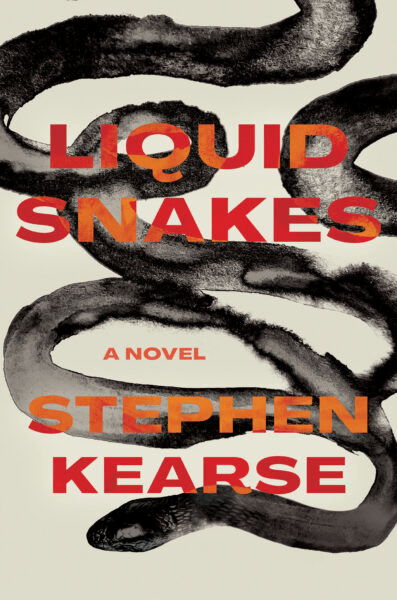
Review: Liquid Snakes by Stephen Kearse

Buy it here:

Amazon, Bookshop

Synopsis:

What if toxic pollutants traveled up the socioeconomic ladder rather than down it? A Black biochemist provides an answer in this wildly original novel of pollution, poison, and dark pleasure

In Atlanta, Kenny Bomar is a biochemist-turned-coffee-shop-owner in denial about his divorce and grieving his stillborn daughter. Chemicals killed their child, leaching from a type of plant the government is hiding in Black neighborhoods. Kenny’s coping mechanisms are likewise chemical and becoming more baroque—from daily injections of lethal snake venom to manufacturing designer drugs. As his grief turns corrosive, it taints every person he touches.

Black epidemiologists Retta and Ebonee are called to the scene when a mysterious black substance is found to have killed a high school girl. Investigating these “blackouts” sends the women down separate paths of blame and retribution as two seemingly disparate narratives converge in a cinematic conclusion.

Liquid Snakes is an immersive, white-knuckle ride with the spookiness of speculative fiction and the propulsion of binge-worthy shows like FX’s Atlanta and HBO’s Random Acts of Flyness. Transfiguring a whodunit plot into a labyrinthine reinterpretation of a crime procedural, Stephen Kearse offers an uncanny commentary on an alternative world, poisoned.

Review:

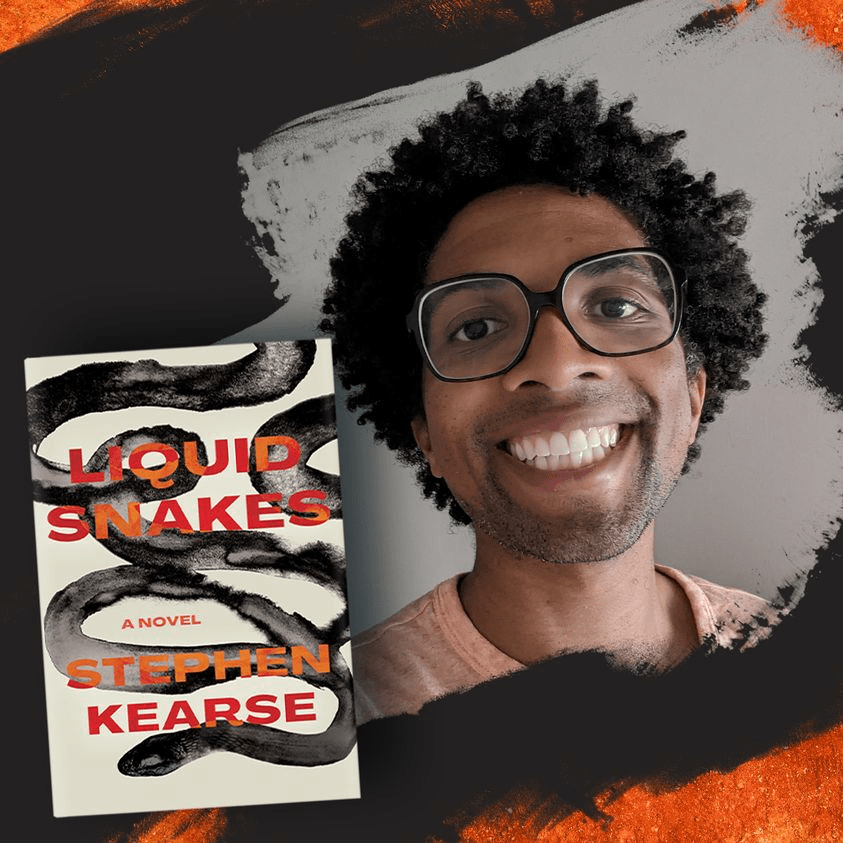
When Liquid Snakes was released this past August, I saw ads for days on all of my social media. Most of the time, I can ignore the ads, but this one seemed persistent. The name of the book, along with the cover and author photo intrigued me. I am not a synopsis reader by nature. I like to go into books as cold as I can. This means I usually judge a book by it’s cover and by the press that published it. Soft Skull Press has been around for decades, and it is a press I have loved for a long time. For me to be inundated by ads for a novel to be released by Soft Skull Press, with the name, cover, and author photo that it had, I just had an inkling that this would be a book I would enjoy. They were right.

The story is split in half. The first is Kenny Bomar, a coffee shop owner who has also made a drug that will literally melt anyone who drinks it, turning them into a black hole of sludge right where they are standing. The second is about Ebonee and Retta, two women who work for the CDC that are trying to follow the trail of the drug and it’s manufacture, while also dealing with tensions between each other and everyone whom they have to negotiate with. 

This is not a typical novel. There are weird quirks and sections that barely make sense to the rest of the novel at the time. Some moments pretend to pull away from the story, but there are also some of these parts that make me think that this story is bigger than the story that is being told. Stephen Kearse does not spend much time putting these pieces of the puzzle together for you, but lets you put them together in any order that you see fit. This is why some readers have had a hard time following the plot. The plot is not specific, and this is why different people will catch different meanings in this novel, and also why this novel is a good one to reread.

Even though Stephen Kearse has an interesting story in process, there are moments when he addresses the way that people in this country, black people specifically, are categorized and when they do not fit into the mold that is already built for them. White people do not always know how to react. Ebonee and Retta has more issues with this seeing as how many of the people they are trying to work with on their investigation, the men in charge, dismiss them immediately. This is when they go along their own path. Kenny also spends the entire novel going down his own path, and he is a character that does not hide his emotions. He has lost a child, and he is pissed at everyone, particularly those who let it happen. His grieving is going to affect everyone around him and his drug is manufactured from a place of anger and grief. He does not want retribution or reparations. He wants revenge. There are ideas in this novel that are much much bigger than the space that the idea is given, so this does make for a novel that feels a little off-kilter in places, and a little unfinished in others. This is not a perfect novel, but it is definitely a novel that will make me read Stephen Kearse’s next book.


Sometimes people ask me how I find the books that I read, movies that I watch, and music I listen to. I find that the easiest answer is that I do not look for these things anymore, but they all find me. Liquid Snakes is one of the prime examples of a book that found me. I am glad to have given it a chance, and the ad algorithm was right. This is the type of novel I enjoy, and I gravitate toward.

Posted in literary book review, Reviews, Uncategorized | Tagged , , , , , , , , , | Leave a comment

Review: Foxfire by Rowan Hill

Buy it here:

Amazon, Bookshop

Synopsis:

In a remote Finnish resort, a group of potential investors gather to enjoy the Arctic beauty and the mesmeric Northern lights. But many of the guests aren’t who they appear to be, and everyone is hiding something–from the gaudy Americans to the adventurous German and Australian couple to the quiet Yakuza and his former Geisha wife.Owner Mattais and his skeptical daughter, Aino, have ignored family legends, dismissing the warnings of honoring their ancient forest as silly, old-fashioned traditions. But when the guests start to be picked off one by one, their blood soaked in the snow, the old tales don’t seem so far-fetched anymore. A spectre haunts the forest and the survivors must decipher who–or what–is taking revenge.”…FOXFIRE combines all the best elements of a tense, well-paced thriller with compelling folklore and horror, all in the stark, deadly and glittering setting of the frozen north…. ” – Laurel Hightower, author of CROSSROADS and BELOW

Review:

Rowan Hill’s latest novel, Foxfire, is hard to define. Part thriller, part mystery, and part folk horror, there are several aspects that scratches different reader itches. The story is set in Finland, at a remote resort where the owner, Mattais, and his daughter have invited potential investors to their property in hopes of expanding the resort and making it a true isolated getaway. The three couples are as different from one another as can be. It is hard to develop eight characters in a meaningful way in a short book, and some of the characters rely on stereotypes. Rocky Armstrong is the strong jawed, short tempered Texas oilman, his wife Regina is the abused trophy wife, the two Japanese characters, Tetsuya is a yakuza member and Mimiko is a former geisha, and Carly, the Australian is a survivalist. Hiding behind all of the somewhat generic roles of all of the characters hides a mystery of who can be trusted. The answer is none of them.

The best parts about this is the setting and how desolate and unforgiving the landscape is. When characters start to die, the challenges of fleeing in a -15 degree, snow-covered forest are only overshadowed by the relentlessness of the murderer. The action is fast paced, and the mystery makes the story compelling. The biggest climax of the novel is when we learn the identity and motivation of the killer. and new natural element that creates more danger for all of the characters. During this section there are some scenes, particularly when two of the characters meet in Japan, that kills all of the momentum that had been building. While my mind wandered during this scene in particular, because I wanted to get back to world crashing down around the resort, I tried to figure out a better place for this meet cute story. I think I would have deleted it because by this time, I did not care about those two characters anymore. There is a new danger stomping through the snow. 

Foxfire is a solid, entertaining novel that kept me guessing until the end. I like the setting and the large cast of characters are interesting, if not a little cliche. Besides a few moments when the story slows down for background instead of remaining at the same breakneck speed, I was completely engaged in what was going to happen next. The ending is satisfying, and I will recommend this to all of my reading friends, whether they are into thrillers, mysteries, or horror. 

Posted in book review, horror book reviews | Tagged , , , , , , , , , , , , , | Leave a comment

Review: The Year’s Best African Speculative Fiction 2022 Edited by Oghenechovwe Donald Ekpeki, Eugen Bacon, and Milton Davis

Buy it here:

Amazon, Bookshop

Synopsis:

This is the follow up to the highly acclaimed 2021 anthology described as containing “some of the most exciting voices, old and new, from Africa and the diaspora, published in the 2020 year.” The first won the World Fantasy Award for best anthology and was met with widespread critical acclaim from across the world, with the science fiction trade magazine, Locus , calling it a “must read.” Oghenechovwe Donald Ekpeki, who created the first anthology now joins forces with Eugen Bacon, a 2022 World Fantasy Award finalist and Milton Davis, an award-winning Black Speculative fiction writer and editor to introduce readers to an ever more diverse set of writers associated with Africa. Timely and relevant to today’s world, the set of stories in this book will astonish, shock and amaze the reader while introducing them to a whole new world.

Review:

Speculative fiction is such a broad umbrella that so many categories of story falls under. Anything that is current world adjacent or set in the future, whether post-apocalyptic stories, horror stories, space science fiction, climate change sci-fi, fantasy stories, superhero stories, technology stories, and even magical realism all live in the speculative space. If any story has a world built outside the realms of the current world, whether be in the future or in an alternative timeline, it can be classified as speculative. I love these kinds of stories, and an anthology like The Year’s Best African Speculative Fiction 2022 not only fits into these interests, but it also stretches my ideas of what speculative fiction can be.

I recognized a few authors when I decided to read this anthology. Nalo Hopkinson is a legend, I know P. Djeli Clark from Ring Shout and A Master of Djinn, and one of the editors Eugen Bacon has books released on Meerkat Press. The rest of the authors in the collection are new to me. I knew I was going to like the collection, but I did not know I would like it as much as I did.

Like the large umbrella that is speculative fiction, there is a large variety of different types of stories and voices in this collection. With so many different types of stories, there is no way a reader can like them all, but it is pretty close for me. A few of the stories really stick out for me and made me immediately look up and even order some of their books.  “Old Solomon’s Eyes” by Cherly S. Ntumy, about a village that is battling a demon that lives in the sunflower fields,  “Them Doghead Boys” by Alex Jennings, about a street gang and police being found torn to pieces, and “Kaleidoscope” by Milton J Davis, about a Christmas gift from an uncle’s mysterious new girlfriend, are just a few of the great stories in the collection from authors that are now on my reading list.

My favorite stories in the anthology are the two written by Tlotlo Tsamaase. “Peeling Time (Deluxe Edition)” might be one of the best stories I have read in years. The premise is actually a well worn story, dealing with the devil for fame, but the structure, writing, and voice honestly make it so much better than it should be. Tlotlo Tsamaase also has “District To Cervix: The Time Before We Were Born” which is a sci-fi, reincarnation story that proves that she is not just one story, but a fantastic writer that needs a bigger audience. In January, her novel Womb City will be released, and I am already in line for one of the first copies. 

The last section of the anthology is a group of the year’s best speculative poems. I do not know much about poetry, but I do know that many of these poems evoke strong emotions in me. “The Revenge of Henrietta Lacks” by Cecilia Caballero, “Tons of Liquid Oxygen Buckle Too Late Under Strain” by Eugen Bacon, and “That Poor Woman” by Gerald Coleman are powerful and memorable. 

The Year’s Best African Speculative Fiction 2022 is one of the surprises of my year. I knew that I would like the anthology, but I did not expect it to be one of the best books I read, and I did not know I would feel so compelled to read more from most of these authors. I hope they continue to release these anthologies. I will preorder next year. 

I received this as an ARC from Netgalley in exchange for an honest review.

Posted in book review, horror book reviews, literary book review, Reviews, science fiction review | Tagged , , , , , , , , , , , , , , , | Leave a comment

Review: Elogona by Samantha Kolesnik

Buy it Here:

WeirdPunk Books, Amazon

Synopsis:

An evocative tale of sapphic love in a post-apocalyptic world dominated by religious zealots and supernatural monsters.

Kolesnik’s Elogona transports readers to a time after the world’s end, when a long-dormant sea creature has awoken to stake its claim against one of the last human settlements.

Verna must battle both man and monster to protect her family and her newfound love for Audrey, a refugee from the mainland.

Meanwhile, the Elogona calls…

Review:

When the new Samantha Kolesnik novella was announced to be released by Weirdpunk Books, I was overwelmed with excitement. One of my favorite writers releasing a novella on one of my favorite presses is the best gift I could ever receive. Samantha Kolesnik has made a name for herself with two smash hit novellas True Crime and Waif. Both of these novellas, along with a couple chapbooks, some anthology stories, and editing the anthology Worst Laid Plans, has made her book announcements always rocket to the top of my most anticipated releases list. Elogona is no exception.

Set in a post-war apocalyptic world, the novella is about two girls, Verna and Audrey. They live on an island that is terrorized by a sea creature, Elogona. The way the Council helps appease this creature is to give a yearly sacrifice at the Maiden’s Feast. Since Verna and Audrey’s love for each other is blossoming, it is not surprising that they become the targets of the island Council to be the next maidens for Elogona.  

The story is compelling, and the writing is so perfect. Kolesnik has a talent for the way she tells a story, constructs scenes, and develops worlds in a way that cannot be taught. Within the first five pages, with just Audrey and Verna talking as friends on the beach, we know so much about the community they are living in, the dangers in the sea, the corruption of the council officials, and how no woman on the island is safe. She naturally portrays the power dynamics on the island between the men and women, the original settlers and newer refugees, and the clash of the generations. She does this with no long paragraphs of information dumps for world building. The scenes feel so organic that it would not take much to convince me that there really is a huge sea creature that is eating the inhabitants of an island, and Samantha Kolesnik is right there documenting events as they happened. Her writing is so clear and her stories are so compelling because they all feel believable.


I received Elogona as an ARC from the author in exchange for an honest review. I am excited to have a new Samantha Kolesnik novella, and I hope to read more of her work in the future.
Posted in book review, horror book reviews, Reviews | Tagged , , , , , , , , , , , , , , | Leave a comment