Review: My Weil by Lars Iyer

Buy it here:

Amazon, Bookshop

Synopsis:

“Memorable characters make this a singular exploration of the human condition.” – Publishers Weekly

A scathingly funny look at a group of quirky graduate students majoring in Disaster Studies who are forced to reconsider their cynicism when they confront a new student who, remarkably, has the same name as the 20th Century Catholic mystic philosopher Simone Weil …

My Weil follows a group of twenty-something PhD students of the new-fangled subject Disaster Studies at an inferior university in Manchester, England, the post-industrial city of so much great music and culture. They’re working class, by turns underconfident and grandiose (especially when they drink) and are reconciled to never finishing their dissertations or finding academic jobs.

Their immediate enemies are the drone-like Business Studies students all around them, as well as the assured and serene PhD students of the posh university up the road. And they’re working together on a film, through which they’re trying to make sense of their lives in Manchester and, in particular, to the Ees, a mysterious patch of countryside that appears to have supernatural qualities.

Into their midst arrives Simone Weil, a PhD student, a version of the twentieth century philosopher, who becomes the unlikely star of their film. Simone is devout, ascetic, intensely serious, and busy with risky charity work with the homeless. Valentine, hustler-philosopher, recognises Simone as a fellow would-be saint. But Gita, Indian posh-girl, is what’s with Simone’s nun-shoes? And Marcie (AKA Den Mom), the leader of the pack, is too busy with her current infatuation, nicknamed Ultimate Destruction Girl, to notice.

The narrator, Johnny, who was brought up in care and is psychologically fragile, and deeply disturbed by the poverty of his adopted city, gradually falls in love in Simone. But will his love be requited? Will Simone be able to save the souls of her new friends and Manchester itself from apocalypse?

Review:

“But by the time the first bombs fell,

we were already bored.

  We were already, already bored.”   

~ Arcade Fire “Suburbs”

I could not get this lyric from the title track of Arcade Fire’s album Suburbs out of my head while reading the newest Lars Iyer novel, My Weil. This is the story of a group of academics working on their Disaster Studies PhD projects, spend all of the novel doing everything but working on their Disaster Studies PhD projects. The group, who refer to themselves as the Collective, drink pickle backs (whisky with a pickle juice chaser) from bar to bar, play badminton, go to house parties of rich alumni, hang out in a junkyard, and genuinely fear life outside of their little bubble. They live in a dangerous Manchester, go to the second best university, and feel like their entire purpose is to avoid anything outside of their friend group. 

At the beginning of the novel, a new member is added to the Collective, one that has changed her name to Simone Weil, after the French philosopher, and is doing her best to live the life that is inspired by Weil’s work. Johnny wants to save her from this and from the dangerous situations that she gets herself into, with the same passion as a character who is trying to save a prostitute from her life of sin. While she is trying to learn compassion and grace by working outside of the friend group, the rest of the group sit around, drink, and talk about philosophy. Most of the group’s conclusions and eureka moments really do not add up to much because they are constantly bored with the idea of actually applying themselves to these ideas. The only one who is doing anything close is Simone and Johnny is trying to stop this. 

Most of My Weil is interesting and funny. The first half really keeps me wondering where the entire plot is heading, and the last thirty-five pages could honestly be the beginning. At one point Johnny mentions that his PhD project feels like Zeno’s arrow, the closer he gets to the end, the further the end moves away. I feel this immensely in the second half of this novel, and I wonder what would have happened if Lars Iyer started the novel with the last thirty-five pages and built from the end. Overall I know what I was getting when I started Lars Iyer’s novel, long passages with deep discussions about philosophy and applying it toward life, but I wish that My Weil was a little more concise. 

I received this as an ARC from NetGalley in exchange for an honest review.
Posted in book review, literary book review, Reviews | Tagged , , , , , , , , , | Leave a comment

Review: Nineteen Seventy Seven by David Peace

Buy it here:

Amazon, Bookshop

Synopsis:

Half-decent copper Bob Fraser and burnt-out hack Jack Whitehead would be considered villains in most people’s books. They have one thing in common, though. They’re both desperate men dangerously in love with Chapeltown whores. And as the summer moves remorselessly towards the bonfires of Jubilee Night, the killings accelerate, and it seems as if Fraser and Whitehead are the only men who suspect or care that there may be more than one killer at large.

Review:

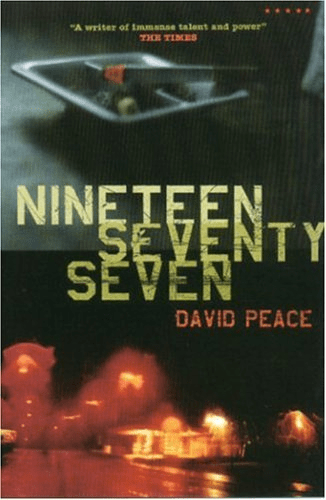
Nineteen Seventy Seven the second in the Red Riding Quartet. This installment takes place during the year of the Queen’s Silver Jubilee, where everyone is celebrating twenty-five years of the reign of Queen Elizabeth II. This celebration is tarnished by a person killing prostitutes, and a police force trying to catch this criminal that is just as corrupt as the thieves, rapists, and murderers they are sworn to stop. The narration of Nineteen Seventy Seven is split in two. Chapters are in first person with alternating narrators. One is disgraced investigator Bob Fraser. The other is has-been journalist Jack Whitehead. They both have their problems with alcohol, women, and ghosts that haunt their every move. The biggest key to understanding what is happening is keeping track of who is narrating at the time, even though sometimes it is purposefully vague.

David Peace has written a novel that feels like less of a crime novel, trying to find a serial killer who is murdering and mutilating prostitutes, and more of a study of two deeply flawed men who are so thick into the mud of their poor decisions and trauma responses that they cannot find their way out. Instead of finding a way to escape or redeem themselves, they both sink deeper and deeper into the muck and slime of their poor choices. They are sick over the murders that are happening in their city and the sickness eats at them. 

I honestly cannot decide how much I like this novel. David Peace has written a crime novel that at moments feels dreamlike and hallucinogenic, but mostly, Nineteen Seventy Seven is ugly and very brutal. There are not only killings and mutilations, but there are violent rapes, racism, and abuse. The police are even dirtier than the criminals, and in the end, the only characters that we have to root for are the women who are running away from the men. Every man is angry and dangerous in this novel, able to do anything to anyone. They all have a capability to be a killer at any moment. This putridness rotting the soul of every character in this novel really makes for a place where you do not want to stay. Because it just is not safe for anyone.

Posted in book review, literary book review | Tagged , , , , , , , , , | Leave a comment

Review: Treacle Walker by Alan Garner

Buy it here:

Amazon, Bookshop

Synopsis:

Treacle Walker is a stunning fusion of myth and folklore and an exploration of the fluidity of time, vivid storytelling that brilliantly illuminates an introspective young mind trying to make sense of everything around him.

‘Ragbone! Ragbone! Any rags! Pots for rags! Donkey stone!’

Joe looked up from his comic and lifted his eye patch. There was a white pony in the yard. It was harnessed to a cart, a flat cart, with a wooden chest on it. A man was sitting at a front corner of the cart, holding the reins. His face was creased. He wore a long coat and a floppy high-crowned hat, with hair straggling beneath, and a leather bag was slung from his shoulder across his hip.

Joe Coppock squints at the world with his lazy eye. He reads his comics, collects birds’ eggs and treasures his marbles, particularly his prized dobbers. When Treacle Walker appears off the Cheshire moor one day – a wanderer, a healer – an unlikely friendship is forged and the young boy is introduced to a world he could never have imagined.

Review:

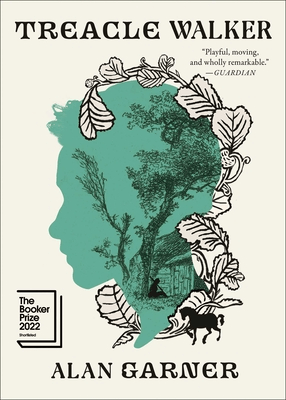
Alan Garner has been telling his version of British Folklore and writing children’s fantasy novels for decades. I have not read him before, but Treacle Walker caught my attention because of a nomination for the Booker Prize, and I liked the cover of the new edition published by Scribner. 

The story starts with Joe, a young kid who is seemingly up to his own devices at all times. He meets Treacle Walker, a wanderer, healer, and someone who Joe becomes friends with. Joe is a lonely kid, reading comics, wearing an eyepatch to correct a lazy eye, and collecting bird eggs and marbles. When he gets attention, any attention, he is drawn to the person, and in this case, Joe gets into quagmires where only Treacle Walker can help him.

Joe’s life is changed when he meets Treacle Walker, and there are many odd things that happen to Joe after they meet. The world around him does not seem real, or real to him. The whole of the novel is Joe trying to find his place in a world that he does not quite understand. The fantasies that he has, about his comic book characters coming to life and his eye that has been under the patch being able to see into a parallel universe when he takes his eyepatch off, are way that he tries to figure out a world that does not make much sense. He is supposed to trust adults, but the adults are only there to trick him, so he spend the whole story trying to find his moorings. Treacle Walker is his only help, and even in this, he is not very helpful.

I enjoyed this short novella, even with the language being somewhat difficult at times to navigate. There are many words and phrases that are very colloquial to the area where Joe lives. This can be distracting and not terribly inviting for a reader who has no clue about this region of the world. I feel like Garner does this on purpose, like those who are outside of this region needs to be off of their moorings like Joe is throughout the novella. He tries and is somewhat successful in repeating Joe’s experience by making his confusion our experience as well.

I received this as an ARC from NetGalley in exchange for an honest review.
Posted in book review, fiction, literary book review | Tagged , , , , , , , , , , , | Leave a comment

Review: Bear by Marian Engel

Buy it here:

Amazon, Bookshop

Synopsis:

‘A strange and wonderful book, plausible as kitchens, but shapely as a folktale, and with the same disturbing resonance.’ – Margaret Atwood

Lou is a shy and diligent librarian at the local Heritage Institute. She works monotonous and dusty hours long into the night but she has found nothing – and no one – to go home to. She has resigned herself to passionless sex on her desk with the Director of the Institute.

When she is summoned to a remote island to inventory the estate of Colonel Cary, she takes it as an opportunity to get out of the city, hoping for an industrious summer of cataloguing.

Colonel Cary left many possessions behind, but she didn’t expect the bear. She soon begins to anticipate the bear’s needs for food and company. But as summer blossoms across the island and Lou shakes off the city, she realises the bear might satisfy some needs of her own.

Review:

In the Werner Herzog documentary Grizzly Man (2005), there is a part where Timothy Treadwell, a man who spent thirteen summers with the bears at Katmai National Park in Alaska, thought that he had a personal connection to the bears, had gained the trust and friendship of the grizzlies around him. In one of his home videos, he films a bear and he says he can see the bear’s friendship and compassion in it’s eyes. At this point, Herzog has a voiceover during the same scene. He says something to the effect that instead of the compassion and friendship that Treadwell sees, Herzog sees coldness and indifference the comes from the bears being wild animals.

I was constantly reminded of this scene while reading Bear by Marian Engel, a short novella from 1976 that has kind of resurfaced in some TikTok posts. Bear is the story of Lou, a librarian who catalogs things for the Institute. When the Institute is given the Colonel Cary Estate, she travels to the remote island to catalog it’s belongings and library. She gets there and learns that there is also a bear on a chain in the backyard that she has to feed. Lou and the bear quickly become closer than they should because she trusts his friendship and compassion. Lou’s behavior reminds me of naiveté of Timothy Treadwell, someone who feels like she has more of a connection to a wild animal than she actually does.


Bear is Marian Engel’s most popular book, but this is also her fifth novel. Reading Bear has made me extremely curious about her and her other books. There is something deeply disturbing and haunting about not only the plot of this book and the character of Lou but also the way that it is written. She tells the story of Lou in a poetic but also sad way, where we can feel the isolation that Lou feels in her life. This loneliness seeps into every aspect of Lou’s life, from her job to being on an island alone for an entire summer with a bear to the way that Lou should not have been put into this situation. Bear won the Governor General’s Award in 1976, which is Canada’s equivalent to the National Book Award, so this bizarre novel was at least critically well-received, which also brings up more questions, particularly what  was going on with novels in Canada in the 70s. I need to know more about the award winning Canadian books at this time and about the life and works of Marian Engel.

Posted in book review, literary book review, Uncategorized | Tagged , , , , , , , , | Leave a comment

Review: Sonic Life by Thurston Moore

Buy it here:

Amazon, Bookshop

Synopsis:

From the founding member of Sonic Youth, a passionate memoir tracing the author’s life and art—from his teen years as a music obsessive in small-town Connecticut, to the formation of his legendary rock group, to thirty years of creation, experimentation, and wonder

“Downtown scientists rejoice! For Thurston Moore has unearthed the missing links, the sacred texts, the forgotten stories, and the secret maps of the lost golden age. This is history—scuffed, slightly bent, plenty noisy, and indispensable.” —Colson Whitehead, Pulitzer Prize–winning author of The Underground Railroad and Harlem Shuffle

Thurston Moore moved to Manhattan’s East Village in 1978 with a yearning for music. He wanted to be immersed in downtown New York’s sights and sounds—the feral energy of its nightclubs, the angular roar of its bands, the magnetic personalities within its orbit. But more than anything, he wanted to make music—to create indelible sounds that would move, provoke, and inspire.

His dream came to life in 1981 with the formation of Sonic Youth, a band Moore cofounded with Kim Gordon and Lee Ranaldo. Sonic Youth became a fixture in New York’s burgeoning No Wave scene—an avant-garde collision of art and sound, poetry and punk. The band would evolve from critical darlings to commercial heavyweights, headlining festivals around the globe while helping introduce listeners to such artists as Nirvana, Hole, and Pavement, and playing alongside such icons as Neil Young and Iggy Pop. Through it all, Moore maintained an unwavering love of the new, the unheralded, the challenging, the irresistible.

In the spirit of Just Kids , Sonic Life offers a window into the trajectory of a celebrated artist and a tribute to an era of explosive creativity. It presents a firsthand account of New York in a defining cultural moment, a history of alternative rock as it was birthed and came to dominate airwaves, and a love letter to music, whatever the form. This is a story for anyone who has ever felt touched by sound—who knows the way the right song at the right moment can change the course of a life.

Review:

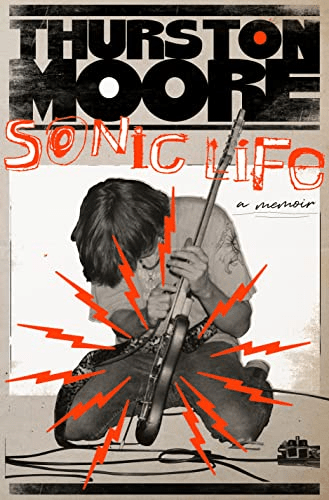
Sonic Youth has been a part of my life for over thirty years, after I bought Dirty when it first came out because I read a review in Spin or Rolling Stone. I have spent my entire life looking for new bands, and while Nirvana was starting to blow up, I wanted to be adjacent to this change in music culture, focus on bands that inspired Nirvana and/or were contemporaries. Sonic Youth was the best band for me, and Dirty is the album that changed everything. 

It is no surprise that I was excited about Thurston Moore’s new memoir, Sonic Life. We get the story that he wants to tell in the way that he wants to tell it. The main focus of the book is the early days of him discovering the New York music scene, falling in love with bands and songs (“I Wanna Be Your Dog” being the best song ever written), and experimenting until he finds his musical voice and vision. In the five hundred pages, Sonic Youth is not even a blip until about a quarter of the way through, and the 90s are not mentioned until close to the 75% mark. The focus on the earlier albums, the touring and the reception, seem to be more important to Thurston’s story because these are the albums where he learned about himself and the band. This is when the music is more a labor of love than anything. 

He talks freely about the music, the bands, and the musicians that he loves, but he is very reluctant to talk about himself. Toward the end he glosses over the fact that he has poor memory when it comes to Sonic Youth lyrics, that he has had the words posted behind the monitors or amps. He also talks about the last decade of Sonic Youth in the last twenty pages, and the disintegration of his band due to him and Kim getting a divorce in the last ten. I know that this is Thurston’s story, and he tells it the way that he wants, but there is very little time spent on anything other than the music that he creates and the people that has met and learned from. This skirting of the personal makes Sonic Life feel a little shallow for a memoir and more of a history of Thurston Moore, as if many of the stories that he tells could be stories that we could learn if we researched hard enough. There could be a second part, a sequel that focuses on the second half of Sonic Youth, but I also know we probably will never get it. 

What we do get is a greater understanding of the music scene that nurtured Sonic Youth. Those early albums, from Sonic Youth to Daydream Nation are informed by Avant Garde art and noise rock. Moore mentions hundreds of bands that are worth checking out, and the whole idea of Sonic Life is that Sonic Youth and Thurston Moore is as influenced by as many bands as they have influenced. This is  not Thurston Moore’s book about Thurston Moore as much as Thurston Moore’s book about Sonic Youth. There is a definite distinction, and those who are looking for a tell-all book about Moore’s personal life are going to be sorely disappointed. Instead we are given a testament of his recollections of being in the most influential noise rock band of all time. 

I received this as an ARC through NetGalley in exchange for an honest review.

Posted in Reviews, Uncategorized | Tagged , , , , , , , | Leave a comment

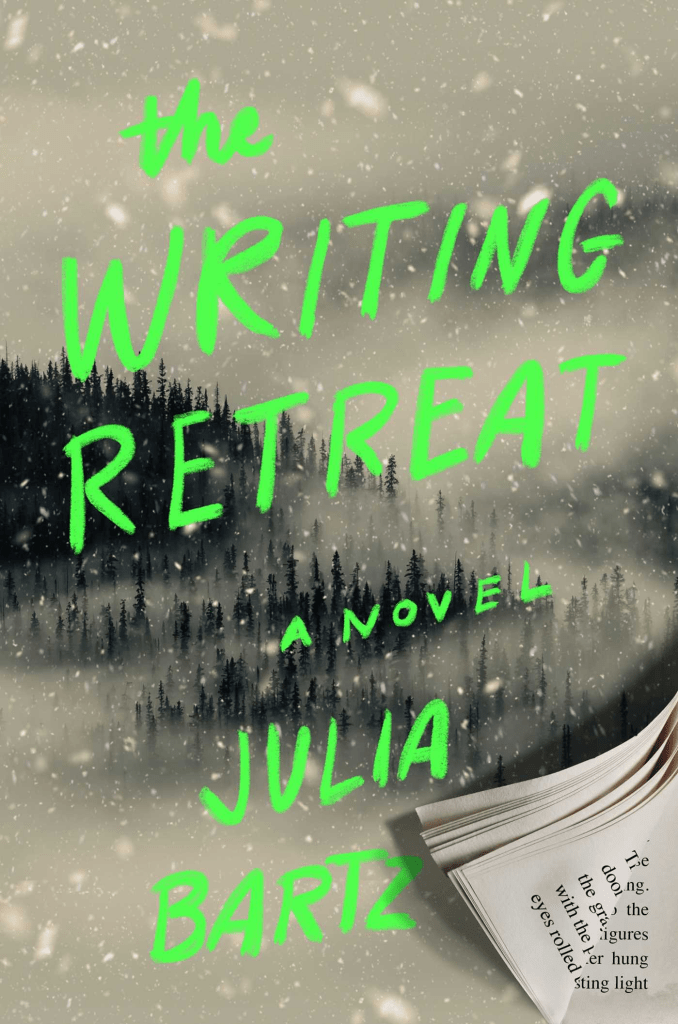
Review: The Writing Retreat by Julia Bartz

Buy it here:

Amazon, Bookshop

Synopsis:

A book deal to die for.

Five attendees are selected for a month-long writing retreat at the remote estate of Roza Vallo, the controversial high priestess of feminist horror. Alex, a struggling writer, is thrilled.

Upon arrival, they discover they must complete an entire novel from scratch, and the best one will receive a seven-figure publishing deal. Alex’s long-extinguished dream now seems within reach.

But then the women begin to die.

Trapped, terrified yet still desperately writing, it is clear there is more than a publishing deal at stake at Blackbriar Estate. Alex must confront her own demons – and finish her novel – to save herself.

This unhinged, propulsive, claustrophobic closed-door thriller will pull you in and spit you out…

Review:

Julia Bartz’s debut novel, The Writing Retreat, starts with a compelling premise. Five female writers are invited to the estate of Roza Vallo to spend a month writing a new book. Blackbriar Estate is also rumored to be haunted. The five writers are given the challenge to write a novel in thirty days, each other them working hard and the best novel is the winner. The main character Alex has writer’s block when she goes to Blackbriar. It does not help that an old friend, Wren, who had a falling out after a drunken night, is another of the contestants. Not only does Alex have to navigate this competition, but she should also try to mend the relationship with her old friend.

There is so much potential in this plot, and for the first half, it moves along as expected. When the story slowly shifts into a completely different second half, my interest evaporates. The second half pretty much abandons the first half, and I no longer care what happens to these characters. Let the ghosts get them, if the ghosts were really part the second half that is. My lack of engagement might be the fact that the most interesting parts of the first half, like the house being haunted, are pretty much abandoned. And the new story, about betrayal, psychopaths, and lies, is not compelling at all. 

The Writing Retreat would have also been better if I liked the writing more. I found Bartz’s writing style to be irritating and distracting. Her taglines for dialogues, which pretty much all follow the same formula, are amateurish and boring. And the excerpts of Alex’s novel within the novel are so uninteresting that I was really tempted to skip them, even though most are less than two pages long. Instead I read the words with no interest in what they were saying. By the last third of the novel, I just wanted to be done. I did not care about what happened to any of them. I wanted out of Blackbrair estate just as much as the girls did. This not the worst novel that I read this year, but it is close to the bottom of the list.

Posted in book review, Reviews | Tagged , , , , , , , | Leave a comment

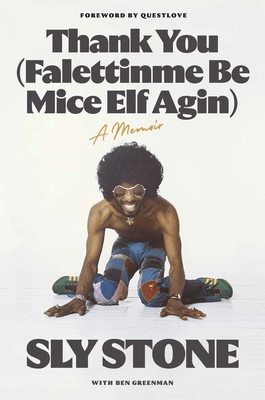
Review: Thank You (Falettinme Be Mice Elf Agin) by Sly Stone

Buy it here:

Amazon, Bookshop

Synopsis:

Not many memoirs are generational events. But when Sly Stone, one of the few true musical geniuses of the last century, decides to finally tell hislife story, it can’t be called anything else.

As the front man for the sixties pop-rock-funk band Sly and the Family Stone, a songwriter who created some of the most memorable anthems of the 1960s and 1970s (“Everyday People,” “Family Affair”), and a performer who electrified audiences at Woodstock and elsewhere, Sly Stone’s influence on modern music and culture is indisputable. But as much as people know the music, the man remains a mystery. After a rapid rise to superstardom, Sly spent decades in the grips of addiction.

Now he is ready to relate the ups and downs and ins and outs of his amazing life in his memoir, Thank You (Falettinme Be Mice Elf Agin) . The book moves from Sly’s early career as a radio DJ and record producer through the dizzying heights of the San Francisco music scene in the late 1960s and into the darker, denser life (and music) of 1970s and 1980s Los Angeles. Set on stages and in mansions, in the company of family and of other celebrities, it’s a story about flawed humanity and flawless artistry.

Written with Ben Greenman, who has also worked on memoirs with George Clinton and Brian Wilson, and in collaboration with Arlene Hirschkowitz, Thank You (Falettinme Be Mice Elf Agin) is a vivid, gripping, sometimes terrifying, and ultimately affirming tour through Sly’s life and career. Like Sly, it’s honest and playful, sharp and blunt, emotional and analytical, always moving and never standing still.

Review:

Sly Stone has had a storied life, through being one of the best artists in the world to losing it all to being the influence of many new artists making music today. Now in his eightieth year, Sly has released his memoir that follows him from his early years as a DJ to his later years of watching television and staying clean. To tell the story about Sly Stone is to tell the story about genius that is dampened by drug use. 

His music is incredible. His songs are in the soundtrack to the zeitgeist of the 60s and 70s, and even if you do not know the lyrics, you can recognize the melodies. From songs covered by Madonna, the Jackson 5, Joan Osborne, and Fishbone to songs samples by Arrested Development, The Beastie Boys, and Kanye West, it is hard to even consider the scope of the influence that Sly and the Family Stone had on the culture.  

I started listening to Sly and the Family Stone because I listened to countless hours of Red Hot Chili Peppers. I was in high school when their album Bloodsugarsexmajik came out. I listened to it countless times, sometimes three or four times a day. I decided to get another of their albums, and without any research, so I bought Freaky Styley. Produced by George Clinton, a very close friend of Sly Stone, their version of “If You Want Me to Stay” made me seek out the original, which led me to much of Sly and the Family Stone’s catalog. 

I knew little about Sly outside of his music. This memoir Thank You (Falettinme Be Mice Elf Agin) shines a light on the genius of Sly Stone, along with the message that he was trying express, and the drugs that muddied it all. When he started Sly and The Family Stone, he made hit after hit, not only for his band but writing songs for others. The more successful he became, the more drugs were readably available. His drugs of choice were cocaine and PCP (angel dust), and doing these separately makes a person unpredictable. Doing them together makes a person unbearable. It is shocking that his story did not end much earlier in tragic death. Many of those around him doing the same things did, like Jimi Hendrix (whom he knew well) and Janis Joplin (whom he did not know well). Unlike most of the artists that he worked with or wanted to work with, he is still alive. He has been sober for four years now, and to think someone was smoking crack and PCP for decades and is finally recovering is worth celebrating. This memoir does not feel like a victory lap for his sobriety as much as the beginning of a new, bright appreciation of someone who had disappeared from the limelight a long time ago. 

The memoir moves fast, goes through some very good times and very tumultuous times, but there is no time when he gets caught up on the good or the bad. It is like he needs to move as quickly as possible through his story because that is how he lived his life. Some of the writing is clever like lyrics or song titles. It shows that his brain will always work in a certain, lyrical, clever way, and even in his later years, this sharpness has not changed. Hopefully this memoir will help Sly Stone come back into the spotlight, at least enough for his to get the recognition that he deserves. 

I received this as an ARC from NetGalley in exchange for an honest review.
Posted in book review, Reviews | Tagged , , , , , , , | Leave a comment

Review: The Night House by Jo Nesbo

Buy it here:

Amazon, Bookshop

Synopsis:

From the internationally best-selling author, a twisted, multi-layered spin on the classic horror novel

In the wake of his parents’ tragic deaths in a house fire, fourteen-year-old Richard Elauved has been sent to live with his aunt and uncle in the remote, insular town of Ballantyne. Richard quickly earns a reputation as an outcast, and when a classmate named Tom goes missing, everyone suspects the new, angry boy is responsible for his disappearance. No one believes him when he says the telephone booth out by the edge of the woods sucked Tom into the receiver like something out of a horror movie. No one, that is, except Karen, a beguiling fellow outsider who encourages Richard to pursue clues the police refuse to investigate. He traces the number that Tom prank called from the phone booth to an abandoned house in the Black Mirror Wood. There he catches a glimpse of a terrifying face in the window. And then the voices begin to whisper in his ear . . .

You know who I am. She’s going to burn. The one you love is going to burn. There’s not a thing you can do about it.

When another classmate disappears, Richard must find a way to prove his innocence–and preserve his sanity–as he grapples with the dark magic that is possessing Ballantyne and pursuing his destruction.

Then again, Richard may not be the most reliable narrator of his own story . . .

Review:

Jo Nesbo has found international fame with his Harry Hole thriller series. (I have thought about trying them more than once but my twelve-year-old brain cannot get passed the name “Harry Hole”. Immature, I know.) The Night House is billed as a stand alone horror novel, and I was interested without reading anything about it. The cover of a bloody phone dangling in front of a creepy old gothic house. This was enough for me. 

The story starts with Richard Elauved hanging out with his friend Tom. They are just goofing around, being boys, when they find a telephone booth. Richard dares Tom to make a prank call. While Tom is on the phone, he literally gets sucked into the telephone. Tom’s disappearance and the unbelievable story that Richard tells about his demise, mixed with the fact that Richard is adopted and not from the town, makes it hard for anyone to believe Richard. The adventure of Richard trying to prove his innocence mixed with a large amount of strange and gruesome things happening to Richard’s friends, makes for a horror story that really is captivating.

Then this story folds in half.

Then this story folds in half again.

The Night House is very good. There are some elements that are a well worn when it comes to horror tropes, but I feel like Jo Nesbo uses them with an innocence and sincerity, like someone who does not read horror or watch 100 horror movies a year. The tone of this story, which grows weirder and weirder as it goes along, does not waver. Richard is a character that feels trustworthy, even when everyone around him shows him evidence that he is wrong. Jo Nesbo has written a character that starts as a bully and a jerk, but he is someone that you are cheering for. You want him to succeed in his situation because you cannot help but like him.  I do not know if Nesbo has more of these types of characters in his writing, but I am certain that it is now time to find out. I look forward to diving into the Harry Hole stories based on the strength of his writing in The Night House.

I received this as an ARC from NetGalley in exchange for an honest review.  
Posted in book review, horror book reviews, Uncategorized | Tagged , , , , , , , , | Leave a comment

Review: Holly by Stephen King

Buy it here:

Bookshop, Amazon

Synopsis:

Holly Gibney, one of Stephen King’s most compelling and ingeniously resourceful characters, returns in this thrilling novel to solve the gruesome truth behind multiple disappearances in a midwestern town.

“Sometimes the universe throws you a rope.” — BILL HODGES

Stephen King’s Holly marks the triumphant return of beloved King character Holly Gibney. Readers have witnessed Holly’s gradual transformation from a shy (but also brave and ethical) recluse in Mr. Mercedes to Bill Hodges’s partner in Finders Keepers to a full-fledged, smart, and occasionally tough private detective in The Outsider. In King’s new novel, Holly is on her own, and up against a pair of unimaginably depraved and brilliantly disguised adversaries.

When Penny Dahl calls the Finders Keepers detective agency hoping for help locating her missing daughter, Holly is reluctant to accept the case. Her partner, Pete, has Covid. Her (very complicated) mother has just died. And Holly is meant to be on leave. But something in Penny Dahl’s desperate voice makes it impossible for Holly to turn her down.

Mere blocks from where Bonnie Dahl disappeared live Professors Rodney and Emily Harris. They are the picture of bourgeois respectability: married octogenarians, devoted to each other, and semi-retired lifelong academics. But they are harboring an unholy secret in the basement of their well-kept, book-lined home, one that may be related to Bonnie’s disappearance. And it will prove nearly impossible to discover what they are up to: they are savvy, they are patient, and they are ruthless.

Holly must summon all her formidable talents to outthink and outmaneuver the shockingly twisted professors in this chilling new masterwork from Stephen King.

Review:

In the latest Stephen King novel, Holly, King returns to Holly Gibney and her Finders Keepers detective agency. She is called about a missing girl, Bonnie Dahl, and what she uncovers is an elderly couple, the Harrises, retired professors from the university and serial killers.

The story is good. I have been reading far more thrillers and mysteries than I used to so I can start to distinguish what I like versus what I do not like. I like the structure like Holly, where we know the Harrises from the very beginning, and we know that they are up to something sinister. King has been writing novels long enough to plot well, pace well, and leave his readers on the edge of their seats. With his starting the book with the killers, we have the information that Holly does not have and will have to figure out. While she gets closer and closer to learning what we know, the tension ramps up higher and higher until a conclusion that is satisfying. The plot is interesting and entertaining and I enjoyed reading a majority of the second half of this book. 

The first half is excruciating. We know that King has political opinions and he shares a great deal of this on Twitter. He has also spent his career writing politics into his stories. Since this novel is set in 2021, with Holly’s mother just dying of Covid, the topic of Covid, vaccinations, masks, and elbow-bumping instead of handshakes are prominent. Holly has been written as a germaphobe anyway, so it is no surprise that she takes precautions seriously. This becomes more and more intolerable as the books move along. It turns from being a cautious character into a statements that are no longer part of the plot. Moments throughout feel like King is just an old man taking the opportunity to yell at the clouds.

I know firsthand that Covid was ugly and brutal. I watched many many patients die in the hospital, but there is also a part of me that feels like the entire pandemic was much more nuanced than King portrays it to be. King’s preoccupation with precautions and vaccination status eventually turn into a good vs evil in this book. The good guys are vaccinated. The bad guys are anti-vaxxers. The good guys tell each other which vaccines they received before taking their masks off (which also does not make much sense because having the vaccine does not stop you from getting or spreading Covid). The bad guys refuse to do elbow bumps with Holly. These things become a focal point in who is good and who is evil really stereotypes all of the characters in the novel and the inclusion of this black and white, right and wrong narrative distracts so much from the story. 


Holly is not one of his best, but it is pretty decent. I like that unlike The Outsider and “If It Bleeds”, this story does not have a single supernatural element, just evil people doing evil things. Holly Gibney, despite all of her flaws, is someone that you are rooting for, and I feel like we are definitely going to see more Holly in the future.

Posted in book review, horror book reviews, Reviews | Tagged , , , , , , , , , , , | Leave a comment

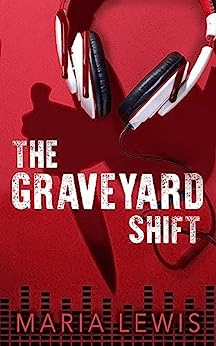
Review: The Graveyard Shift by Maria Lewis

Buy it Here:

Bookshop, Amazon

Synopsis:

When a horror-loving radio show becomes the stage of a gruesome murder, its host Tinsel Monroe is put next on the killer’s list…
—

Tinsel Munroe’s dream of working in radio hasn’t turned out to be everything she hoped it would. Sure, she has her own show – the aptly titled The Graveyard Shift – where she celebrates the sounds of horror-cinema. It’s a pop cultural oasis for the niche audience she has cultivated, but the wage is barely enough to cover her rent and the midnight hours are putting a strain on her relationship with tattooist boyfriend, Zack. After three years at Melbourne’s coolest station, she’s seemingly no closer to a prime-time slot.

That is, until someone is murdered live on air. 

Mistaking it for a Halloween prank at first, a visit from police informs Tinsel that the hysterical call was, in fact, the real deal. She is freaked out by the horrible incident, but her true-crime obsessed sister Pandora is fascinated by it. 

While detectives assure them the killer will soon be caught, the bodies continue to drop with the killer striking at locations tied to Australian film history in increasingly gruesome ways. With a growing, macabre audience to her radio show, that potentially includes the killer, Tinsel begins receiving strange messages over the text lines. Her home and her workplace suddenly aren’t the sanctuaries she once thought they were. 

Tinsel and her sister are left no choice but to team up with Detective James as they race to find the connection between her and the culprit. The people she thought she could trust are now those she should fear the most. In order to survive, Tinsel is going to have to listen to more than just the airwaves…

Review:

Tinsel Munroe is an overnight radio DJ who specializes in all things spooky. This includes creepy music and horror movies (I actually listened to some of the songs she played on her show while reading, which made for a great soundtrack for Tinsel’s life) . When a person dies on the air while trying to win tickets to the premiere of the new Joe Meyer movie, Band Candy, Tinsel’s life turns into a dangerous game of finding the girl’s killer and trying not to be the next target herself.

There are some interesting elements to this mystery. I like Tinsel, the life that she lives above a pub with her tattoo boyfriend, surrounded by interesting music and movies (both premieres and hosting a Halloween movie marathon). Her sister, Pandora runs a true crime blog, and both of them seem to be interesting people to be around. The setting of Melbourne and many scenes placed at Tinsel’s radio station job and movie theaters adds to the appeal of this novel, but the execution of the plot just did not capture me like it should have. The plot feels fatty. Maria Lewis spends a great deal of time on things that are insignificant. There is almost as much time spent on why Tinsel should not wear open toed shoes in a mechanic’s garage as the motive for all of the killings in the book. A disproportionate amount of time is spent on the fact that Tinsel and Pandora are adopted because it has absolutely zero to do with the plot in the end. For a mystery and thriller, this novel is not sharp at all, but just soft and mostly meandering toward the ending.

The Graveyard Shift has some interesting ideas, but it does not seem like the ideas are enough to carry the plot for four hundred pages. The mystery elements are fairly weak. We are given a red herring suspect that we do not believe for one second is the culprit, and we are also given a cliche male cop who is there to save this damsel in distress, while falling in love with her. This has the pieces to be a really great horror-tinged thriller, but instead it is soft and mostly uninteresting, with an ending that feels rushed and not as well plotted as it could have been. 

I received this as an ARC from NetGalley in exchange for an honest review.
Posted in book review, Uncategorized | Tagged , , , , , , , , , | Leave a comment