Review: Zero-Sum: Stories by Joyce Carol Oates

Buy it here:

Amazon, Bookshop

Synopsis:

Zero-sum games are played for lethal stakes in these arresting stories by one of America’s most acclaimed writers, the award-winning, best-selling author of Blonde

A brilliant young philosophy student bent on seducing her famous philosopher-mentor finds herself outmaneuvered; diabolically clever high school girls wreak a particularly apt sort of vengeance on sexual predators in their community; a woman stalked by a would-be killer may be confiding in the wrong former lover; a young woman is morbidly obsessed by her unfamiliar new role as “mother.” In the collection’s longest story, a much-praised cutting-edge writer cruelly experiments with “drafts” of his own suicide.

In these powerfully wrought stories that hold a mirror up to our time, Joyce Carol Oates has created a world of erotic obsession, thwarted idealism, and ever-shifting identities. Provocative and stunning, Zero-Sum reinforces Oates’s standing as a literary treasure and an artist of the mysterious interior life.

Review:

Zero-Sum: Stories is the newest collection of stories by Joyce Carol Oates. She is getting close to publishing fifty short story collections, and this really shows the two main types of stories that she writes: stories about the interior life that dwell deep into the psyche of the main characters and the stories that are just creepy and strange, filled with killers, predators, and danger. I find that the stories driving with characters who are being introspective on topics like suicide and motherhood, do not keep me as interested as the stories that are weird and dangerous. Fortunately for Zero-Sum, this collection has both. 

Joyce Carol Oates has has a long career of telling stories in her own way. She also tells stories about others in her own way. Blonde is her famous book based on Marilyn Monroe, but this is not her only writing based on famous people and events. My Sister, My Love is based on the JonBenet Ramsey case. Black Water is based on Ted Kennedy and the Chappaquiddick incident. Wild Nights! is a story collection based on the final days of five famous authors. Many of her novels are based on celebrities, unsolved crimes, and serial killers. With this knowledge in the back of my head, I was reading the longest story in the collection, “The Suicide”. This is the story about an award-winning author who is planning to kill himself but cannot get the narrative of his suicide right so he keeps rewriting the story. I I could not stop thinking that this story is based on David Foster Wallace. In this story, as well as some of her others, like “The Baby-Monitor” and “The Cold”, Oates dives deep into her characters, making us understand that there is always so much more below the surface that we should not be quick to judge people, and sometimes helping them is beyond our capacities. These stories really are character studies, and there is not always a good resolution to the events. 

My favorite stories by Joyce Carol Oates are her most absurd ones. I know that she can really explain suicide and post-partum feelings, but these stories are not nearly as interesting to me as stories like “Monstersister” about a girl starts growing something weird on the back of her head, and this growth begins to take over her life, and “Mr. Stickum” about a group of girls who are going to take revenge on someone from the neighborhood whom they think is a sexual predator. These stories of absurdity and crime are much of the reason why I really read Joyce Carol Oates. She does really well with the serious stories, but the not-so-serious stories are the ones that really grab my attention. 

Oates is now 85 years old and has published 160 books. For her to continue to write and publish so many novels and stories is remarkable, and we need to keep reading her books. Zero-Sum is not my favorite collection by her, but there are some really good stories in the mix. For someone who has written so much, it is still a wonder that I get excited to see what she is going to write next. 

I received this as an ARC from NetGalley in exchange for an honest review. 

Posted in fiction, literary book review, Reviews | Tagged , , , , , , , , | Leave a comment

Review: Nineteen Claws and a Black Bird by Agustina Bazterrica

Buy it here:

Amazon, Bookshop

Synopsis:

A collection of nineteen dark, wildly imaginative short stories from the author of the award-winning TikTok sensation Tender Is the Flesh.

From celebrated author Agustina Bazterrica, this collection of nineteen brutal, darkly funny short stories takes into our deepest fears and through our most disturbing fantasies. Through stories about violence, alienation, and dystopia, Bazterrica’s vision of the human experience emerges in complex, unexpected ways—often unsettling, sometimes thrilling, and always profound. In “Roberto,” a girl claims to have a rabbit between her legs. A woman’s neighbor jumps to his death in “A Light, Swift, and Monstrous Sound,” and in “Candy Pink,” a woman fails to contend with a difficult breakup in five easy steps.

Written in Bazterrica’s signature clever, vivid style, these stories question love, friendship, family relationships, and unspeakable desires.

Review:

After reading and loving Tender is the Flesh, I was excited to read Agustina Bazterrica’s follow-up, Nineteen Claws and a Black Bird. This collection is twenty stories, ranging from very short to medium short, none of the stories much more than ten pages long. With the collection being so many stories but the book length being so short, it is easy for me to forget the plots of some of the stories a few hours after reading them. Many of them feel more like scenes, sketches, and character studies than actual stories. 

There are some standout moments in this collection, some moments when I am reminded that Agustina Bazterrica wrote Tender is the Flesh, a nasty, incredible novel about people who eat people because they cannot give up meat. Stories like “Unamuno’s Boxes”, “Elena-Marie Sadoz”, “No Tears” and “The Continuous Equality of the Circumference” remind me that Bazterrica is a great writer, a storytelling with dense, powerful language and strong imagery. These are elements that make Tender is the Flesh such a compelling story. Most of the stories I like in this collection are the stories that are longer, because Bazterrica takes the time to give us more so we can be mesmerized in the language of the story’s world, feel what the characters are feeling, and be attached to the conclusions. Most of these stories have horrible outcomes, many of them end in self-harm and suicide, and when we are given any time with the characters, we can feel their emotions before their final acts. It cannot be understated that by the time I have read a few of the stories, I know that most all of the outcomes are bleak, that all of the stories are being told under a black cloud, and that there are no real happy endings to be seen. 

Bleakness has been Bazterrica’s style so far. There is not much happiness in the worlds that she creates, and I can appreciate this type of storytelling. Unfortunately there are many times during this collection when I just do not have the time to get attached to the story, and it is over before it has even really started. I would like to read another short story collection by her with the same page count but with half the stories. Her power is in worldbuilding and creating a breathing character, building up a tower before knocking it all down. Many of the stories in this collection are too short for this to happen. 

I have received this ARC from NetGalley in exchange for an honest review.

Posted in fiction, horror book reviews, Reviews | Tagged , , , , , , , , , , | Leave a comment

Review: Titanium Noir by Nick Harkaway

Buy it here:

Amazon, Bookshop

Synopsis:

A virtuosic mashup of Philip K. Dick and Raymond Chandler by way of Marvel—the story of a detective investigating the murder of a Titan, one of society’s most powerful, medically-enhanced elites

“Cross-genre brilliance from the superbly talented Nick Harkaway.” —William Gibson, New York Times best-selling author of Agency

Cal Sounder is a detective working for the police on certain very sensitive cases. So when he’s called in to investigate a homicide at a local apartment, he’s surprised by the routineness of it all. But when he arrives on scene, Cal soon learns that the victim—Roddy Tebbit, an otherwise milquetoast techie—is well over seven feet tall. And although he doesn’t look a day over thirty, he is ninety-one years old. Tebbit is a Titan—one of this dystopian, near-future society’s genetically altered elites. And this case is definitely Cal’s thing.

There are only a few thousand Titans worldwide, thanks to Stefan Tonfamecasca’s discovery of the controversial T7 genetic therapy, which elevated his family to godlike status. T7 turns average humans into near-immortal distortions of themselves—with immense physical proportions to match their ostentatious, unreachable lifestyles. A dead Titan is big news . . . a murdered Titan is unimaginable. But these modified magnates are Cal’s specialty. In fact, his own ex-girlfriend, Athena, is a Titan. And not just any—she is Stefan’s daughter, heir to the massive Tonfamecasca empire.  

As the murder investigation intensifies, Cal begins to unravel the complicated threads of what should have been a straightforward case, and it becomes clear he’s on the trail of a crime whose roots run deep into the dark heart of the world.

Review:

I have read hardboiled crime novels off and on for most of my life. I think my love for pulp was started with seeing Pulp Fiction in the theater when I was still in high school. It began an obsession with all things pulp. I read the Mammoth Book of Pulp Fiction, and this lead me to so many great authors, particularly Jim Thompson. I loved his stories and I read most of his books in the late 90s (when Vintage Black Lizard released his catalog). Hard Case Crime started publishing new and lost crime novels in 2004, and they had a subscription service, so I had years of getting every one of their crime novels. Pulp fiction, crime novels, noir novels, whatever you want to call them usually center around a clever detective that might have a drinking problem but definitely has problems with the police, even when they are on the squad, have been a part of my life for thirty years. Titanium Noir is a new novel by Nick Harkaway that captures the spirit of the long tradition of the crime novel, with his own twist.

The novel starts with the death of a Roddy Tebbit, a pretty nerdy and neat guy who also happens to be a Titan. Titans are those who have grown big and strong after the use of T7 genetic therapy. T7 and being a Titan equates with the fountain of youth, those who will live for hundreds of years. The side effects are growth, stronger, larger bones, height and strength, and they are hard to murder. It is also known as a therapy for the rich. Tebbit does not present as the type of person who was a candidate for T7 therapy so not only is the investigation about Tebbit’s murder, but it is also about how he was a Titan in the first place. 

Cal Sounder is called into this sensitive case. His character is a homage to a long tradition of hard-boiled, quick-witted detectives. Harkaway does a great job with Cal, molding him into the traditional noir detective: a fast thinker, a bit of a smartass, and a lover of women who also gets beaten to a pulp by those people he is trying to track down, usually more than once. Sounder puts his life on the line more than once to solve this case, and like all paperback detectives, the risks and pain pays off.

Titanium Noir is fast paced, action packed, and fun to read. Even with the genetic modifications aspects thrown in, the story really hums along at a pace that makes it easy and satisfying to read. Most of Harkaway’s novels are long and deeply involved, so at 250 pages, Titanium Noir is a nice change of pace, and definitely a novel worthy of being a starting place for anyone interested in Harkaway’s work.

I received this as an ARC from NetGalley in exchange for an honest review.
Posted in fiction, Reviews | Tagged , , , , , , , | Leave a comment

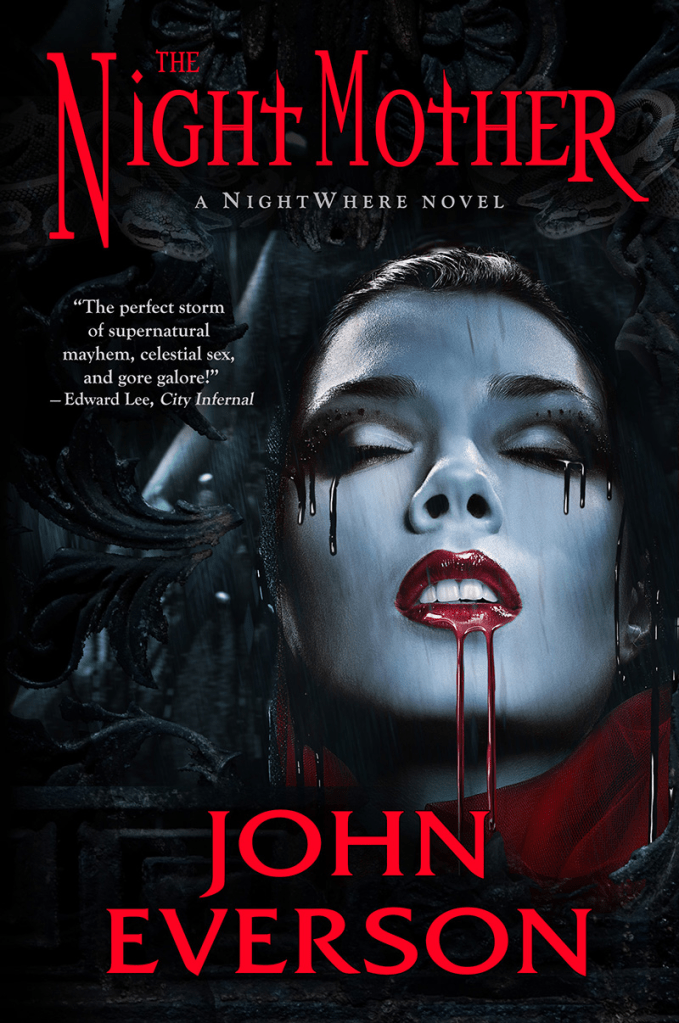
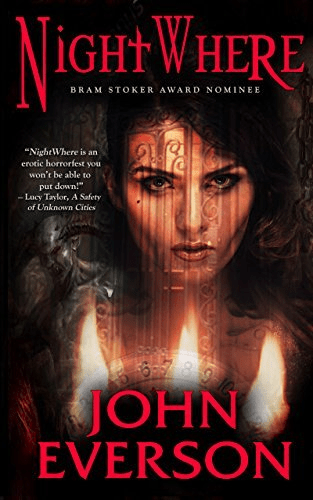
Review: The Night Mother and NightWhere by John Everson

Buy it Here:

Amazon, Bookshop

Synopsis for NightWhere:

She yearned to go beyond… but some curtains should never be opened.
When Rae broached the idea of visiting an underground sex club, Mark didn’t blink. He should have. Because NightWhere is not your usual swingers club. Where it’s held on a given night…only those who receive the red invitations know. Soon Rae is indulging in her lust for pain. And Mark is warned by a beautiful stranger to take his wife away before it’s too late.

But it’s already too late. Because Rae hasn’t come home. Now Mark is in a race against time — to find NightWhere again and save his wife from the mysterious Watchers who run the club. To stop her from taking that last step through the degradations of The Red into the ultimate BDSM promise of The Black. More than just their marriage and her life are at stake: Rae is in danger of losing her soul…

Synopsis for The Night Mother:

The sequel to the 2012 Bram Stoker Award finalist NightWhere!

Selena, a fallen angel, knew that once exposed, you could never escape the pull of NightWhere, a mysterious underground sex club run by beings called The Watchers.

Cassie, a driven dominatrix, didn’t.

When both are drawn into the club’s secret rooms that promise an ecstasy of forbidden pain and pleasure, they must somehow try to protect the men they love. Because the club’s Midnight Queen, the Night Mother, has a deadly plan that may break the boundaries of our world and destroy everything and everyone they’ve ever desired…

Review:

NightWhere is a place where all of your most deviant fantasies can come to life A BDSM sex club that moves to a new location in the Chicagoland area every month, but the inside of the club looks the same everywhere. With people watching from the ceiling and the walls, watching everything that happens. With walls dripping with blood. With people who have never escaped. John Everson published the first book, NightWhere in 2012, and received high praise, even a finalist for a Bram Stoker award. Now he has returned to NightWhere for a sequel, The Night Mother, the woman who is in charge of the entirety of NightWhere, a character who does not factor much into the original novel. 

If you have read NightWhere and loved it: You will love The Night Mother even more. This is a direct sequel to NightWhere. The first novel is Mark trying to save Rae from the club. This novel is about Mark trying to save the club from Rae. (Isn’t there a song, “Heaven Doesn’t Want Me and Hell is Afraid I’ll Take Over”?) This sequel has all of the characters that we connected with from the first novel, with a few new ones to help with the readers journey through NightWhere. 

If you have read NightWhere and did not like it: This is a better story, and to be brutally honest, John Everson is a much better writer now than he was a decade ago. The years between the two novels have been spent publishing great books like The House by the Cemetery, Voodoo Heart, and Five Deaths for Seven Songbirds. He has really honed his skills, and The Night Mother is a well crafted and well-written story. NightWhere is also a much more interesting place a decade later. There are rooms that have any sort of fetish that you can imagine, and as we walk through the club again, we are exposed to a much more varied and interesting experience. And The Night Mother. She has a small scene in the first book, but her character in this second book, along with the Rae and how she has changed, really makes for a sequel that is better than the original.

If you have not read NightWhere: This is a direct sequel, but Everson has written it in a way that you can enjoy it without confusion. He introduces Cassie, a dominatrix, and Paul, her slave, to NightWhere, and they do the job of explaining the club and what is going on with each room. I read NightWhere and The Night Mother back to back, and I did enjoy it this way, but I also tried to think of reading The Night Mother without the context of the first. If I was lost. I do think that Everson does a good job of explaining the situation and even expanding on the club, but I also feel like I get more depth from the sequel having read the first because every character from the first returns for the second. 

Someone blurbed NightWhere as “Hellraiser meets Fifty Shades of Grey.” This is not terribly far from the truth. NightWhere is a special place where the deeper a person travels into the depths of the club, the closer they are to the depths of Hell. I always liked Hellraiser because the main purpose of the story was for the characters to find the ultimate pleasure, unfortunately the Cenobites idea of pleasure is through tortuous pain. This is NightWhere. Many of the acts in the club cross the line between pain and pleasure, and this is the line that NightWhere tries to straddle. There is gore and torture, and some of the horrors that are described here are some of the most brutal I have ever read.

Beneath all of the surface horrors, there is a great deal of heart in both of these novels. Ultimately, NightWhere and The Night Mother are love stories, where ordinary people get caught in the playground for otherworldly entities. In NightWhere, Mark is trying to save his marriage and the woman that he loves from a club that he thinks has brainwashed her becuase “Love Will Conquer All”. He is kind of an idiot, but he is also not wrong. The “Love Will Conquer All” aspect in these novels is what keeps everyone reading and the hope of a good outcome is what makes them palatable. Like one of the characters mentions in The Night Mother, NightWhere is a place for pain but also for pleasure. When you lose sight of the pleasure, all you have left is pain. Everson’s best job in these novels is balancing the horrors of NightWhere with the humanity that is fighting the entire time to stay alive. 

I received The Night Mother from John Everson in exchange for an honest review. 

Posted in fiction, horror book reviews, Reviews | Tagged , , , , , , , , | 1 Comment

Review: I Am My Country: and Other Stories by Kenan Orhan

Buy it here:

Amazon, Bookshop

Synopsis:

A fiercely imaginative debut story collection by “a startling talent who can seemingly do anything” (Anthony Marra) explores the lives of ordinary people in Turkey to reveal how even individual acts of resistance have extraordinary repercussions.

“No recent collection has captivated me as much as I Am My Country. You must read it!”—Andrew Sean Greer

Spanning decades and landscapes, from the forests along the Black Sea to the streets of Istanbul, Kenan Orhan’s ​playful stories ​conjure dreamlike worlds—of talking animals, flying houses, and omniscient prayer-callers—to ​examine humanity’s unfaltering pursuit of hope in even the darkest circumstances.

A determined florist trains a neighborhood stray dog to blow up a corrupt president. A garbage collector finds banned instruments—and later, musicians—in the trash and takes them home to form a clandestine orchestra in her attic. A smuggler risks his life to bring a young woman claiming to be pregnant via immaculate conception across the border with Syria. A poor cage-maker tries to use his ability to talk to birds to woo his childhood love just before the 1955 Istanbul pogrom. These characters are united by a desperate yearning to break free from the volatile realities they face: rising authoritarianism, cultural and political turmoil, and staggering violence.

Ranging from the absurd to the tenderhearted, the stories in I Am My Country illuminate the constant force amid one country’s history of rampant oppression and revolutionary progress: the impulse to survive.

Review:

I Am My Country, the debut short story collection by Kenan Orhan, has ten stories with common theme of war and government oppression. All of the stories are centered around a tumultuous Turkish political climate, and the way that the citizens adjust to their new circumstances. I do not know anything about this, the government of Turkey or the wars and coups that the Turkish people have endured. I only have these stories as a reference. With a mixture of stories that use elements of fables and magical realism, and some taunt and fantastic writing, I understand how the citizens feel. These stories do in a short period of time what many novels take hundreds of pages to do: draw us into the world, make us understand, and make us feel empathy for the characters. 

All of these stories are good in their own ways. A few that I like best:

“The Beyoğlu Municipality Waste Management Orchestra” opens the collection with a woman who works as a trash collector. She starts to find musical instruments then musicians in the garbage on her route. She collects them and has an orchestra in her attic, something that is banned with the new government.

“Mule Brigade” A story where mostly reluctant soldiers drive into a village to round up and kill the work animals so that the villagers are not using them to smuggle contraband across the border.

“The Birdkeeper’s Moral”  A man who catches birds in homemade cages to make a living runs into a girl whom he loved decades earlier. He tries to find a way to impress her, with the help from an owl who is giving him advice. 

Many of these stories are set up like fables, but most of them end as cautionary tales. Orhan’s ability to paint a picture of the world that is crumbling around the character’s feet, while the characters mostly remain hopeful for the future, makes I Am My Country really stick out. It has been a long time since I have read a collection quite as powerful and moving as this one. 

I received this as an ARC from NetGalley in exchange for an honest review.
Posted in Uncategorized | Leave a comment

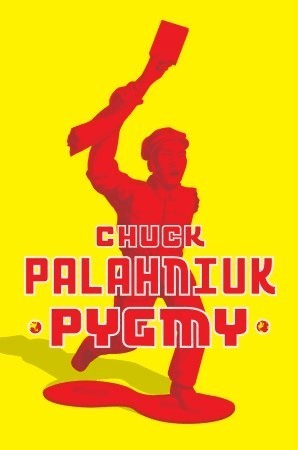
Review: Pygmy by Chuck Palahniuk

Buy it here:

Amazon, Bookshop

Synopsis:

The Manchurian Candidate meets South Park—Chuck Palahniuk’s finest novel since the generation-defining Fight Club.

“Begins here first account of operative me, agent number 67 on arrival Midwestern American airport greater _____ area. Flight _____. Date _____. Priority mission top success to complete. Code name: Operation Havoc.”

Thus speaks Pygmy, one of a handful of young adults from a totalitarian state sent to the United States, disguised as exchange students, to live with typical American families and blend in, all the while planning an unspecified act of massive terrorism. Palahniuk depicts Midwestern life through the eyes of this thoroughly indoctrinated little killer, who hates us with a passion, in this cunning double-edged satire of an American xenophobia that might, in fact, be completely justified. For Pygmy and his fellow operatives are cooking up something big, something truly awful, that will bring this big dumb country and its fat dumb inhabitants to their knees.

It’s a comedy. And a romance.

Review:

Pygmy is not one of Chuck Palahniuk’s great novels. He has several novels that I consider influential and/or worthy of wide readership like Fight Club, Survivor, and Choke. Pygmy is one only the diehard fans can love. Credit can be given because Palahniuk really tries to do something different, trying a disjointed narrative style, and even though the story is decent and some of the scenes are funny, the writing gets in the way. The entire novel as a whole is just painful to complete.

The story is about Pygmy, a foreign exchange student which is given this racially insensitive name by the character’s host family gives him when he comes to their midwestern town. Why does he come to this particular town and this particular family? Because he is part of a group of kid terrorists who are going to create a massive terrorist attack on the United States with the help of secrets they steal from the government job where the host family’s father works. Along the way, Pygmy has to navigate high school, bullies, and his love interest for the daughter of the host family.  

The book was probably pretty fun to write, but it is not fun to read. The typical chapter is written in short sentences, with words mixed up and made up, names and jargon that are odd, quirky, or nonsense, and stories that are more frustrating to parse out than they are worth. Every “dispatch” also has pattern where the story starts, there is a quote from some famous, often times horrible, person, usually a leader or philosopher like Hitler, Mussolini, Karl Marx, etc. The story continues and then the quote returns to wrap up the action in the chapter, like the quotes are metaphors for the story. Pygmy is able to drop all of the quotes but then returns to the broken sentences of his dispatches to make the story. Over two hundred and fifty pages, this grows irritating. I can use some mental gymnastics to solve why the narrator is so poor at writing the story when he is also able to quote so many famous people (and spell every word during a spelling bee), and how the education that he has should be enough to be able to follow basic sentence structure, but it is not worth it. Having stuck it out to the end, after such a long journey to get there, I can say that everything about this book is disappointing. The idea is fun, but the execution does not work for me.  

Posted in fiction, Reviews | Tagged , , , , , , , , | Leave a comment

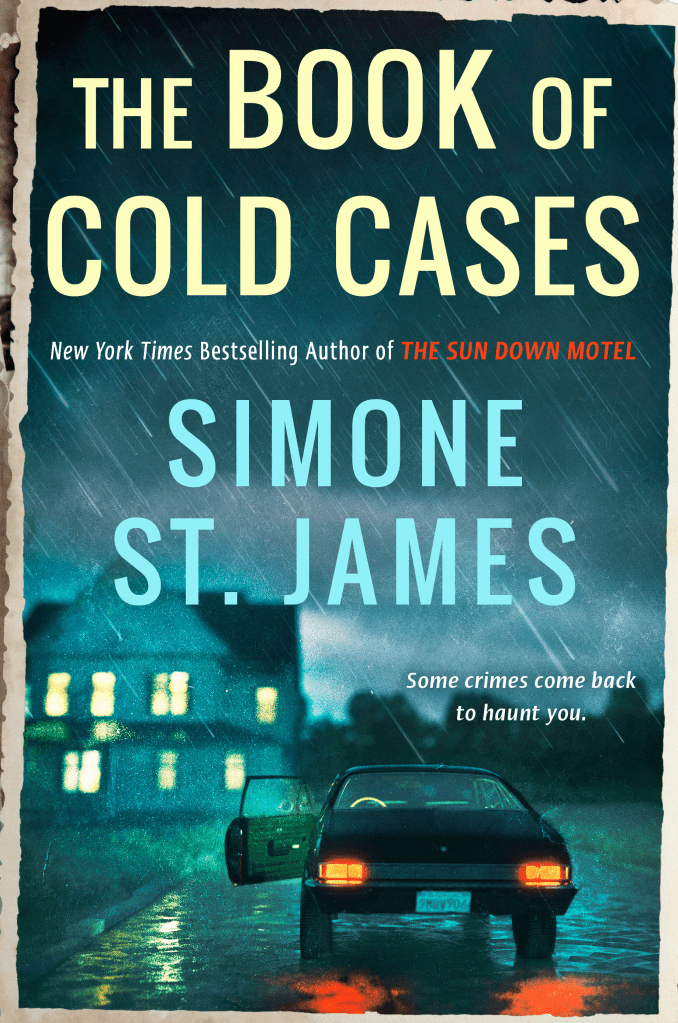
Review: The Book of Cold Cases by Simone St. James

Buy it here:

Amazon, Bookshop

Synopsis:

In 1977, Claire Lake, Oregon, was shaken by the Lady Killer Murders: Two men, seemingly randomly, were murdered with the same gun, with strange notes left behind. Beth Greer was the perfect suspect–a rich, eccentric twenty-three-year-old woman, seen fleeing one of the crimes. But she was acquitted, and she retreated to the isolation of her mansion.

Oregon, 2017. Shea Collins is a receptionist, but by night, she runs a true crime website, the Book of Cold Cases–a passion fueled by the attempted abduction she escaped as a child. When she meets Beth by chance, Shea asks her for an interview. To Shea’s surprise, Beth says yes.

They meet regularly at Beth’s mansion, though Shea is never comfortable there. Items move when she’s not looking, and she could swear she’s seen a girl outside the window. The allure of learning the truth about the case from the smart, charming Beth is too much to resist, but even as they grow closer, Shea senses something isn’t right. Is she making friends with a manipulative murderer, or are there other dangers lurking in the darkness of the Greer house?

A true crime blogger gets more than she bargained for while interviewing the woman acquitted of two cold case slayings in this chilling new novel from the New York Times bestselling author of The Sun Down Motel.

Review:

Shea Collins spends most of her home life locked in her apartment, researching and writing true crime articles for her own blog called “The Book of Cold Cases.” Her blog is moderately successful, with a group of readers who are as interested in unsolved crimes and she is. One of these crimes happened in 1977, in Shea’s hometown, Claire Lake, Oregon. Shea had written about the Lady Killer Murders, where two men are anonymously shot, and how the main suspect in the case is a rich girl named Beth Greer. Forty years later, the same Beth Greer that just came into her life by walking into the doctor’s office where she is a receptionist. Beth had never told her side of the story before, but Shea convinced her that her story needs to be told and that the Lady Killer Murders need to be solved.

This is another Simone St. James novel, and there is so much similarity between The Book of Cold Cases and her previous novel The Sun Down Motel that it feels like they are very easy to compare. I like the setup, and I like that we are instantly given a paranormal vibe from the Greer house. The major difference between these two books is the The Book of Cold Cases is more of a mystery where as The Sun Down Motel leans more toward it’s paranormal aspects. Other than that, they feel like the same characters in different books. Simone St. James writes a good novel, but it does not work as well as her previous book. The Book of Cold Cases feels like the first plot idea that St. James had was the one that she wrote. There could have been more of the exploration into the activities of the house. There could have been a little more cat and mouse with Beth Greer. There were moments when the tension could have been stronger but the decisions that St. James makes this novel feel a very safe. 

This is not to say that The Book of Cold Cases is a bad book. I like the characters and I like the house. I do wish that she would have done more with the house because it is pretty interesting as another character in the plot, but the focus is off of the house most of the novel. I wish that St. James would have taken more chances in The Book of Cold Cases. Instead we get a follow-up to a superior book.

Posted in fiction, Reviews | Tagged , , , , , , , , | Leave a comment

Review: Friend of My Youth by Amit Chaudhuri

Buy it here:

Amazon, Bookshop

Synopsis:

In Friend of My Youth, a novelist named Amit Chaudhuri visits his childhood home of Bombay. The city, reeling from the impact of the 2008 terrorist attacks, weighs heavily on his mind, as does the unexpected absence of his childhood friend Ramu, a drifting, opaque figure who is Amit’s last remaining connection to the city he once called home.

Amit Chaudhuri’s new novel is about geographical, historical and personal change. It asks a question we all grapple with in our lives: what does it mean to exist in both the past and the present? It is a striking reminder that, as the Guardian has said, ‘Chaudhuri has been pushing away at form, trying to make something new of the novel.’

Review:

Amit Chaudhuri’s novel Friend of My Youth is narrated by a character named Amit Chaudhuri, who is explicitly described as a work of fiction who just happens to have the same name as the author. Amit Chaudhuri (the character) is a novelist who has returned to the city of his youth to give readings of his new novel, which might or might not be in stock in any of the bookstores. He wants to spend time with his friend, Ramu, but Ramu is in rehab for a heroin addiction, so Amit is forced to explore the city on his own. The loneliness of seeing the old hotels and eating at the old restaurants by himself seeps through the narrative, making the journey through Bombay sad and dreary. Because, like everywhere, the city has changed, the hotel that he has stayed at his whole life has subtle but disheartening differences, and he wishes he could talk about these things to someone, particularly Ramu, because he would understand the way that Amit feels. 

This is a short book, but it seems like such a long journey. Not much happens throughout the story, and Amit Chaudhuri (the writer) has made the journey as emotional as possible. The reader feels the state of mind that Amit Chaudhuri (the character) is in, the disappointment of reminiscing by himself about a city that is no longer the same as when he was young. This story is really a parallel narrative about all of his youth changing, his literal friend, Ramu, dealing with addiction and struggling to stay clean, and a metaphorical friend, Bombay, dealing with constant changes and struggling to stay clean. Both of them have changed for Amit, and these changes makes him wonder what has changed inside of him. The actual reaction past the nostalgia of a place he used to know is pretty neutral. 


In the end, Friend of My Youth feels like a meditation on growing older and how everything changes. Whether it be a city, a friendship, or himself, the changes will never stop. Sometimes it is nice to go back and reminisce about youth, but the truth is that the present is more a more important subject of focus. 

Posted in fiction, literary book review, Reviews | Tagged , , , , , , , , | Leave a comment

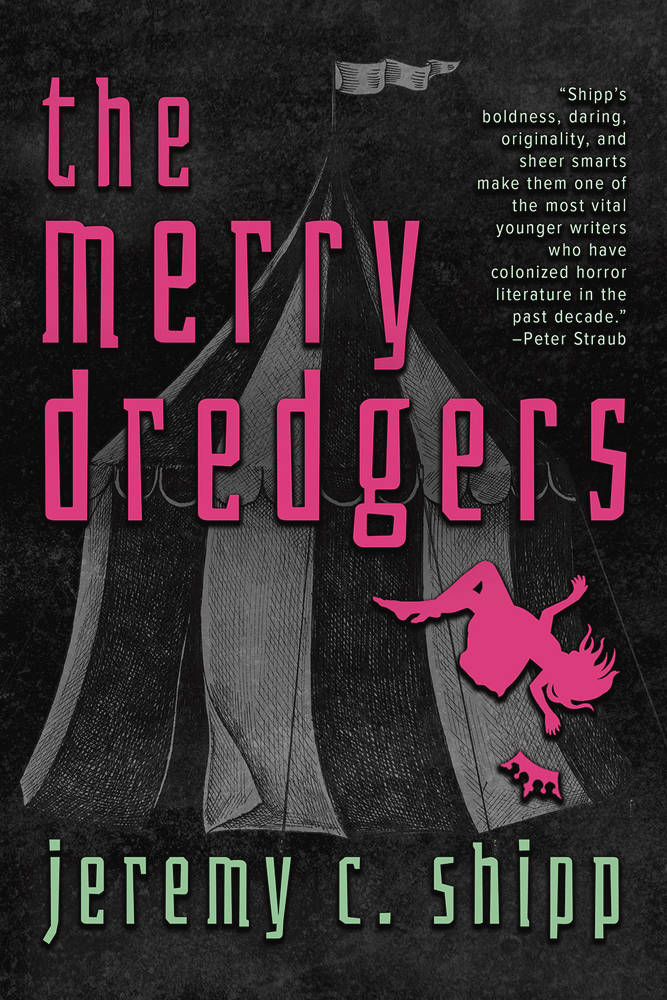
Review: The Merry Dredgers by Jeremy C. Shipp

Buy it here:

Meerkat Press, Amazon, Bookshop

Synopsis:

Seraphina Ramon will stop at nothing to find out the truth about why her sister Eff is in a coma after a very suspicious “accident.” Even if it means infiltrating the last place Seraphina knows Eff was alive: a once-abandoned amusement park now populated by a community of cultists.

Follow Seraphina through the mouth of the Goblin: To the left, a wolf-themed roller coaster rests on the blackened earth, curled up like a dead snake. To the right, an animatronic Humpty Dumpty falls off a concrete castle and shatters on the ground, only to reform itself moments later. Up ahead, cultists giggle as they meditate in a hall of mirrors. This is the last place in the world Seraphina wants to be, but the best way to investigate this bizarre cult, is to join them.

Review:

I am a little obsessed with Jeremy C. Shipp. If anyone were to ask me the most underread author I know, their name would be the first on my list. I have enjoyed everything I have read by them, and I have been reading them since the short story collection, Sheep and Wolves from 2008. It is no surprise that I came into reading The Merry Dredgers with a slanted viewpoint, but I will still stand behind my opinions, even as a Jeremy Shipp stan.

The Merry Dredgers is narrated by Seraphina Ramon, a person who dresses like a princess for children’s parties, lives with her cat, Heracles, has a car that is falling apart, and has a sister Eff, who has joined what is obviously a cult. When Eff has an accident, Phina does what any sister would do: go investigate the cult because they are obviously at fault. The Merry Dredgers live in an old amusement park, Goblintropolis. This amusement park would be a frightening place on any day, but now that a group of people that Phina does not trust lives there, the entire experience feels like there is danger around every corner.

There are a few different layers to The Merry Dredgers. Besides having the mystery of whether or not the cult is at fault for Eff’s accident, we are also given Phina’s journey of self-discovery. The mission of the Merry Dredgers are to dig into themselves to find the core of their beings through meditation, vegetarianism, and a little hallucinogenic drug use. The whole idea is the explore your inner-self until you find the merriment at your core. But like any group of people that is too happy, can this happiness be trusted?

Shipp writes stories that feel like a fever dream narrated by a sleep paralysis demon. There is a large focus on the settings and the scenery of the goblin-themed amusement park, and for Seraphina to actually stay after going on some of the amusements makes her braver than I would have been. Shipp likes the creepiness of spiders and tentacles and goblin wars. Many of the scenes has to start with a reminder of how terribly weird the amusement park is. The creations are outlandish, but so are the stories that Phina tells. I love the stories that she makes up as she goes along, and the conversations between her and her love interest Nichelle are very funny.

This book feels like Shipp is writing the book that they want to write. This book is far weirder than their two novellas released by tor.com (Atrocities and Bedfellow). Many sections of this book remind me of Jeremy Shipp’s Twitter account. The tweets that they post are just as creepy and amusing as the construction of this story and this amusement park. I enjoy every aspect of this book, and I am excited to buy extra copies to share with my unsuspecting friends. Maybe one day Jeremy Shipp will get the readership that they deserve. The Merry Dredgers is another step on this path. 

I received this ARC from NetGalley in exchange for an honest review.

Posted in fiction, horror book reviews, Reviews | Tagged , , , , , , , , | 1 Comment

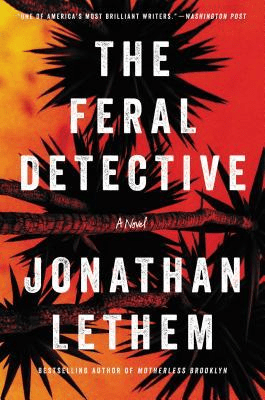
Review: The Feral Detective by Jonathan Lethem

Buy it here:

Amazon, Bookshop

Synopsis:

Phoebe Siegler first meets Charles Heist in a shabby trailer in the desert outside of Los Angeles. She’s on a quest to find her friend’s missing daughter, Arabella, and hears that Heist is preternaturally good at finding people who don’t want to be found. A loner who keeps his pet opossum in a desk drawer, Heist has a laconic, enigmatic nature that intrigues the sarcastic and garrulous Phoebe. It takes some convincing, but he agrees to help.

The unlikely pair traverse California’s stunning Inland Empire, navigating the enclaves of hippies and vagabonds who aim to live off the grid. They learn that these outcasts exist in warring tribes–the Rabbits and the Bears–and that Arabella is likely caught in the middle. As Phoebe tries to delicately extricate her, she realizes that Heist has a complicated history with these strange groups and that they’re all in grave danger.

Jonathan Lethem’s first detective novel since Motherless Brooklyn delivers the same memorable delights: ecstatic wordplay, warm and deeply felt characters, and an offbeat sense of humor. Combined with a vision of California that is at once scruffy and magnificent, The Feral Detective emerges as a transporting, comic, and absolutely unforgettable novel.

Review:

The Feral Detective starts with Phoebe traveling from New York City to the Inland Empire to find her friend’s daughter, Arabella, who is obsessed with Leonard Cohen and always talked about going to Mt. Baldy because this is where Cohen lived at a Buddhist monastery for five years. Phoebe employs a detective, Charles Heist, to help her navigate the situation and find her friend. The adventure Phoebe takes to find Arabella also opens her eyes to another completely different America that she knows nothing about. 

This seems like a reactionary novel, one that starts with the election of Donald Trump and the fallout many people feared. Phoebe walks into Heist’s office three days before Trump’s inauguration, and throughout the entire novel, this changing of the presidency is on the back of Phoebe’s mind. While she searches for Arabella, she runs into several different communities of desert dwellers, people who are living their lives in communities away from the things that she worried about, like politics and the country. They have their own politics and country to live with without worrying about the president. One of the biggest threats to their home is people like Phoebe. There is a juxtapose between the Phoebe being in New York City, a place crowded with people and feeling pretty alone, and Phoebe being in the California desert, a place that is supposed to be desolate but is crowded with people who welcome her, even though she is a stranger. 

Jonathan Lethem’s novel spends most of it’s time off the grid, where there is no internet or cellphone signal. You can feel this in the writing. Phoebe’s narration is thoughtful but also prickly and sometimes a little bored, like she wants to interject herself into the situation even though she does not know the danger she has become entangled with. She tries to tell people what to do and gets upset and offended when she is told no. There are times when she comes off as a person who is looking down on Charles Heist and all of his acquaintances because they are not doing what she says or are letting her into their loop of understanding. This reflects back onto an entitlement some people feel when they meet another group of people they do not completely understand, and it also swings back around to her feelings of the election. She comes out of her bubble and sees people who elected President Trump, pretty much people she did not have to interact with in her New York bubble. She has the world pegged in her mind a certain way, through the lens of a New Yorker, but it is the people she meets in her journey into the desert that changes her worldview. Living on the internet is much easier than talking to people in real life. Phoebe is forced to be with people she does not understand, and without the internet, all she has is people to talk to and rely on. There are rewards in the difficult practice. 


The Feral Detective has given me many things to think about, and I do know that this is the point. At the core the message is to get out of our comfort zone, our bubble, and learn about people we know nothing about. Finding things in common is much easier when we actually try. This can be seen as Jonathan Lethem’s own optimistic reaction to the elections in 2016, one where people need to get away from the limits of the day to day world in which they live and try to creates bonds with new people.

Posted in fiction, literary book review, Reviews | Tagged , , , , , , , , | Leave a comment