Review: The Maidens by Alex Michaelides

Buy it here:

Amazon, Bookshop

Synopsis:

Edward Fosca is a murderer. Of this Mariana is certain. But Fosca is untouchable. A handsome and charismatic Greek Tragedy professor at Cambridge University, Fosca is adored by staff and students alike—particularly by the members of a secret society of female students known as The Maidens.

Mariana Andros is a brilliant but troubled group therapist who becomes fixated on The Maidens when one member, a friend of Mariana’s niece Zoe, is found murdered in Cambridge.

Mariana, who was once herself a student at the university, quickly suspects that behind the idyllic beauty of the spires and turrets, and beneath the ancient traditions, lies something sinister. And she becomes convinced that, despite his alibi, Edward Fosca is guilty of the murder. But why would the professor target one of his students? And why does he keep returning to the rites of Persephone, the maiden, and her journey to the underworld?

When another body is found, Mariana’s obsession with proving Fosca’s guilt spirals out of control, threatening to destroy her credibility as well as her closest relationships. But Mariana is determined to stop this killer, even if it costs her everything—including her own life.

Review:

Alex Michaelides’s follow-up to his best selling novel, The Secret Patient, starts with Mariana getting called to Cambridge University by her niece Zoe because Zoe’s roommate has been found murdered. From the very beginning Mariana suspects Edward Fosca, the professor of Greek tragedies who also surrounds himself with a group of girls he has nicknamed “The Maidens.” Of course the murder that takes place is one of the maidens so she instantly thinks that he is the killer and has a singular vision on how to get him arrested before she becomes the next victim.

There are two types of thrillers. One type is when you do not know who the killer is so you are investigating along with the characters. The other is when you know the killer from the beginning, and you’re waiting for the characters to catch up. The Maidens does not work very well on either account. The plotting and story is pedestrian and a little boring, and Mariana, the psychotherapist who is convinced that Professor Fosca is killing his students, is pretty flat and uninteresting. Periodically she gets into a psychological rant that does nothing but attempt to show off her work skills without give her very much added depth. I do like the idea of the Greek cults and the Maidens following in that tradition, but the actual story and plot just does not win me over.

Most of this is because I did not like or care about any of the characters. Every single one of the men are written in a way that makes them predatory and creepy. Fosca has his harem of college girls, Mariana has a patient named Henry who does not know boundaries and keeps showing up in a stalker kind of way. Even Fred, the pseudo-love interest she meets on the train from London to Cambridge at the beginning of this investigation keeps showing up, professing his love, and saying that they will get married, even after she tells him that there is no chance of this ever happening. There is not a trustworthy man in this whole story, and this might be to try to draw suspicion on all of them. Mariana is surrounded by all of these dodgy people, but she only wants to pursue one person with murder charges. Her vision is so singular, she is blinded to the creepiness of the other men in her life.


In the end, this is a middle of the road book. There is not much to say about The Maidens that goes either way. I am happy to have read it, but I am not enthusiastic about passing it along or rereading it. I might have to try The Secret Patient to see if this book is just a sophomore slump.

Posted in fiction, Reviews | Tagged , , , , , , , , , | Leave a comment

Review: Stringers by Chris Panatier

Buy it here:

Publisher Website, Amazon, Bookshop

Synopsis:

Knowledge can get you killed. Especially if you have no idea what it means.

Ben is NOT a genius, but he can spout facts about animals and wristwatches with the best of experts. He just can’t explain how he knows any of it.

He also knows about the Chime. What it is or why it’s important he couldn’t say. But this knowledge is about to get him in a whole heap of trouble.

After he and his best friend Patton are abducted by a trash-talking, flesh-construct alien bounty hunter, Ben finds out just how much he is worth… and how dangerous he can be. Hopefully Patton and a stubborn jar of pickles will be enough to help him through. Because being able to describe the mating habits of Brazilian bark lice isn’t going to save them.

Review:

Stringers is the adventures of Ben, a seemingly normal guy who works at a bait and tackle shop, follows a diet where healthy food cancels out the sweets, gets high with his best friend, Patton, and builds a huge Lego sculpture in his apartment while sucking down rows of cookies. He also knows way too much about the mating habits of insects, wrist watches, and something called the Chime of Jecca. He does not know how he knows this but he does. It also makes him valuable to intergalactic bounty hunters. 

The story is decent. Ben is kidnapped by string hunters who will sell him to the highest bidder. Ben and the other kidnapped stringers do not want this so they try to escape. The kidnappers have a way to dig into their mind for information, and Ben is of particular interest because he knows the location of the Chime of Jecca, and this Chime can destroy the universe. He has to escape from the hunters, find the chime, and destroy his memory of it so that nobody else can find it. 

I did not care much for this novel, mostly because I did not like the characters enough to carry the story. Ben is pretty insufferable, and I did not care about anyone in the universe that he was trying to save. The only decent person in the whole novel is Patton, and this is because he kind of reminds me of one of my friends growing up. He has a deep loyalty to Ben, even when Ben is not loyal in return. Besides the relationship between Ben and Patton, there does not seem to be much that is interesting about any of the other characters. The jokes are mostly unfunny, juvenile, and immature, and it makes almost all of the scenes unbearable. The worst part about Stringers is the slew of completely unnecessarily footnotes scattered throughout the novel. These are absolutely pointless and nothing but a nuisance. I actually stopped reading the footnotes about twenty pages in because they were not adding anything to the story but distracting my reading. The book starts fairly interesting, but it was a chore to get through the second half. I did not care about the characters or the story enough to really be interested in the outcome.  The best part about Stringers is the awesome cover art.

I received this novel from Netgalley in exchange for an honest review.

Posted in fiction, Reviews | Tagged , , , , , , , | Leave a comment

Review: Like Real by Shelly Lyons

Buy it here:

Publisher Website, Bookshop, Amazon

Synopsis:

In Shelly Lyons’s debut novel, LIKE REAL, Vic Moss—kenjutsu hobbyist and clueless Lothario—lets vanity dictate his decision to acquire an experimental new-tech prosthesis that promises to evolve into a seamless, realistic looking hand. Instead, it tears from his body, transforms into his clone, and pursues a relationship with the same woman Vic has in his crosshairs—forcing Vic to kill or be replaced.

This mind-bending body horror rom-com is a rollicking Cronenbergian gene splice of Idle Hands and How to Lose a Guy in 10 Days. It’s freaky. It’s fun. It’s LIKE REAL.

Review:

Like Real is the story of Vic Moss and his missing hand, well not missing, but surgically removed, and not exactly the whole hand but all but his thumb and part of his palm. Before this, he lived a pretty normal life, enjoying Star Trek, Japanese katanas, watching game shows, and using dating apps to meet girls. When his hand needs to be removed, it pretty much ruins his life, so he has to get it fixed. In comes Like Real and Doctor Cord, who makes prosthetics that look real. When Vic receives his new hand, his life turns into a jumble of bizarre and horrific events. I science and body horror, so this novel is right in my sweet spot. This is why I received Like Real from the author at my request, in exchange for an honest review.

There are many things to like about this novel. Even though the main character Vic is a little bit of a bro who thinks he is overachieving my doing more than the goals that he sets low for himself, he surrounds himself with good, decent people. His friends and neighbors are willing to help him at any turn. His friend Norman helps him with whatever he asks, has a brain filled with self help quotes that he rattles off at any given moment, and lets Vic borrow his car whenever he asks. His next door neighbors, Cozy and Mamie, are two middle aged women who spend most of their lives out by the pool. They also clean Vic’s apartment while he is away, invites him to every gathering that they have by the pool (even after he has been a nuisance to them), watches his dog, and lets Vic borrow their car whenever he asks. Even the love interest, Tanya, is a benefit for Vic. She does have an agenda, trying to get the scoop on his story while bribing hospital people for information with petty cash and homemade cookies, but she is still a good person. Deep down, she is concerned about him, regardless of the terrible mistakes that he makes. There seems to be a wholesomeness in the cast of characters that end up helping Vic along with his journey.

The writing is clever and very funny. The scenes and chapters are well constructed, and the writing decisions that Shelly Lyons makes mostly work out. We are given a coherent story, even when there are some high concept things happening. This story has many moving parts, and it could have very easily turned into a train wreck. We could have gone on long journeys with Tanya to find information for her articles, or we could have been navigated through the long corridors of the Like Real building. We could have fallen into some technical scenes about the procedures and the life and work of Doctor Cord. These things did not happen. The novel is written in third person omniscient, but it does not get far enough away from Vic that we forget what is going on with him.

I loved the last third of this novel. This is when the story starts to really turn, and we learn the fate of Vic and other the Like Real patients. The first two-thirds are good, but I would have been interested in seeing the book if started at the last third. The first part is very much developing the story and the characters, helping us understand the nature of the situation and almost lulls us into a feeling that we might know what is going to happen next, but the final third is really where the action picks up and the pages start to fly by. This is where all of Vic’s neighbors, coworkers, and friends really gather to get their friend through his tough situation with his hand that is just like real. As it is, by the time the last third arrives, we do feel like we have a good understand of Vic and his friends and why they fight so hard to help him.

Posted in fiction, Reviews | Tagged , , , , , , , | Leave a comment

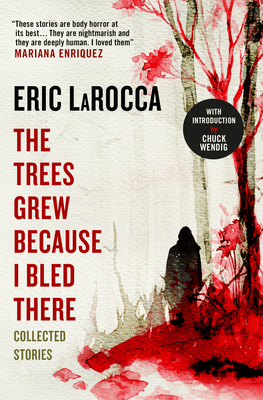
Review: The Trees Grew Because I Bled There by Eric LaRocca

Buy it here:

Amazon, Bookshop

Synopsis:

A beautifully crafted, devastating short fiction collection from the Bram-Stoker finalist and author of Things Have Gotten Worse Since We Last Spoke and Other Misfortunes.

Eight stories of literary dark fiction from a master storyteller. Exploring the shadow side of love, these are tales of grief, obsession, control. Intricate examinations of trauma and tragedy in raw, poetic prose. In these narratives, a woman imagines horrific scenarios whilst caring for her infant niece; on-line posts chronicle a cancer diagnosis; a couple in the park with their small child encounter a stranger with horrific consequences; a toxic relationship reaches a terrifying resolution…

Originally published under the title The Strange Thing We Become and Other Dark Tales, this is a much-praised collection of deeply unsettling, painfully dark tales.

Review:

In 2021, Eric LaRocca published two books. One was the novella Things Have Gotten Worse Since We Last Spoke and one was a short story collection called The Strange Thing We Become and Other Dark Tales. Things Have Gotten Worse Since We Last Spoke became a viral hit, and the little novella from WeirdPunk Books made Eric LaRocca a hot new author, and a household name in horror fiction. Titan Books picked up the rights to both of these 2021 releases. Last year saw an expanded edition of Things Have Gotten Worse Since We Spoke, and this year sees the rerelease of The Strange Thing We Become and Other Dark Tales as The Trees Grew Because I Bled There. 

When I started to see the hype about Things Have Gotten Worse Since We Last Spoke, I decided to read it, and I was a little underwhelmed, like the hype was bigger than the story. I did find the novella well written and some of the scenes were very creepy, but the story did not do much for me. I knew at that time that Eric LaRocca is very talented and so I decided to try again with The Trees Grew Because I Bled There. This collection showcases the great talent in Eric LaRocca’s writing. All of the best elements of Things Have Gotten Worse Since We Last Spoke are here but with stories that I enjoyed more. There is so much style and so much daring storytelling that I could not wait to see what adventure the next story was going to put me through. 

Almost every story could be my favorite story, depending on my mood “Bodies Are For Burning” is about a woman who is watching her niece and cannot stop thinking about burning things, including her niece. “You’re Not Supposed to Be Here” is about a deadly game of telling the truth. “The Trees Grew Because I Bled There” is about a love affair that is much more intense and terrifying than Things Have Gotten Worse Since We Last Spoke. This entire collection is like one of those albums that you can listen to over and over again without skipping any of the tracks. It is just that good.

I think that my favorite today is the original title story, “The Strange Thing We Become” about a person who is asking for advice on an online forum. This story reminded me of Dennis Cooper’s novel, The Sluts, and honestly reading through this collection, I can see Eric LaRocca’s writing being compared to Dennis Cooper. Both of them write deeply disturbing stories that really stick with you when you are finished, and both of them deserve all of the readership in the world. The Trees Grew Because I Bled There is the book that has made me a huge Eric LaRocca fan, and I will be following their career as they continues to grow into a horror superstar.

I received this ARC from NetGalley in exchange for an honest review.

Posted in fiction, Reviews | Tagged , , , , , , , , , , | Leave a comment

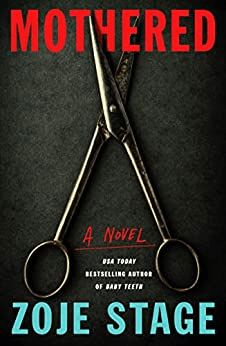
Review: Mothered by Zoje Stage

Buy it here

Amazon, Bookshop

Synopsis:

A claustrophobic psychological thriller about one woman’s nightmarish spiral while quarantined with her mother.

Grace isn’t exactly thrilled when her newly widowed mother, Jackie, asks to move in with her. They’ve never had a great relationship, and Grace likes her space—especially now that she’s stuck at home during a pandemic. Then again, she needs help with the mortgage after losing her job. And maybe it’ll be a chance for them to bond—or at least give each other a hand.

But living with Mother isn’t for everyone. Good intentions turn bad soon after Jackie moves in. Old wounds fester; new ones open. Grace starts having nightmares about her disabled twin sister, who died when they were kids. And Jackie discovers that Grace secretly catfishes people online—a hobby Jackie thinks is unforgivable.

When Jackie makes an earth-shattering accusation against her, Grace sees it as an act of revenge, and it sends her spiraling into a sleep-deprived madness. As the walls close in, the ghosts of Grace’s past collide with a new but familiar threat: Mom.

Review:

This is my third Zoje Stage novel, and I have had nothing but praise for the first two books I read by her. I loved Baby Teeth and Getaway, and I recommended them to everyone I see (I still share a link with all of my reader friends when Baby Teeth is on sale.) Her latest book, Mothered, is a pandemic book, and I realized quickly that books about Covid-19 and isolation are going to irritate and anger me. 

The story starts in the middle of the shutdown, with Grace losing her job and spending most of her time talking to her friend, Miguel, and a group of girls that she is catfishing on the internet, using male avatars to make these girls feel attached to her. (She has also skewed her thinking that she is doing these girls a favor by catfishing them because all she is being charming and trying to help them with their lives.) When Grace’s mother, Jackie, convinces her that she can move in to help with the house while Grace is unemployed in the middle of a lockdown, things quickly turn. There are memories of Grace’s childhood, and her twin sister, Hope, and the reason why Jackie has been distance from Grace since Hope’s death. 

Zoje Stage has written another Mother/Daughter/Sisters codependency book. This is okay, but the setting is what bothered me the most, the actions that Grace in particular takes. I know that the lockdown was difficult for almost everyone, and many people struggled. Getting outside did not bother me. Them sitting on the porch is a nice way to get out of the house. Even walking around the neighborhood as long as Grace avoided contact with someone. These are solutions that could help Grace cope with the things she was feeling. When Grace thinks about calling an ambulance and checking herself into the hospital or having her mother go to the hospital just to get away from her, this is when I have my biggest problems with her. There are times when she is supposed to be quarantined because she is exposed but wants to go to the grocery or the drugstore to get something. Even though Stage has written Grace as someone who is careful about spreading Covid, there are moments when it feels like she is not very careful at all. The passages about her contemplating going to the hospital as a solution to her problems made me want to throw the book across the room. I am a frontline health care worker who watched hundreds of people slowly die on ventilators and throughout the hospital. The hospital is never a place she would ever want to be, especially because she is fighting with her mother.

I did not like these characters. I did not like the situation. I did not understand the point of the throwaway prologue and epilogue, but I still like Zoje Stage and her novels. Maybe this one hit too close to me, and I tried very hard not to nitpick about the character’s pandemic behavior, but I found myself growing more and more irritated with Grace and her life decisions as the book progressed. 

I received this as an ARC from NetGalley in exchange for an honest review.

Posted in fiction, Reviews | Tagged , , , , , , , , , | Leave a comment

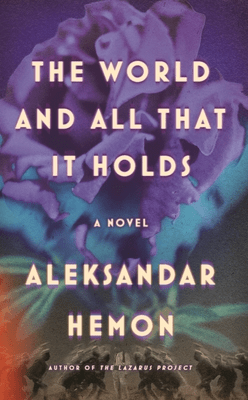
Review: The World and All That It Holds by Aleksandar Hemon

Buy It Here:

Amazon, Bookshop

Synopsis:

The World and All That It Holds–in all its hilarious, heartbreaking, erotic, philosophical glory–showcases Aleksandar Hemon’s celebrated talent at its pinnacle. It is a grand, tender, sweeping story that spans decades and continents.

As the Archduke Franz Ferdinand arrives in Sarajevo one June day in 1914, Rafael Pinto is busy crushing herbs and grinding tablets behind the counter at the pharmacy he inherited from his estimable father. It’s not quite the life he had expected during his poetry-filled student days in libertine Vienna, but it’s nothing a dash of laudanum from the high shelf, a summer stroll, and idle fantasies about passersby can’t put in perspective.

And then the world explodes. In the trenches in Galicia, fantasies fall flat. Heroism gets a man killed quickly. War devours all that they have known, and the only thing Pinto has to live for are the attentions of Osman, a fellow soldier, a man of action to complement Pinto’s introspective, poetic soul; a charismatic storyteller; Pinto’s protector and lover.

Together, Pinto and Osman will escape the trenches, survive near-certain death, tangle with spies and Bolsheviks. Over mountains and across deserts, from one world to another, all the way to Shanghai, it is Pinto’s love for Osman–with the occasional opiatic interlude–that keeps him going.

Review:

Aleksander Hemon’s newest epic novel The World and All That It Holds starts with Archduke Franz Ferdinand visiting Sarajevo in 1914 and getting assassinated on the street in front of the main character, Rafael Pinto. This event changes everything for Pinto, a Bosnian Jew, who goes to war and falls in love with another soldier, Osman, who becomes his partner his entire life, even when they are torn apart. The novel sweeps through four decades of Pinto going to war, being a prisoner, and eventually trying to figure out how to get back home to Sarajevo, with hopes that he will somehow reunite with his family. The journey that Rafael Pinto takes is one that is heartbreaking, dangerous, and at times desperate. 

Rafael’s journey, accompanied by various miles traveled, various opiates ingested, and various unsavory characters befriended, is one that is wonderfully written by Aleksander Hemon. Most of Hemon’s writings involve wars in Europe, particularly Bosnia, and these stories really bring the grit, gore, and danger of the situations to life. There are many times through this novel when I did not know if this scene was the end for Rafael because I did not know how much more a human could take. Some of the finest moments are with Rafael and Osman, who whispers to him in the bunkers during battle, while in prison and starving, and even when they are separated. Osman’s voice is the voice that warns him to get out some dangerous situations, to look out for certain people. The connection that these two men have, as lovers, as companions, and as lifelong guardians, has a tenacity that makes you hope everything works out for them in the end. When I examine the title The World and All That It Holds, it can be taken literally, but there is also another meaning. We are presented with Rafael’s world, and by the end, we are shown everything that Rafael holds dear. His home, his family, his drugs, but most importantly his love. 

For as beautiful and as compelling as this story is, some of the writing did leave me in the dark. There are many many instances of phrases, songs, and conversations in German, French, Spanjol, and Bosnian, without any hints of translation. Even though the book is very lyrical and wonderfully written, the language changes are so frequent that it pulls me out of the story, where I have to stop and translate the text. I wanted to be closer to this story, this world, and it is obvious that the different languages also represent the entire world that Pinto lives in, but it made it harder for me to stay engaged and focused on his journey.

I received this as a ARC from NetGalley in exchange for an honest review.

Posted in fiction, Reviews, Uncategorized | Tagged , , , , , , , , , , | Leave a comment

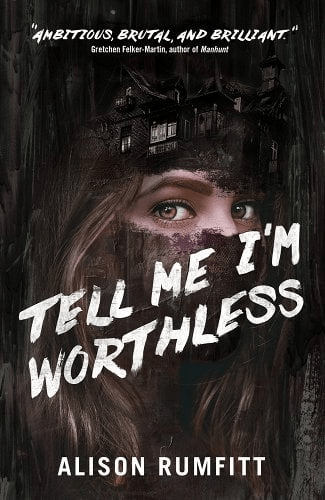
Review: Tell Me I’m Worthless by Alison Rumfitt

Buy it here:

Bookshop, Barnes & Noble

Synopsis:

Three years ago, Alice spent one night in an abandoned house with her friends, Ila and Hannah. Since then, Alice’s life has spiraled. She lives a haunted existence, selling videos of herself for money, going to parties she hates, drinking herself to sleep.

Memories of that night torment Alice, but when Ila asks her to return to the House, to go past the KEEP OUT sign and over the sick earth where teenagers dare each other to venture, Alice knows she must go.

Together, Alice and Ila must face the horrors that happened there, must pull themselves apart from the inside out, put their differences aside, and try to rescue Hannah, whom the House has chosen to make its own.

Review:

“Memory is a difficult thing to navigate, especially traumatic memory. It splinters. You can cut yourself on the edges of it so easily.” p. 206

Last night I set my alarm for 2 AM to finish reading Tell Me I’m Worthless before the kids woke up. I had time to take a nap for an hour or two before they started their day and their demands of my attention. During that nap, I kept having bad dreams about the end of the world and everything falling apart. This is really the message at the core of Tell Me I’m Worthless. The world is falling apart because evil and hate lives and it will never fully be killed because we will always give it room to breathe and flourish. 

The story follows Alice, a transwoman, Ila, her ex-lover and TERF spokesperson, and The House, who is trying to lure them back into it’s clutches. Three years before, Alice, Ila, and their friend Hannah went into this House because they had heard it was haunted. Hannah never came out, and the other two came out scarred (literally and metaphorically) for life. Alice and Ila split up and hate each other after this, taking their lives in separate trajectories. When Ila asks Alice to return to house, they decide to do it together.

This is a very uncomfortable book to read. There is a lot of violence, suicide, sexual assault, and grimy people doing awful things to one another. Alice and Ila are not happy people. We do not really know if they were happy people before they encountered the house, but what we get are two people who cannot outrun their trauma. I do not want to compare books, but the last time I was this uncomfortable reading a novel it was The Sluts by Dennis Cooper. There is something unsettling about every character in this book, and they are not exactly people I would want to spend time with.

I like that Alison Rumfitt uses so different perspectives and timelines. She even breaks the fourth wall a few times before turning this novel and this evil house into a complete metaphor for society. Tell Me I’m Worthless uses a haunted house to tell a horror story but the bones of this story, the true nightmare at the core, is society and the way that we treat one another. Any time the mirror is reflected on us, the conversation is never easy.

I love this book because it really is unsettling. Even though it is a horror novel, it is also has deeper meaning. The way that it is structured with chapters that do not line up, with sentences that are short and sharp, with narrators that are as unreliable as their memory, all it makes for a novel that I cannot stop thinking about. This is one of those books that make you mull over the meaning long after, and even though it is uncomfortable, this is one of those books that you sometimes need to read.

Posted in Reviews | Tagged , , , , , , , , | Leave a comment

Review: The Black Guy Dies First: Black Horror Cinema from Fodder to Oscar by Robin R. Means Coleman and Mark H. Harris

Buy it Here:

Amazon, Bookshop

Synopsis:

A definitive and surprising exploration of the history of Black horror films, after the rising success of Get Out, Candyman, and Lovecraft Country from creators behind the acclaimed documentary, Horror Noire.

The Black Guy Dies First explores the Black journey in modern horror cinema, from the fodder epitomized by Spider Baby to the Oscar-​winning cinematic heights of Get Out and beyond. This eye-opening book delves into the themes, tropes, and traits that have come to characterize Black roles in horror since 1968, a year in which race made national headlines in iconic moments from the enactment of the 1968 Civil Rights Act and Martin Luther King Jr.’s assassination in April. This timely book is a must-read for cinema and horror fans alike.

Review:

As a white guy in a 100% white town, I grew up not thinking much about how black people were portrayed in horror movies. I loved Candyman and The People Under the Stairs, but I did not think of them as black movies or the impact they had in the community. It was not until I was older, when I was listening to a lady at the video store yelling at the worker because she accidentally rented Tales from the Hood instead of the Disney movie Tall Tale that I was aware of black movie makers making horror for black audiences. This was an eye opening experience I had in 1995. Many people had this same experience with Get Out in 2017. The reaction to Get Out and the rise of horror that does not have straight white guys as the target audience has grown since Get Out. It is interesting to read a book like The Black Guy Dies First: Black Horror Cinema from Fodder to Oscar now because you can see the change in the sheer amount of examples from the past five years versus the previous four decades. 

Robin R. Means Coleman and Mark H. Harris start with the first two real examples of black people in horror, Spider Baby and Night of the Living Dead, to the present day films like Us, Candyman (2021), and Bad Hair. Harris runs the website, blackhorrormovies.com, and some of this book, particularly the first 100 pages, feels like a long blog post. There are many lists that break up the introduction, and this feels like it is intentional to let us know that even though there are some very important, uncomfortable conversations they are going to bring up about race in horror movies, they want the reader to be disarmed. It is interesting because one of the first topics that they mention is how black people in early horror movies were used as comic relief, ways to cut tension in the scenes. They use some of these tactics in their writing.

Some of the early films are repeated over and over because they match many of the subjects discussed, but also because many decades, particularly the 80s and 90s were not very rich with black horror cinema. I would like to see a follow up to this book in another 10 years, because we are in a golden age of inclusive horror, with more cinema including people of color and other marginalized groups in lead roles in horror movies. Personally I think this is a good thing. The more films I watch and the more books that I read that I feel like I am not the target audience, the more I know that other people are getting films that mean more to them. 

The Black Guy Dies First is an interesting, well researched study. I have seen many of the films mentioned, but there are a few that I now want to revisit, and a few I never really considered watching before now (like Surf Nazis Must Die). There are a few times when this book feels repetitive because there are so many of the films that fall into several different categories, but as a whole this is a good, well research study. I really want to visit blackhorrormovies.com and use it as a resource for movies I need to watch.

I received this as an ARC through NetGalley in exchange for an honest review.

Posted in Reviews | Tagged , , , , , , , , , | Leave a comment

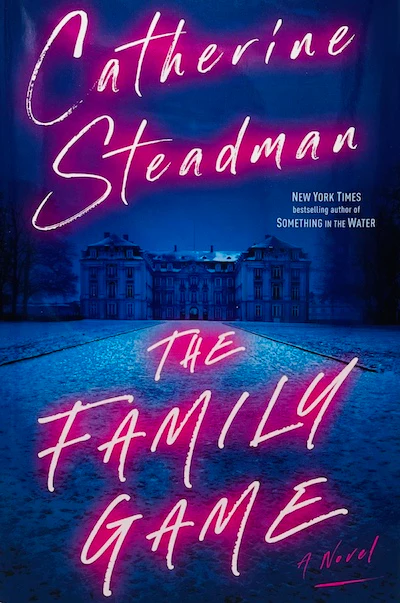
Review: The Family Game by Catherine Steadman

Buy it here:

Amazon, Bookshop

Synopsis:

A rich, eccentric family. A time-honored tradition. Or a lethal game of survival? One woman finds out what it really takes to join the 1% in this riveting psychological thriller from the New York Times bestselling author of Something in the Water, Mr. Nobody, and The Disappearing Act.

Harry is a novelist on the brink of stardom; Edward, her husband-to-be, is seemingly perfect. In love and freshly engaged, their bliss is interrupted by the reemergence of the Holbecks, Edward’s eminent family and the embodiment of American old money. For years, they’ve dominated headlines and pulled society’s strings, and Edward left them all behind to forge his own path. But there are eyes and ears everywhere. It was only a matter of time before they were pulled back in . . .

After all, even though he’s long severed ties with his family, Edward is set to inherit it all. Harriet is drawn to the glamour and sophistication of the Holbecks, who seem to welcome her with open arms, but everything changes when she meets Robert, the inescapably magnetic head of the family. At their first meeting, Robert slips Harry a cassette tape, revealing a shocking confession which sets the inevitable game in motion.

What is it about Harry that made him give her that tape? A thing that has the power to destroy everything? As she ramps up her quest for the truth, she must endure the Holbecks’ savage Christmas traditions all the while knowing that losing this game could be deadly.

Review:

The Family Game starts with Harriet Reed, a novelist on the brink of stardom, getting engaged to marry Edward Holbeck. Ed comes from old American money, ruthless American money. He has estranged himself from his father, mother, and siblings, but when they learn about Harry and their engagement, they start to use her to get him back into the fold. What Harry finds when she meets the Holbecks is a family that holds a great deal of power, money, and influence. She also learns that is a very dangerous undercurrent to everything that they do.

Many things work really well in this novel. Harry is from England, and the Holbecks use some of her cultural ignorance against her, like inviting her and Edward over for a dinner without telling her that it is Thanksgiving. These kinds of little tricks that the Holbecks pull really set up the book for bigger tricks, and we can believe that Harry is a little behind in her understanding while trying to navigate this family. This also makes Harry a strong character, one that shows her adaptability and has a very good chance of beating them at their own games. Another thing that works really well in the novel is the way that the structure of the Holbeck family is presented. We feels from Harry’s very first meeting with any of them that there is an undercurrent to their knowledge, like they have already vetted the situation and that they can get away with whatever they want because they have money and power. The father and patriarch of the Holbecks, Robert, is the biggest example of this. He is to be feared. The way that he conducts himself makes him frightening. At one point, an entire family dinner is canceled specifically because he is in a mood and will not join them. The power that he has not only as the head of his family but as a wealthy white guy in America that can escape whatever problem that arises, is on full display. He knows that he has enough money and influence to cover up any sort of unlawful action. This puts Harry in danger, and we feel the tension Harry feels. We sense the danger that she is in, even before she senses it herself. 


I like that this book is set between Thanksgiving and Christmas, that this is not only a thriller but it is a holiday book as well. Harry spends the holiday season with the Holbecks, and it is definitely one that she will never forget. Even though I was able to predict the ending about half way through the book, I enjoyed The Family Game, and it is a great deal of fun to read. The story moves quickly, and in the end, it is a novel that I can recommend to anyone who likes stories about rich families and the secrets they have kept simply because they have money.

Posted in fiction, Reviews | Tagged , , , , , , , | Leave a comment

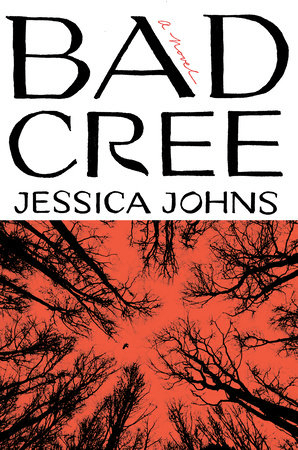
Review: Bad Cree by Jessica Johns

Where to Buy:

Amazon, Bookshop

Synopsis:

In this gripping debut tinged with supernatural horror, a young Cree woman’s dreams lead her on a perilous journey of self-discovery that ultimately forces her to confront the toll of a legacy of violence on her family, her community and the land they call home.

When Mackenzie wakes up with a severed crow’s head in her hands, she panics. Only moments earlier she had been fending off masses of birds in a snow-covered forest. In bed, when she blinks, the head disappears.

Night after night, Mackenzie’s dreams return her to a memory from before her sister Sabrina’s untimely death: a weekend at the family’s lakefront campsite, long obscured by a fog of guilt. But when the waking world starts closing in, too–a murder of crows stalks her every move around the city, she wakes up from a dream of drowning throwing up water, and gets threatening text messages from someone claiming to be Sabrina–Mackenzie knows this is more than she can handle alone.

Traveling north to her rural hometown in Alberta, she finds her family still steeped in the same grief that she ran away to Vancouver to escape. They welcome her back, but their shaky reunion only seems to intensify her dreams–and make them more dangerous.

What really happened that night at the lake, and what did it have to do with Sabrina’s death? Only a bad Cree would put their family at risk, but what if whatever has been calling Mackenzie home was already inside?

Review:

Bad Cree is the story of MacKenzie, a woman living in Vancouver after leaving her Cree family behind to pursue her own life. When she starts having vivid dreams and crows start to follow her everywhere, she knows that she has to go back to a small town in Alberta to find the answers. There are some things that this novel does right, but there are more things that it does wrong. 

I like that Mackenzie goes home to her family to help solve her problem and the family that help her are the women. Her sister, her cousin, her mother, and her aunts all pitch in to help Mackenzie figure out why she is having these dreams and what they mean. The men are in the house or coming home from work, but they do not count. They are not part of this story. This comradery also leads to secrets that are revealed between the women. This is a story that has deep ties to indigenous belief, superstition, and lore. The bond between the women in the house shows that they are all from the same lineage and0 that there are special powers in being Cree and in being a woman. This lesson is definitely learned by Mackenzie through her journey.

The problem is that this book is too long, even at 250 pages. It almost feels like this was a 200 page manuscript, and the publisher asked the author to add another 50 pages to the middle. The first 120 or so pages are decent, and the last sixty is where the story really starts to form. The seventy pages in the middle are forgettable except that it took forever to get through them. I struggled to finish these pages. It did not help that the writing is not too great. There are certain things Johns uses repeatedly to describe her characters and their emotions. They all “laugh slightly.” They all “gulp to breathe.” They all “laugh” again. They all “breathe” again. I am fairly certain that Mackenzie does the same thing in about six of her dreams. This really feels like an early draft of a book, and the writing is very limited. The final showdown, after 220+ pages lasts about two pages, so it is pretty disappointing, and the buildup does not seem worth it. In the end, Bad Cree feels like Jessica Johns has written a much better book about family relationships than a horror novel.

I did not hate this book, but it was hard to finish the last half. I do like that it is very much focused on the women in the story and the men are barely worth a mention, and maybe women get more value out of this prodigal daughter story. It just did not have much for me.

Posted in Uncategorized | Leave a comment