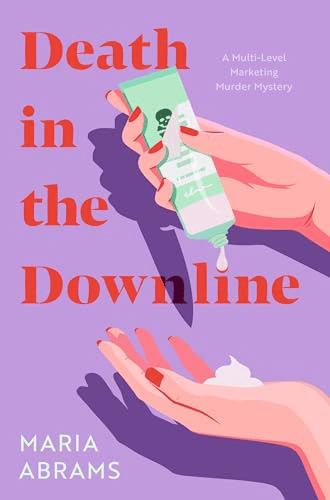
Review: Sky Full of Elephants by Cebo Campbell

Buy it here:

Amazon, Bookshop

Synopsis:

In this exquisite speculative novel set in a world where white people no longer exist, college professor Charlie Brunton receives a call from his estranged daughter Sidney, setting off a chain of events as they journey across a truly “post-racial” America in search of answers.

One day, a cataclysmic event occurs: all of the white people in America walk into the nearest body of water. A year later, Charles Brunton is a Black man living in an entirely new world. Having served time in prison for a wrongful conviction, he’s now a professor of electric and solar power systems at Howard University when he receives a call from someone he wasn’t even sure existed: his daughter Sidney, a nineteen-year-old who watched her white mother and step-family drown themselves in the lake behind their house.

Traumatized by the event, and terrified of the outside world, Sidney has spent a year in isolation in Wisconsin. Desperate for help, she turns to the father she never met, a man she has always resented. Sidney and Charlie meet for the first time as they embark on a journey across America headed for Alabama, where Sidney believes she may still have some family left. But neither Sidney or Charlie is prepared for this new world and how they see themselves in it.

When they enter the Kingdom of Alabama, everything Charlie and Sidney thought they knew about themselves, and the world, will be turned upside down. Brimming with heart and humor, Cebo Campbell’s astonishing debut novel is about the power of community and connection, about healing and self-actualization, and a reckoning with what it means to be Black in America, in both their world and ours.

Review:

Sky Full of Elephants starts with a college professor, Charles  Brunton, getting a call from his daughter, whom he had not talked to his entire life. The novel also starts a year earlier when all of the white people in America walk into bodies of water and drown themselves. Since then America has changed, with most parts of the country surviving being the large cities. Charlie’s daughter, Sidney, lives in Wisconsin, alone, in a neighborhood that had pretty much drown themselves. She is angry at her mother, stepfather, and brothers drowning themselves in the lake behind their house, and mad at her father for never being part of her life. When she gets a message taped to the front gate of her house from her white aunt, Agnes, saying that some white people are still alive and in Orange Beach, Alabama, she knows that Charlie is the only person left who can help her get there.

Part road trip novel, part story of family, and part story about learning about one’s own identity, Sky Full of Elephants starts very compelling. The tension in what America is like at this time, how people travel, what areas are more dangerous than others and which areas are just abandoned, really drives the first half of this novel. Not only do we learn about the tensions between Charles and Sidney and the reason why they have no relationship, we are also learning about different ways America has changed. Electricity is still everywhere, but pumping for oil is something that nobody seems interested in doing. Traveling and hospitality have become more about helping one another than gaining a profit. Adding to the struggle of getting out of Wisconsin, Charles and Sidney are also going to Alabama, a place where rumor is that it is ran by a king, and airplanes do not even fly there anymore. This road trip and world building half of the novel keeps the tension high, and we can sense the danger that the two characters travel into. The second half of the book is a different type of good. Most of it is learning about identity and who black people have been in their history in America versus their history in the world. Sidney being half white and raised by white people knows very little about the history of black people in the world, so she really struggles with some of the ideas and feelings that she is shown. She knows that the identity of America has changed, and she does not know where she fits anymore. The changing America has given black people the opportunity to incorporate attitudes from countries where black people have always been in leadership. I do like the feeling of togetherness and community that this brings, the sense that everyone who shows up is welcomed and treated like family. 

I wish there was more world building like in the beginning, with more interesting things that have happened in America since there are no white people left. Also the ending really did not resonate as much as it was trying to resonate, but Sky Full of Elephants is a really interesting book with some interesting concepts. I really enjoyed the first half and wish to visit there again soon. 

I received this as an ARC from NetGalley in exchange for an honest review.
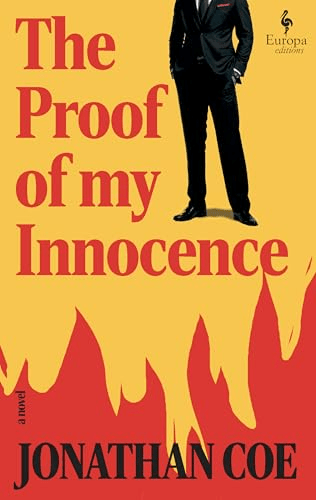
Posted in book review, literary book review, Reviews, science fiction review | Tagged , , , , , , , , , , | Leave a comment

Review: Authority (Southern Reach #2) by Jeff VanderMeer

Buy it here:

Amazon Bookshop

Synopsis:

The bone-chilling, hair-raising second installment of the Southern Reach Trilogy

After thirty years, the only human engagement with Area X—a seemingly malevolent landscape surrounded by an invisible border and mysteriously wiped clean of all signs of civilization—has been a series of expeditions overseen by a government agency so secret it has almost been forgotten: the Southern Reach. Following the tumultuous twelfth expedition chronicled in Annihilation, the agency is in complete disarray.

John Rodríguez (aka “Control”) is the Southern Reach’s newly appointed head. Working with a distrustful but desperate team, a series of frustrating interrogations, a cache of hidden notes, and hours of profoundly troubling video footage, Control begins to penetrate the secrets of Area X. But with each discovery he must confront disturbing truths about himself and the agency he’s pledged to serve.

In Authority, the second volume of Jeff VanderMeer’s Southern Reach trilogy, Area X’s most disturbing questions are answered . . . but the answers are far from reassuring.

Review:

I have read Annihilation at least four times, each time with more interest and more understanding to what happened to the twelfth expedition in Area X, a piece of land that has become uninhabitable and devours every team of explorers that enters. Every time I have read Annihilation, I have started Authority, but I have never been able to get through the whole thing. Authority is less about exploring Area X as it is about office politics that shows how poorly the government is running the expeditions to Area X. The novel starts with a new director, John Rodriguez, nicknamed Control, coming to the job on the first day. Two problems face him as soon as he enters the building. The first is the return of the Biologist, the main character in Annihilation, who is found studying an empty lot and brought back for debriefing into the Southern Reach building. The second is the legacy of the director he is replacing, whom is the Psychiatrist in Annihilation, and leader of the twelfth expedition, and who disappeared into Area X. The Biologist might have clues to the mysteries of what happens inside of Area X and what happened to the rest of her expedition, but she is not talking. The whole of this novel is Control trying to figure out what happened to the Psychiatrist, what the Biologist knows, and why all of his coworkers seem to be conspiring against him. 

VanderMeer takes a strange turn in this sequel to Annihilation, moving away from an environmental horror to a novel of office politics, and there are a few moments in this novel where the story is so slow that it is very easy to give up on this novel. I have given up the first three times I tried to read it. The problems that Control inherits and tries to solve grow deeper and deeper into a mystery that it is easier to just not care and stop reading. The truth is that I did not really know if I was going to get through it this time, or if it was going to be worth the effort. Jeff VanderMeer seems to enjoy these office stories (which he returns to in Hummingbird Salamander), but Authority does not have the same intimacy as Annihilation. In the end, I am glad to get to the end, and I do wonder what is going to happen next. This seems like the second in many trilogies, the one that is setting up for a fantastic ending.


Annihilation also stands alone as a great short novel. You do not have to read on in the trilogy if you do not want to, but Authority is a parallel as well as a continuation. The Biologist and Control are both in the same situation in their respective novels. The confusing bureaucracy of the Southern Reach is just as bad as the landscape of Area X. The people who are supposed to be leading the situation are untrustworthy and actually doing their best to manipulate them both into doing things they normally would not do. There are secret areas in both Area X and in the building of the Southern Reach, and both main characters are able to learn more than they are supposed to know. They both end up on the run because they know too much. In the end, the novels are similar to each other, and there are things in both of them that really deepen the mystery of what might happen in the third volume.

Posted in book review, fiction, horror book reviews, literary book review, science fiction review | Tagged , , , , , , , , , , , , , , | Leave a comment

Review: Creation Lake by Rachel Kushner

Buy it here:

Amazon, Bookshop

Synopsis:

From Rachel Kushner, a Booker Prize finalist, two-time National Book Award finalist, and “one of the most gifted authors of her generation” (The New York Times Book Review), comes a new novel about a seductive and cunning American woman who infiltrates an anarchist collective in France—a propulsive page-turner of glittering insights and dark humor. 

Creation Lake is a novel about a secret agent, a thirty-four-year-old American woman of ruthless tactics, bold opinions, and clean beauty, who is sent to do dirty work in France. “Sadie Smith” is how the narrator introduces herself to her lover, to the rural commune of French subversives on whom she is keeping tabs, and to the reader. Sadie has met her love, Lucien, a young and well-born Parisian, by “cold bump”—making him believe the encounter was accidental. Like everyone Sadie targets, Lucien is useful to her and used by her. Sadie operates by strategy and dissimulation, based on what her “contacts”—shadowy figures in business and government—instruct. First, these contacts want her to incite provocation. Then they want more. In this region of centuries-old farms and ancient caves, Sadie becomes entranced by a mysterious figure named Bruno Lacombe, a mentor to the young activists who communicates only by email. Bruno believes that the path to emancipation from what ails modern life is not revolt, but a return to the ancient past. Just as Sadie is certain she’s the seductress and puppet master of those she surveils, Bruno Lacombe is seducing her with his ingenious counter-histories, his artful laments, his own tragic story. Written in short, vaulting sections, Rachel Kushner’s rendition of “noir” is taut and dazzling. Creation Lake is Kushner’s finest achievement yet as a novelist, a work of high art, high comedy, and unforgettable pleasure.

Review:

In Rachel Kushner’s fourth novel, Creation Lake, Sadie Smith is at a place in her life where she is starting to wonder if the work she is doing is worth the risk. After being fired from the US government as a secret agent due to a poor finish to one of her assignments, she starts to work around the world as a private agent. For this assignment, her faceless and nameless bosses have hired her to infiltrate a radical group who have plans to stop developments on French farmland. While doing research she meets Pascal Balmy, the leader of the group, and she is able to guess the password to the email of Bruno Lacombe, the mentor of the group. Bruno is a mystery, someone who lives close but off the grid, rumored to be in a cave in the countryside. He uses his daughter’s computer to write the group emails but most of them are ramblings about Neanderthals, Prometheus, Polynesian sailing, and his life. 

The novel unfolds in strange ways, slowly and mostly off of any actual path. The writing is immersive, and even though it might not feel like it is going anywhere, before long you realized that you are a long way from where you started. The character of Sadie Smith, an alias for this mission that is chosen because it is sort of interesting yet hard to find anything if Googled, is a mixture of hard coldness and soft yearning. She spends so much of her social time keeping all of her stories straight, trying to get everyone in the anarchist group to trust her, that when she is done, back in the house that she is using, she can do nothing but drink beer and enjoy the quiet. The hours where she can turn off her secret agent become a haven of piled up empty bottles of beer and wine and dirty glasses in the kitchen. This turns into something that she likes more than having an agenda and needing to talk to people. Before too long, she becomes wrapped in the curiosities contained in Bruno’s emails, and the chances of looking for a new life after this mission grow more and more appealing.

Creation Lake is a stellar novel that starts a little odd, but the cohesion of the different pieces show a novel that is well written and well crafted. In a general sense, I have very little interest in many of the subjects that come up in this book, the thriller/spy aspect does not have much tension, and the conclusion is a little thin, but there is something about Creation Lake, something about it being more of character study than a secret agent adventure story that makes me feel like it is only done well because Rachel Kushner did it. 

I received this as an ARC from NetGalley in exchange for an honest review.

Posted in book review, literary book review, Reviews | Tagged , , , , , , , , , | Leave a comment

Review: How to Sell a Haunted House by Grady Hendrix

Buy it here:

Amazon, Bookskhop

Synopsis:

Grady Hendrix takes on the haunted house in a thrilling new novel that explores the way your past—and your family—can haunt you like nothing else.

When Louise finds out her parents have died, she dreads going home. She doesn’t want to leave her daughter with her ex and fly to Charleston. She doesn’t want to deal with her family home, stuffed to the rafters with the remnants of her father’s academic career and her mother’s lifelong obsession with puppets and dolls. She doesn’t want to learn how to live without the two people who knew and loved her best in the world.

Most of all, she doesn’t want to deal with her brother, Mark, who never left their hometown, gets fired from one job after another, and resents her success. Unfortunately, she’ll need his help to get the house ready for sale because it’ll take more than some new paint on the walls and clearing out a lifetime of memories to get this place on the market.

But some houses don’t want to be sold, and their home has other plans for both of them…

Review:

In Grady Hendrix’s sixth novel, Louise learns that her parents have died in a car crash, and she has to return to her childhood home in Charleston, SC to help with the funeral and decisions as to what will happen with the house and all of the belongings inside. This includes a huge doll collection and a room filled with homemade puppet from her mother’s Christian ministries. Her brother, Mark, has differing opinions on what they should do with all of the stuff, and how much more he deserves than Louise. After a few days of fighting with Mark and trying to clear out some of her mother’s things, Louise learns that there is much more to her parent’s house than just a bunch of junk. 

I have never had such a visceral reaction to the attitudes and actions of two main characters while reading any other novel. Louise and Mark are the worst. They are two of the most self-centered, selfish, garbage people I have ever read. Both of them are hateful to each other and Louise’s reason for leaving her daughter with her ex in San Francisco for a longer period of time is money. The money is not even that significant amount, and it is obvious from the way that her brother operates that the money is not even guaranteed. Mark is definitely a guy who would double cross his sister to keep all of the money for himself, and feel justified in it. There are no redeeming qualities in either of these characters and when bad things happen to them, they become even more insufferable.  


Grady Hendrix can write, and he does a good job writing horror novels, but I am not sure that his horror novels are the type of horror novels that I like. This is my third novel of his, and The Southern Book Club’s Guide to Slaying Vampires is the only one I have been able to recommend. The other two, The Final Girl Support Group and How to Sell a Haunted House have left a great amount to be desired, and the biggest problem in them is that the characters are so unlikable that I do not care what happens to them. My favorite character in this book, Barb, a woman who buys haunted toys online to purge them of their demons only has one scene. I liked her for the same reason why I liked all of the ladies in The Southern Book Club’s Guide to Slaying Vampires. They are Southern women with lemonade, pot lucks, and “Bless your heart” manners. They are the best characters in any of Grady Hendrix work and maybe all of horror. Unfortunately there is very little of this southern “charm” in this novel, and the rest of the novel is not very entertaining. Grady Hendrix knows how to write, but the characters that he writes are either very endearing or incredibly irritating, and he spends more time on the latter.

Posted in book review, horror book reviews, Reviews | Tagged , , , , , , , , | Leave a comment

Review: Fathers and Fugitives by S.J. Naude

Buy it here:

Amazon, Bookshop

Synopsis:

An inventive and emotionally charged novel about fatherhood and family, loyalty and betrayal, inheritance and belonging.

Daniel is a worldly and urbane journalist living in London. His relationships appear to be sexually fulfilling but sentimentally meager. He has no relationships outside of sexual ones, and can seem at once callow and, at times, cold to the point of cruel with his lovers. Emotionally distant from his elderly, senile father, Daniel nonetheless returns to South Africa to care for him during his final months. Following his father’s death, Daniel learns of an unusual clause in the old man’s will: he will only inherit his half of his father’s considerable estate once he has spent time with Theon, a cousin whom he hasn’t seen since they were boys, who lives on the old family farm in the Free State. Once there, Daniel discovers that the young son of the woman Theon lives with is seriously ill. With the conditions bearing on Daniel’s inheritance shifting in real time, Theon and Daniel travel with the boy to Japan for an experimental cure and a voyage that will change their lives forever.

S.J. Naudé’s masterful novel is many things at once: a literary page-turner full of vivid, unexpected characters and surprising twists; a loving and at times shockingly raw portrayal of its protagonist’s complex psyche; and a devastatingly subtle look into South Africa’s fraught recent history.

Review:

Fathers and Fugitives, a novel translated from the Afrikaans by Michiel Heyns, is split into five distinct parts, each with their own significant impact on the life of Daniel, a journalist from South Africa living in London. The first section is about a Serbian man whom he meets at an exhibition for an American minimalist painter. He quickly gets entangled with the man and his friend’s financial and legal problems. The second section of the novel is about taking care of his father in the final throes of dementia. The third is about going to South Africa to meet a cousin whom he had only seen once or twice when they were kids. One of his cousin’s staff members has a child that is very sick, and Daniel agrees to help him get medical treatment. The fourth section is Daniel trying to adopt an infant who has lost his mother. The final section has Daniel as an old man, visiting the life and memories that he had lived. 

In each section, Daniel encounters people that need his help and generosity, and he generally does not tell them no. The care that he gives to his friends, his father, his cousin, and acquaintances is a burden to him that he shoulders with grace, and in the end, Daniel comes out as a good person, wanting to do the right thing in every encounter. 

Fathers and Fugitives is a rich and captivating story that does such an incredible job introducing characters and making them such an impactful part of Daniel’s journey. With each new section and each new set of problems, Daniel navigates these situations with grace. He never gets frustrated, and he does what he needs to do to make sure that he does not let down his family. In the end, Daniel can go through his life and the people that he impacted, and he can be confident that he made the best decisions that he could make with the knowledge that he had at the time. This is a novel that really has makes me think a great deal about life and how atypical it is for someone to do his best in every situation to help people, even when there is little to no motivation besides goodness.

I received this ARC from Europa Editions in exchange for an honest review. 

Posted in book review, literary book review | Tagged , , , , , , , , , , , | Leave a comment

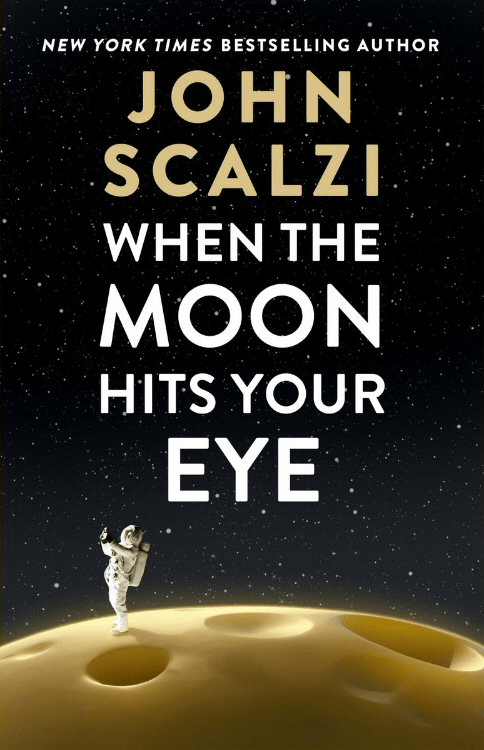
Review: Crypt of the Moon Spider by Nathan Ballingrud

Buy it here:

Amazon, Bookshop

Synopsis:

Crypt of the Moon Spider is a dark and dreamy tale of horror, corruption, and identity spun into the stickiest of webs.

Years ago, in a cave beneath the dense forests and streams on the surface of the moon, a gargantuan spider once lived. Its silk granted its first worshippers immense faculties of power and awe.

It’s now 1923 and Veronica Brinkley is touching down on the moon for her intake at the Barrowfield Home for Treatment of the Melancholy. A renowned facility, Dr. Barrington Cull’s invasive and highly successful treatments have been lauded by many. And they’re so simple! All it takes is a little spider silk in the amygdala, maybe a strand or two in the prefrontal cortex, and perhaps an inch in the hippocampus for near evisceration of those troublesome thoughts and ideas.

But trouble lurks in many a mind at this facility and although the spider’s been dead for years, its denizens are not. Someone or something is up to no good, and Veronica just might be the cause.

Review:

Everything that Nathan Ballingrud has published is worth reading. From his first book of stories, North American Lake Monsters, to his debut novel The Strange, almost everyone who reads his books becomes a fan. He has not released many books, yet North American Lake Monsters was adapted into the Hulu series Monsterland, and his novella The Visible Filth was filmed in 2019 as Wounds. To write a handful of books but already have two big adaptations shows the quality of the stories he writes. His latest novella, Crypt of the Moon Spider, is the first in the Lunar Gothic Trilogy, and this first volume is the beginning of a story that seems like a mixture of horror, sci-fi, and alternate history.

The novella takes place in 1923 on a moon covered in forests, caverns, and rivers. Veronica Brinkley is brought to the moon to be signed over to the Barrowfield Home for Treatment of the Melancholy, a sanatorium where rich people dump their loved ones for someone else take care of their ails. Veronica quickly meets Dr. Cull and his assistant, whom she names “Grub.” It does not take very long after Veronica meets Dr. Cull that he is experimenting with brain surgeries, cutting out a piece here and there, using moon spider silk as neurotransmitters, and changing his patients into whomever he wants in the name of health and science. 

Crypt of the Moon Spider is short and fast paced. There are many elements that are interesting, and I hope that they are explored in further volumes, but this is the problem with this introduction. For as heavy as it is on history, world building, and Dr. Cull experimenting on patients, Ballingrud does not spend much time getting deep enough into characters that we actually feel sympathy or empathy for them. This is not to say that the story is entertaining and fascinating. Ballingrud has proven beyond any doubts that everything that he writes is compelling even if it more plot driven than character driven. I find myself more interested in the world Ballingrud is building than the people who are being affected by it, mostly because I have been given more of chance to understand the moon spider universe than to feel attached to any of the characters. 

I received this as an ARC from NetGalley in exchange for an honest review.
Posted in book review, horror book reviews, Reviews, science fiction review | Tagged , , , , , , , , , , , , | Leave a comment

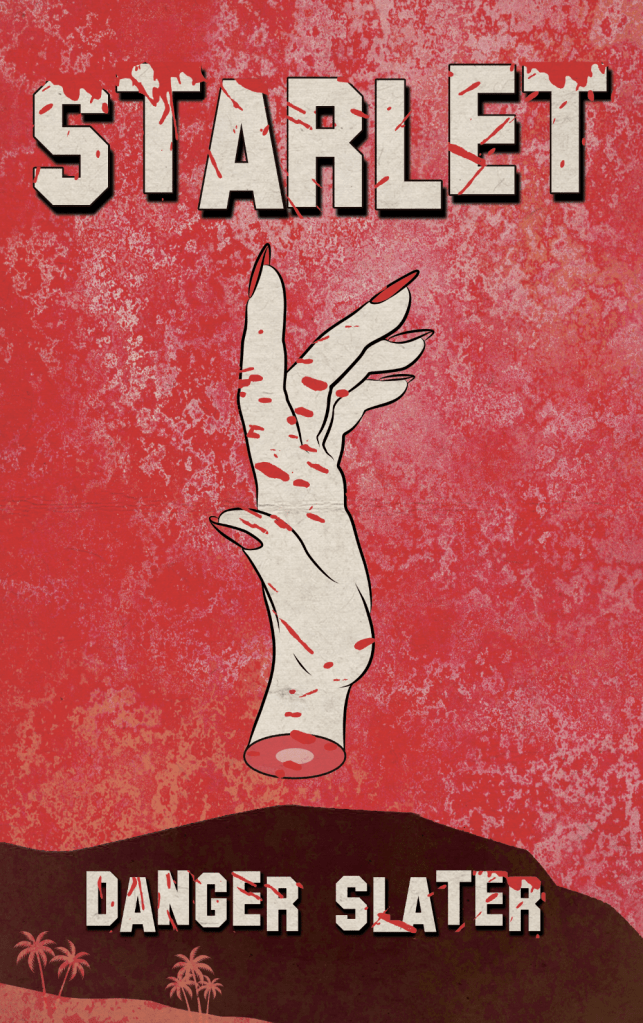
Review: Sacrificial Animals by Kailee Pedersen

Buy it here:

Amazon, Bookshop

Synopsis:

Inspired by Kailee Pedersen’s own journey being adopted from Nanning, China in 1996 and growing up on a farm in Nebraska, this rich and atmospheric supernatural horror debut explores an ancient Chinese mythology.

The last thing Nick Morrow expected to receive was an invitation from his father to return home. When he left rural Nebraska behind, he believed he was leaving everything there, including his abusive father, Carlyle, and the farm that loomed so large in memory, forever.

But neither Nick nor his brother Joshua, disowned for marrying Emilia, a woman of Asian descent, can ignore such summons from their father, who hopes for a deathbed reconciliation. Predictably, Joshua and Carlyle quickly warm to each other while Nick and Emilia are left to their own devices.

Punctuated by scenes from Nick’s adolescent years, when memories of a queer awakening and a shadowy presence stalking the farm altered the trajectory of his life forever, Sacrificial Animals explores the violent legacy of inherited trauma and the total collapse of a family in its wake.

Review:

When I started reading Sacrificial Animals, I did not think I was going to end up liking it very much. It is the story of two brothers, Nick and Joshua Morrow, growing up with their angry father Carlyle in isolation on a one thousand acre farm called Stag’s Crossing. Nobody is allowed on the farm except the three men, and Nick and Joshua cannot wait to leave. The novel is two stories, the past and the present (which “the present” actually takes place in the 90s). The past is about Carlyle being tough and angry with his two sons while the present is about Carlyle calling the boys to return to Stag’s Crossing because he is dying. Joshua had not talked to his father in twenty plus years due to Carlyle not accepting his marriage to Emilia, a stranger, a foreigner, an “unacceptable woman from an unacceptable family.” We think Carlyle is a hard, bitter, racist person, someone who lost his wife and son in childbirth and will never forgive the world for letting this happen. 

I did not instantly love this novel because the beginning starts slow and subject is very dark, with a young Nick trying to get the approval of a father that preferred the company of Joshua, and the summoning of their return to the farm in hopes that things had finally changed. Kailee Pedersen works hard on her prose, using verbose sentences and repetition to make sure the reader understands that Carlyle is a vile human being. As the novel moves forward, the coldness of the father mixed with the loneliness of Nick on the farm and living alone as a forty-three year old makes you feel the impending doom, like something bad is going to happen between the two that will be irreversible. You just do not know what exactly. In the last sixty pages of the novel, the entire thing comes together (or falls apart depending on your perspective), and there is a strange sense that Carlyle was right all along, that he spent most of his life isolating his family from the outside world for a good reason. 

I enjoyed Sacrificial Animals, and maybe it is because I understand a father/son relationship that is rocky at best. The approval that Nick seeks from his father, and the hopes that their relationships will be mended by the end makes complete sense, as does watching nothing turn out the way that it is supposed to turn out. I also like how the construction of this story, from the opening scene to the very last sentence, feels very important. Even though the sentences and word choices can be a little on the busy side, the story itself seems taut, thoughtful, and well-executed. This could be one of my favorite novels of the year. 

I received this as an ARC from NetGalley in exchange for an honest review.
Posted in book review, horror book reviews, literary book review, Reviews | Tagged , , , , , , , , , | Leave a comment

Review: Letters to the Purple Satin Killer by Joshua Chaplinsky

Buy it here:

Clash books website, Bookshop

Synopsis:

Jonas Williker is considered one of the most sadistic serial murderers of the modern era. This epistolary novel explores the aftermath of his arrest and the psychological trauma of those who lived through it. The Pennsylvania native brutalized his way into the zeitgeist during the early part of the new millennium, leaving a trail of corpses across five states before his eventual arrest. All told, Williker was responsible for the rape and murder of 23 women, and is suspected in the deaths of dozens more. His calling card—a torn piece of fabric found on or inside the bodies of his victims—helped popularize his now ubiquitous nickname. The Purple Satin Killer.  In the years following his arrest, Jonas Williker received hundreds of letters in prison. Collected here, these letters offer a unique glimpse into a depraved mind through a human lens, including contributions from family, the bereaved, and self-professed “fans.” They represent a chilling portrait of the American psyche, skewering a media obsessed culture where murderers are celebrities to revere. What you learn about the man from these letters will shock you, but not as much as what you learn about yourself.

Review:

Jonas Williker is a serial killer who has murdered 23 women and is finally caught due to an assault charge in Nevada. He has been extradited to Indiana, tried, sentenced, and put to death by the state. Letters to the Purple Satin Killer is a collection of the letters that were found in his belongings and arranged to tell a narrative of his story and the people who are influenced by him. He recieves letters from his mother, his old childhood friend, his ex-girlfriend, a victim who survived, and tons of admirers, from women obsessed with him to memorabilia collectors to a Satin Killer themed death metal band that also happens to be from my hometown. The interesting thing is that all of the letters are to The Purple Satin Killer, and we do not get a single word from Jonas Williker himself, only a few instances of people reacting to letters he had written in response. 

In a way Joshua Chaplinsky has put us behind bars with Jonas Williker. We are given the brief outline of what he did in the preface, but after that, all we do is wait and receive correspondence from the people who have written to him. None of these letters are forced. There is nothing that can make someone write a letter to a serial killer, even if he is your son. So we are getting glimpses of those outside of his cell and how they perceive him are reacting to him. The only indications we get of Jonas responding is when there is a reaction in the next letter. Everyone is motivated by their desires. We are just the interlopers in the story, but we also feel a closer kinship to the coldness of Jonas Williker than to those who are communicating with him. 

This novel is over 400 pages of letters, and most of them are linked and bring a character arc. From his mother, to an obsessed woman, to one of his victims that lived, to his childhood friend that wonders if their friendship was legitimate or something that Jonas needed to “look normal”, as Williker gets closer and closer to his execution, the letters become more erratic, more off-kilter, more desperate, and you can feel the authors of the letters spiraling out of control. The people who are obsessed with him or blame will no longer have that person, this scapegoat where they can funnel their feelings. In the end the whole novel is cloaked in a feeling of loss, sadness, and despair that has become a major part of every single person Jonas Williker encounters. You cannot help but feel the loss of Jonas Williker as well when the final pages are read.

I received this as an ARC from the author for an honest review, but I will be getting a hard copy when it is released. This is one of the few novels I already want to reread.

Posted in book review, fiction, horror book reviews, Reviews | Tagged , , , , , , , , | 1 Comment

Review: I Was a Teenage Slasher by Stephen Graham Jones

Buy it here:

Amazon, Bookshop

Synopsis:

From New York Times bestselling horror writer Stephen Graham Jones comes a classic slasher story with a twist—perfect for fans of Riley Sager and Grady Hendrix.

1989, Lamesa, Texas. A small west Texas town driven by oil and cotton—and a place where everyone knows everyone else’s business. So it goes for Tolly Driver, a good kid with more potential than application, seventeen, and about to be cursed to kill for revenge. Here Stephen Graham Jones explores the Texas he grew up in, the unfairness of being on the outside, through the slasher horror he lives but from the perspective of the killer, Tolly, writing his own autobiography. Find yourself rooting for a killer in this summer teen movie of a novel gone full blood-curdling tragic.

Review:

There is no doubt that anyone trying to write a slasher novel will be compared to Stephen Graham Jones. Due to the amount of slasher novels he has written (I am counting five that I have personally read), it is no doubt that Jones is seen as someone who has cornered the market of the slasher novel. And it is not be done better. Stephen Graham Jones has rules for the slasher genre, the biggest one being that slasher stories are born from someone being mistreated, bullied, or murdered, and there has to be an element of revenge in every slasher story. This is how we get Tolly Driver, a kid who drinks too much at a party, gets duct taped to a patio chair and nearly killed when given a drink that was filled with peanuts, due to him being highly allergic. This is an oversimplification of the nuances of Driver’s revenge, but is the origins of his slasher story. 

Steven Graham Jones writes in a way that is slow and deliberate, like a slasher stalking it’s prey, knowing that there is no chance at escape. He likes to reveal pieces of the plot then take his time getting there. For example, we know from the first few pages that the change in Tolly Driver is due to an incident with peanuts, but it takes him about fifty pages to get there. Instead he sets the scene, immerses us in teenage drama in Lamesa, Texas in 1989, shows us the dynamics between the kids at the party, and the motivation for the reason why Tolly drinks too much and acts foolish enough for people to be mad enough to tape him to a pool chair. Stephen Graham Jones writes these types of scenes throughout all of his novels, where he gives us a glimpse of what is going to happen but then takes his time getting there. In some of his writing, this gets to be too big of a distraction, but the way that I Was a Teenage Slasher works out makes it compelling and more of an immersive story. 


In the end, I Was a Teenage Slasher is a pretty simple, straightforward book. Like slasher movies, the motivation is established early on, and the kills are quick and the plot moves quickly, and the final girl is established. There are a few elements that really sets Tolly Driver apart from other slashers. It is entertaining to watch him turn from a run-of-the-mill teenager who is trying to make friends and get girls to notice him into a killer who does not even understand what is happening. This might not be my favorite Stephen Graham Jones novel (I’m still partial to Only Good Indians), but it is high on the list of his novels worth reading.

Other Reviews of books by Stephen Graham Jones

My Heart is a Chainsaw

Night of the Mannequins

Only Good Indians

Posted in book review, fiction, horror book reviews, Reviews | Tagged , , , , , , , | Leave a comment

Review: Incidents Around the House by Josh Malerman

Buy it here:

Amazon, Bookshop

Synopsis:

A chilling horror novel about a haunting told from the perspective of a young girl whose troubled family is targeted by an entity she calls “Other Mommy,” from the New York Times bestselling author of Bird Box
 
To eight-year-old Bela, her family is her world. There’s Mommy, Daddo, and Grandma Ruth. But there is also Other Mommy, a malevolent entity who asks her every day: “Can I go inside your heart?”  
 
When horrifying incidents around the house signal that Other Mommy is growing tired of asking Bela the same question, over and over . . . Bela understands that unless she says yes, soon her family must pay. 
 
Other Mommy is getting restless, stronger, bolder. Only the bonds of family can keep Bela safe but other incidents show cracks in her parents’ marriage. The safety Bela relies on is on the brink of unraveling.  
 
But Other Mommy needs an answer. 
 
Incidents Around the House is a chilling, wholly unique tale of true horror told by the child Bela. A story about a family as haunted as their home.

Review:

Josh Malerman is doing his best to make himself the best horror writer working today. Since releasing Birdbox, he has had a new release almost every single year, and each one of his books is fantastic. His new novel, Incidents Around the House, might be the novel that cements him as not only a household name in horror but in all reading communities.

Narrated by Bela, the eight year old child of Ursula and Russ, there is something in their house, an entity that wants Bela to call her “Other Mommy” and allow her to “enter her heart.” When Other Mommy starts to show herself to other people besides Bela, like her mother and father, people at a party, and everywhere Bela tries to go, the novel becomes a novel of a mother and father trying to protect their child, fighting for survival, while working through the problems that they have in their marriage. They think that being a team will be the only thing that will drive Other Mommy away.

This story moves fast, and this creates a tension that rises and rises. The reader is about to break along with Bela and her family. Malerman makes us feel like we are part of the team, trying to come up with the plan to fight this threat by creating an empathy toward Bela’s mother and father. Bela’s parents are deeply flawed, making mistakes in their marriage and in their lives. The fear and threat of Other Mommy makes them reevaluate themselves and their worry feels genuine and palpable. Anyone who is a parent of a child that sees a poltergeist coming out of their closet would have the same reaction, not only of fear and anger but also of protection, You would do exactly what Bela’s parents do, try to keep yourself between the entity and your child. Malerman makes the problem they have a human one. Unlike many horror novels, the parents in Incidents Around the House look for answers, for an expert on the internet, for some sort of help, and there is none. The feeling that this is how the situation would play out in real life, that there were no real experts to get rid of a spirit haunting your house is well explored. 

This is the fifth Josh Malerman book I have reviewed, and this is high on the list of his best work. I like the characters, the story moves swiftly, and in the end, all we want is for Bela to be able to go back to being an eight year old again.

I received this as an ARC from NetGalley in exchange for an honest review. 
Reviews of other Josh Malerman books:

Inspection

Daphne

“Pearl”

Goblin

Posted in book review, horror book reviews, Reviews | Tagged , , , , , , , , , , , | Leave a comment